AI & Medicine: Free Clinic QA Checklist for AI Notes: Complete Guide
Learn how to build a clinic QA checklist for AI medical notes. Improve accuracy, reduce burnout, and ensure compliance for private practices and clinics.
The Hidden Burden of Modern Clinical Documentation
For many healthcare providers, the workday doesn’t end when the last patient leaves. Instead, it transitions into hours of tedious charting, often referred to as ‘pajama time.’ This after-hours documentation is a primary driver of clinician burnout, leading to rushed notes, potential errors, and a constant state of medico-legal anxiety. Whether you are running a private practice or managing a busy university clinic, the pressure to maintain high-quality records while seeing a high volume of patients is immense.
This guide will teach you how to implement a robust workflow using a free clinic QA checklist for AI notes. We will move beyond basic SOAP formats to explore comprehensive documentation quality control, privacy standards, and a practical rollout plan. By the end of this article, GPs, specialists, and telehealth providers will have a clear roadmap to transition from manual data entry to high-level clinical oversight.
What a medical scribe solves in modern practice
The real cost of traditional documentation isn’t just time; it is the cognitive load it places on the provider. When a doctor is focused on typing every word a patient says, they lose the ability to maintain eye contact and pick up on subtle non-verbal cues. This leads to delayed notes that are often completed days later when memories have faded, increasing the risk of missing critical diagnostic details or medication adjustments.
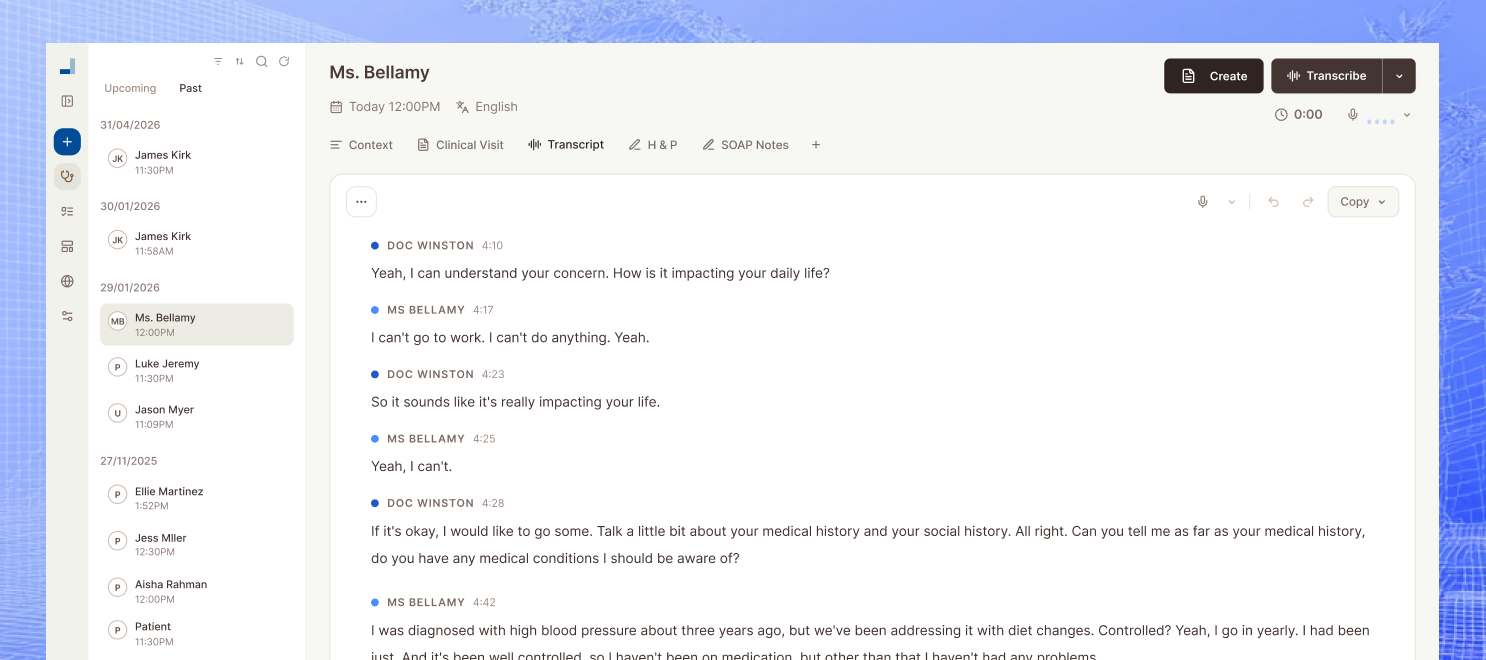
An AI medical scribe acts as an assistive intelligence that captures the nuances of the patient-clinician dialogue in real-time. It is important to remember that these tools are not replacements for clinical judgment. The clinician remains the ultimate authority, responsible for reviewing, editing, and signing off on every entry. The AI handles the heavy lifting of synthesis and structure, allowing the human expert to focus on the person sitting across from them.
- Reduces the cognitive burden of dual-tasking during patient encounters.
- Eliminates ‘pajama time’ by providing near-instant drafts for review.
- Captures specific clinical details that might be forgotten in end-of-day charting.
- Allows clinicians to focus on high-level decision-making over data entry.
Note types you can generate beyond SOAP (H&P and more)
While the SOAP note is a staple of medical training, it isn’t always the most efficient format for every encounter. Modern AI scribes allow for the generation of History and Physicals (H&P), detailed consult notes, and specific procedure notes that meet the high standards required for hospital privileges or insurance audits. Having a variety of formats ensures that the depth of the note matches the complexity of the patient’s condition.
Continuity of care relies heavily on the quality of handovers and referral letters. When a specialist receives a well-structured consult note rather than a generic summary, the patient’s journey becomes safer and more efficient. Standardized templates for follow-up notes and discharge summaries also ensure that no critical post-visit instructions are omitted, which is vital for reducing readmission rates and improving long-term outcomes.
Properly structured documentation is more than just a record; it is a tool for audit readiness. By utilizing diverse note types, clinics can ensure they are capturing the necessary billing codes and medical necessity justifications required by payers. This structured approach creates a more professional clinical environment and protects the practice from regulatory scrutiny.
- H&Ps and Progress Notes provide a longitudinal view of patient health.
- Discharge summaries and referral letters improve inter-provider communication.
- Procedure notes ensure technical details are recorded with high precision.
- Customized formats support specialty-specific needs like orthopedics or psychiatry.
How to implement free clinic QA checklist for AI notes step-by-step
The first step in deploying a free clinic QA checklist for AI notes is to start small. Don’t try to overhaul your entire documentation process overnight. Select one specific visit type—such as standard follow-ups or initial consultations—to pilot the new workflow. This allows you to identify any friction points in a controlled manner before expanding to more complex cases.
Next, you should align your AI settings with your specialty-specific templates. Whether you are in a university clinic or a primary care setting, the structure of your notes should reflect your clinical logic. Once your templates are ready, begin capturing encounters during the live visit. For telehealth, this usually involves a simple audio integration, while in-person visits rely on a mobile device or ambient microphone in the exam room.
After the encounter, the AI will generate a draft almost immediately. This is the most crucial phase of the implementation: the review and edit. Use your QA checklist to quickly scan for accuracy in medications, dosages, and the plan of care. Once satisfied, the output can be instantly repurposed. A single transcript can generate a progress note for the EMR, a referral letter for a colleague, and a summary for the patient themselves.
- Pilot the system with one specific encounter type to build confidence.
- Customize templates to match the specific documentation needs of your specialty.
- Review AI-generated drafts immediately for maximum accuracy and speed.
- Repurpose clinical data into letters, forms, and summaries to save extra time.
How to keep note quality high and reduce mistakes
The most common failure points in AI-generated documentation often involve numerical values, such as specific medication dosages or lab results. In some cases, ‘note bloat’ can occur if the AI includes too much conversational filler that isn’t clinically relevant. Quality control is about filtering out the noise while ensuring the high-stakes data points are 100% accurate.
Developing a lightweight review habit is the best defense against errors. Instead of reading the note like a novel, clinicians should use a ‘spot-check’ method focusing on the Assessment and Plan. Establishing team-wide standards for what constitutes a ‘finished’ note helps ensure that every provider in the clinic is producing high-quality, professional documentation that stands up to legal and peer review.
- Focus review on high-risk areas like medication names and dosages.
- Check for ‘hallucinations’ or irrelevant conversational content in the draft.
- Standardize the Assessment and Plan sections across the entire clinic team.
- Maintain a feedback loop to refine AI templates based on recurring edits.
Privacy, consent, and patient trust (plain English)
Privacy is the cornerstone of the patient-provider relationship. While AI tools are designed to be secure, you must follow your local and regional regulations regarding data storage and patient recording. Transparency is key. Most patients are comfortable with technology if they understand that it helps their doctor focus more on their health and less on a computer screen.
A simple script can ease any patient anxiety: ‘To ensure I catch every detail of our conversation today, I’m using a secure AI assistant to draft my notes. It lets me look at you instead of my screen. Is that okay with you?’ Once consent is obtained, it should be documented in the patient’s record according to clinic policy. Security principles should always prioritize encryption and data minimization.
- Always obtain verbal or written consent based on your local regulations.
- Explain how the technology benefits the patient’s care directly.
- Ensure the AI tool complies with HIPAA, GDPR, or relevant local privacy laws.
- Periodically review your clinic’s data retention and security policies.
Rolling it out across a clinic without disruption
For clinic owners, the rollout should follow a 2-week pilot plan. During the first week, select ‘super-users’ who are tech-savvy to test the workflow. By the second week, they can help train the rest of the staff. This peer-to-peer training model is often more effective than top-down mandates, as it addresses practical, on-the-ground concerns from day one.
Metrics are essential for measuring success. Track things like the total time spent on documentation before and after the rollout, and assess the reduction in after-hours work. You might also find that note completeness and coding accuracy improve, which can have a direct impact on clinic revenue. Alignment between templates and existing EMR fields will ensure that the transition is as seamless as possible for the administrative team.
- Use a 2-week pilot program to identify and solve workflow bottlenecks.
- Identify ‘super-users’ within the clinic to act as internal trainers.
- Track time savings and note quality to calculate your return on investment.
- Align AI output with existing EMR fields for easy copy-and-pasting.
Mcoy AI is an AI medical scribe that records and transcribes patient encounters, then generates multiple clinical note types (H&P, progress notes, consult notes, follow-up notes, procedure notes, discharge summaries, referral letters, and more). With 200+ customizable templates and an AI chat feature to create letters, forms, and specialized documents, it helps clinicians streamline their entire administrative workflow. The tool is designed to move beyond the simple SOAP note, providing the variety and depth required for modern medical practice.
Frequently Asked Questions
How accurate are AI medical scribes in real clinics?
In real-world clinical settings, AI medical scribes are highly accurate at capturing the dialogue and medical terminology used during an encounter. However, accuracy depends on clear communication and the quality of the audio recording. They are excellent at synthesizing complex information into structured notes, but they are assistive tools rather than autonomous ones, meaning they perform best when combined with a clinician’s final review.
Do I still need to review every note?
Yes, reviewing every note is a fundamental requirement for clinical safety and legal compliance. While the AI does the majority of the drafting, the clinician must verify that the facts, assessments, and plans are correct before signing. A well-designed free clinic QA checklist for AI notes makes this review process take only a minute or two, rather than the ten to fifteen minutes required for manual entry.
What note types can an AI scribe generate besides SOAP?
Beyond the standard SOAP note, advanced AI scribes can generate History and Physicals (H&P), detailed consultant reports, follow-up progress notes, and complex procedure summaries. They can also create discharge summaries for hospital settings and professional referral letters for specialists. This versatility ensures that the documentation fits the specific purpose of the patient interaction.
Will this work for telehealth and in-person consults?
Most AI medical scribes are designed to work seamlessly in both environments. For in-person consults, the system typically uses a smartphone or a tablet mic to capture the room audio. For telehealth, the AI can often integrate directly with the video platform or record the audio output of the exchange, ensuring that remote providers get the same time-saving benefits as those in the office.
How do I explain recording/transcription to patients?
The best approach is transparency and focusing on the benefit to the patient. Most clinicians find success by saying that the tool allows them to concentrate fully on the patient rather than taking notes. A simple, honest explanation that the recording is used solely to generate an accurate medical record is usually enough to gain patient trust and consent.
How do clinics prevent note bloat?
Note bloat is prevented by using highly specific templates that instruct the AI on what to include and what to leave out. Clinicians can also use the review phase to quickly delete any repetitive or non-essential information. Setting strict guidelines in the AI settings helps ensure the final output is concise, focused, and highlights only the relevant medical facts.
How long does template setup take?
Initial template setup can take as little as 10 to 15 minutes if you are using pre-built industry standards. Customizing these templates to perfectly match your specific workflow or specialty might take an additional hour of testing. Once these are set, however, they provide a consistent framework that saves hours of work every single week for the entire team.
What’s the safest way to start if I’m skeptical?
The safest way to start is to use the tool for a small batch of non-complex follow-up visits. This allows you to see how the AI handles your specific speaking style and clinical logic without the pressure of a high-complexity case. As you build confidence in the system’s ability to capture accurate data, you can gradually roll it out to your full patient load.
Conclusion
Implementing a free clinic QA checklist for AI notes is the most effective way to ensure documentation remains accurate, professional, and compliant. By moving away from manual typing and toward an AI-assisted workflow, clinicians can reclaim their time and focus on what truly matters: patient care. Start with a small pilot, use professional templates, and maintain a consistent review habit to see immediate improvements in your clinic’s efficiency. Adopting a high-quality free clinic QA checklist for AI notes today is the first step toward a more sustainable and balanced medical career.
What a serious review table should cover
| Decision area | Common mistake | Better clinic-ready approach | Metric to watch |
|---|---|---|---|
| Workflow design | Treat free clinic qa checklist for ai notes: complete guide as a one-off documentation task | Build a repeatable process with clear ownership and review points | Time to complete documentation |
| Team adoption | Assume every clinician will naturally use the same process | Train for consistency and define exception handling early | Active user adoption |
| Quality review | Only check notes when a problem is reported | Audit a sample of notes weekly and review edge cases | Edit rate per note |
| Operational follow-through | Leave admin actions outside the documentation workflow | Use the same encounter data for referrals, letters, and follow-up tasks | Completion rate for next-step tasks |
Related reading
If you are working through free clinic qa checklist for ai notes: complete guide, it helps to read this alongside AI & Medicine: How to Simplify Clinical Notes for Busy Doctors, AI & Medicine: How Doctors Can Improve SOAP Notes, and Specialty Guides: How to Use an AI Medical Scribe for Better Patient Summaries. Those guides cover adjacent workflow, implementation, and evaluation questions so the decision does not sit in isolation.
FAQ
How accurate are AI medical scribes in real clinics?
In real-world clinical settings, AI medical scribes are highly accurate at capturing the dialogue and medical terminology used during an encounter. However, accuracy depends on clear communication and the quality of the audio recording. They are excellent at synthesizing complex information into structured notes, but they are assistive tools rather than autonomous ones, meaning they perform best when combined with a clinician’s final review.
Do I still need to review every note?
Yes, reviewing every note is a fundamental requirement for clinical safety and legal compliance. While the AI does the majority of the drafting, the clinician must verify that the facts, assessments, and plans are correct before signing. A well-designed free clinic QA checklist for AI notes makes this review process take only a minute or two, rather than the ten to fifteen minutes required for manual entry.
What note types can an AI scribe generate besides SOAP?
Beyond the standard SOAP note, advanced AI scribes can generate History and Physicals (H&P), detailed consultant reports, follow-up progress notes, and complex procedure summaries. They can also create discharge summaries for hospital settings and professional referral letters for specialists. This versatility ensures that the documentation fits the specific purpose of the patient interaction.
Will this work for telehealth and in-person consults?
Most AI medical scribes are designed to work seamlessly in both environments. For in-person consults, the system typically uses a smartphone or a tablet mic to capture the room audio. For telehealth, the AI can often integrate directly with the video platform or record the audio output of the exchange, ensuring that remote providers get the same time-saving benefits as those in the office.
How do I explain recording/transcription to patients?
The best approach is transparency and focusing on the benefit to the patient. Most clinicians find success by saying that the tool allows them to concentrate fully on the patient rather than taking notes. A simple, honest explanation that the recording is used solely to generate an accurate medical record is usually enough to gain patient trust and consent.
How do clinics prevent note bloat?
Note bloat is prevented by using highly specific templates that instruct the AI on what to include and what to leave out. Clinicians can also use the review phase to quickly delete any repetitive or non-essential information. Setting strict guidelines in the AI settings helps ensure the final output is concise, focused, and highlights only the relevant medical facts.
How long does template setup take?
Initial template setup can take as little as 10 to 15 minutes if you are using pre-built industry standards. Customizing these templates to perfectly match your specific workflow or specialty might take an additional hour of testing. Once these are set, however, they provide a consistent framework that saves hours of work every single week for the entire team.
What’s the safest way to start if I’m skeptical?
The safest way to start is to use the tool for a small batch of non-complex follow-up visits. This allows you to see how the AI handles your specific speaking style and clinical logic without the pressure of a high-complexity case. As you build confidence in the system’s ability to capture accurate data, you can gradually roll it out to your full patient load.