Practice Operations: Free AI Scribe Setup Checklist for Clinics [Free Guide]
Learn how to build a free AI scribe setup checklist to reduce clinician burnout and automate clinical documentation. Follow our step-by-step implementation guide.
What a medical scribe solves in modern practice
The modern healthcare environment is plagued by a silent epidemic: the burden of documentation. For every hour spent with a patient, doctors often spend two hours at the computer. This leads to profound cognitive load, delayed note completion, and eventually, severe burnout. When clinicians are rushed, the quality of care can suffer as they struggle to recall specific nuances from a 15-minute encounter hours later.
A free AI scribe setup checklist helps bridge the gap between exhausting manual entries and automated efficiency. An AI scribe acts as an assistive listener that captures the natural flow of conversation and organizes it into a clinical structure. It is important to remember that these tools are assistive; while they process massive amounts of audio data, the clinician remains the final authority and must verify all medical details for accuracy.
- Eliminates after-hours charting and administrative fatigue.
- Reduces cognitive load by allowing doctors to focus on the patient, not the screen.
- Ensures immediate note completion, improving the accuracy of the record.
- Acts as a high-powered assistant, though clinical responsibility remains with the provider.
Note types you can generate beyond SOAP (H&P and more)
While the SOAP note is the industry standard for daily progress, medical practice requires a much broader range of documentation. Comprehensive patient care involves History and Physical (H&P) reports, which provide a deep dive into a patient’s baseline and systemic review. Without a tool to automate these long-form documents, practitioners often fall back on templates that are too generic to be useful.
Consult notes and referral letters are equally critical, especially in university clinics or multi-specialty practices. These documents serve as the primary communication channel between providers. High-quality documentation ensures that the next clinician in the care chain has a clear understanding of the diagnosis, the rationale for treatment, and the specific questions being asked in a referral.
Structure matters immensely for audit readiness and medico-legal protection. By using specific formats like procedure notes or discharge summaries, clinics can ensure they meet billing requirements and maintain a high standard of continuity. Moving beyond basic SOAP notes allows for a more nuanced medical record that truly reflects the complexity of the patient encounter.
- H&P and Progress Notes for inpatient and outpatient longitudinal care.
- Consultation and Referral letters to streamline specialist communication.
- Procedure Notes and Discharge Summaries for surgical or acute care settings.
- Audit-ready formats that ensure compliance with insurance and legal standards.
How to implement free AI scribe setup checklist step-by-step in a real clinic
To begin implementing a free AI scribe setup checklist, start by selecting one specific visit type rather than trying to automate your entire schedule at once. Many clinics find success starting with straightforward follow-up appointments. This allows the staff and the clinician to get used to the microphone placement and the flow of the software without the pressure of a complex multi-system initial consult.
Once you have mastered the basics, begin setting up your templates by specialty. Each field of medicine has distinct requirements; a pediatric note looks very different from an orthopedic consult. Configuring these templates early ensures that the AI knows which data points to prioritize, such as developmental milestones or specific range-of-motion measurements. This preparation prevents the ‘blank page’ problem and ensures consistency across the practice.
During the encounter, focus entirely on the patient. Whether it is an in-person visit or a telehealth session, the AI captures the dialogue in the background. After the patient leaves, you should spend sixty seconds reviewing the generated output. This quick edit phase is where you confirm that dosages, laterality, and specific dates are correct. This habit keeps the workflow moving and prevents a backlog of notes at the end of the day.
Finally, utilize the outputs for secondary administrative tasks. A well-organized AI output can be instantly converted into a referral letter or a school excuse form. By reusing the data already captured, you eliminate the need to dictate the same information multiple times for different documents. This circular workflow is what truly saves time in a busy clinic environment.
- Begin with a pilot visit type to build confidence in the technology.
- Customize templates by specialty to ensure relevant data capture.
- Maintain a one-minute review habit immediately following each encounter.
- Leverage note data to generate letters and forms automatically.
How to keep note quality high and reduce mistakes
High-quality documentation relies on the avoidance of ‘note bloat’—the inclusion of unnecessary information that obscures the clinical picture. AI tools can sometimes be too literal, capturing every ‘um’ and ‘ah’ if not properly configured. To maintain quality, clinicians should establish standards for what a ‘gold standard’ note looks like in their specific practice. This includes clear problem lists and concise assessments.
A lightweight review habit is the best defense against errors like missing medications or incorrect values. While AI is highly accurate, it can occasionally mishear a brand name or a specific numerical value. A quick scan by the clinician ensures that these clinical ‘facts’ are verified. Team standards, such as a peer-review process where colleagues occasionally spot-check each other’s notes, can also elevate the overall documentation quality.
- Define practice-wide standards for concise and relevant clinical summaries.
- Implement a ‘triple-check’ for medications, allergies, and dosages.
- Regularly update your AI templates to reflect changing clinical guidelines.
- Foster a culture of peer-review to maintain high documentation standards.
Privacy, consent, and patient trust (plain English)
Patient trust is the foundation of the clinical relationship. When introducing a free AI scribe setup checklist, it is essential to be transparent about how data is being handled. Most patients are supportive once they realize the tool allows their doctor to look at them instead of a computer screen. However, you must always follow local regional policies regarding recording and data retention.
A simple way to explain this to a patient is: ‘With your permission, I’m using a digital assistant to help me take notes today so I can focus entirely on our conversation instead of typing. It records our talk, turns it into a medical note, and then the recording is handled securely according to our privacy rules. Is that okay with you?’ Most find this incredibly refreshing.
- Always obtain verbal or written consent based on your local regulations.
- Explain the benefit to the patient: more eye contact and better focus.
- Ensure the AI provider adheres to strict security and encryption standards.
- Maintain clear records of patient consent within the EHR.
Rolling it out across a clinic without disruption
A successful rollout requires a phased approach. A two-week pilot plan with one or two ‘champion’ doctors is more effective than a clinic-wide mandate. During this period, these clinicians can refine templates and identify any technical hurdles, such as Wi-Fi dead zones in certain exam rooms. The goal is to solve the small problems before they scale.
Track specific metrics to prove the value of the tool. Measure the reduction in ‘pajama time’ (hours spent charting at home) and the speed of note completion. When the rest of the staff sees that their colleagues are leaving the office on time with all their notes finished, the barrier to adoption disappears. Training should be brief and focused on the practicalities of the software rather than complex technical details.
- Start with a 14-day pilot program involving a small group of clinicians.
- Monitor metrics like time-to-completion and after-hours work reduction.
- Hold weekly 10-minute huddles to share best practices and template tips.
- Focus training on workflow integration rather than just software features.
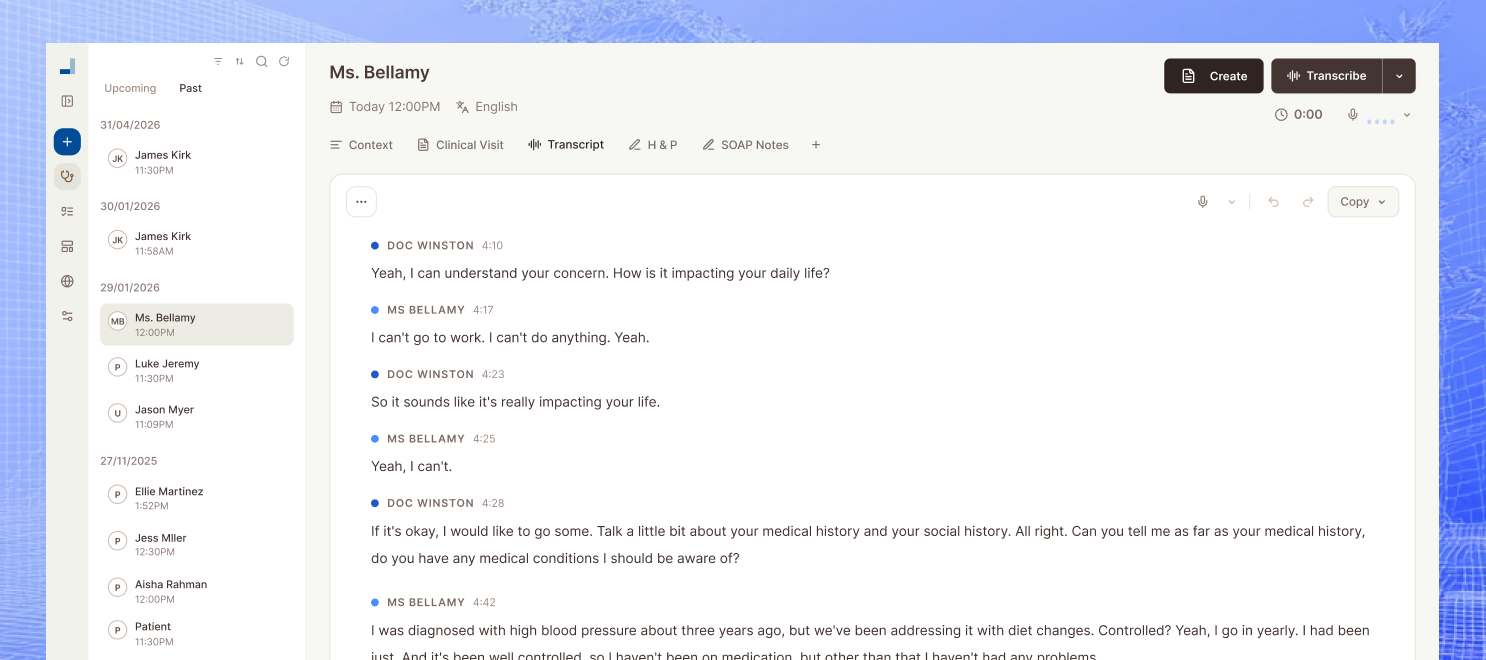
Mcoy AI is an AI medical scribe that records and transcribes patient encounters, then generates multiple clinical note types (H&P, progress notes, consult notes, follow-up notes, procedure notes, discharge summaries, referral letters, and more). With over 200 customizable templates and an integrated AI chat to create letters, forms, and secondary documents, it helps clinicians reclaim their time while maintaining a high standard of clinical precision.
Conclusion
Establishing a free AI scribe setup checklist is a transformative step for any modern clinic. Transitioning from manual typing to an automated workflow allows you to spend more time on what matters most: patient care. By following a structured implementation plan, focusing on template customization, and maintaining a quick review process, you can eliminate the administrative burden that leads to burnout. Use this guide to jumpstart your pilot program and see firsthand how a free AI scribe setup checklist can revolutionize your daily practice and restore the joy of medicine.
What a serious review table should cover
| Decision area | Common mistake | Better clinic-ready approach | Metric to watch |
|---|---|---|---|
| Workflow design | Treat free ai scribe setup checklist for clinics [free guide] as a one-off documentation task | Build a repeatable process with clear ownership and review points | Time to complete documentation |
| Team adoption | Assume every clinician will naturally use the same process | Train for consistency and define exception handling early | Active user adoption |
| Quality review | Only check notes when a problem is reported | Audit a sample of notes weekly and review edge cases | Edit rate per note |
| Operational follow-through | Leave admin actions outside the documentation workflow | Use the same encounter data for referrals, letters, and follow-up tasks | Completion rate for next-step tasks |
Related reading
If you are working through free ai scribe setup checklist for clinics [free guide], it helps to read this alongside Practice Operations: How Clinics Can Streamline Daily Operations, Practice Operations: How Clinics Can Improve Workflow Without Changing Their EHR, and Specialty Guides: Create a Documentation SOP for Your Clinic | Mcoy Health. Those guides cover adjacent workflow, implementation, and evaluation questions so the decision does not sit in isolation.
FAQ
How accurate are AI medical scribes in real clinics?
In a real-world clinical setting, AI scribes are remarkably accurate, often capturing nuances that a human might miss. However, they are not perfect and can occasionally misinterpret complex medical terminology or background noise. They are designed to be assistive, meaning their primary value is in organizing the bulk of the data, which the doctor then verifies for 100% accuracy.
Do I still need to review every note?
Yes, the clinician is legally and ethically responsible for the accuracy of the medical record. While the AI does the heavy lifting, you must perform a brief review to ensure all clinical facts, dosages, and diagnoses are correct. This review typically takes less than a minute per note and is significantly faster than writing a note from scratch.
What note types can an AI scribe generate besides SOAP?
Beyond standard SOAP notes, an AI scribe can generate History and Physicals (H&P), detailed procedure notes, consult letters, and discharge summaries. It can also assist in drafting follow-up notes and referral letters to other specialists. This versatility ensures that all aspects of patient documentation are covered by one automated system.
Will this work for telehealth and in-person consults?
AI scribes are highly adaptable and work effectively in both environments. For in-person visits, they capture audio via a smartphone or computer microphone. For telehealth, they can integrate with the video platform or listen to the computer audio to ensure the digital encounter is documented with the same level of detail as an office visit.
How do I explain recording/transcription to patients?
Honesty and benefit-focused language are best when speaking to patients. Simply explain that you are using a secure tool to capture your conversation so you can focus on them instead of a computer screen. When patients realize they are getting your undivided attention, they are almost always supportive of the technology.
How do clinics prevent note bloat?
Note bloat is prevented by using highly specific templates that tell the AI exactly which information to include and what to leave out. Clinicians can also set preferences for brevity. By focusing on the assessment and plan rather than a verbatim transcript, the final note remains professional, concise, and clinically relevant.
How long does template setup take?
Initial template setup for a specific specialty usually takes about 10 to 15 minutes. Most clinicians start with a pre-existing template and customize it over their first few days of use. Once the template is dialed in, it works automatically for every subsequent patient encounter, requiring no further manual input.
What’s the safest way to start if I’m skeptical?
The safest approach is to run a small-scale pilot for one week with a handful of non-complex patients. Use the AI scribe alongside your traditional method if necessary to build trust. Once you see the accuracy and the time saved on those initial cases, you can gradually expand its use to more complex encounters and more clinicians.