Specialty Guides: Clinical Reasoning Efficiency: A Guide to AI Documentation
Discover how to document clinical reasoning efficiently and reduce burnout. Learn workflow strategies for AI medical scribes and diverse note types.
Introduction: The Burden of After-Hours Charting
For many clinicians, the end of the patient day marks the beginning of a second shift: the documentation marathon. Whether it is a busy private practitioner or a resident in a university clinic, the pressure to document clinical reasoning efficiently often leads to rushed notes, missed nuances, and a constant state of medico-legal anxiety. Manual entry is not just slow; it is a significant contributor to professional burnout and cognitive fatigue.
This comprehensive guide explores how to document clinical reasoning efficiently by leveraging modern AI technology. We will dive into various documentation formats beyond the standard SOAP note, quality control measures, and a practical rollout plan for your clinic. Whether you are in general practice, a specialized surgical field, or conducting telehealth consultations, these strategies are designed to streamline your workflow and restore your focus to patient care.
What a medical scribe solves in modern practice
The real cost of documentation extends far beyond the time spent typing. It includes the mental energy diverted from the patient to the computer screen, often referred to as cognitive load. In a traditional setting, clinicians must struggle to remember every detail of a complex encounter, leading to delayed notes that might lack the specific clinical logic used during the visit. This delay creates a risk for both patient safety and reimbursement accuracy.
An AI medical scribe acts as an assistive layer, capturing the conversation in real-time so the provider can maintain eye contact and engagement. It is important to remember that these tools are assistive; the clinician remains the ultimate authority and is responsible for the final medical record. By automating the transcription and initial drafting of notes, the technology ensures that the subtle details of clinical reasoning are recorded while they are fresh, rather than hours later from memory.
- Reduces the heavy cognitive load of simultaneous listening and typing.
- Ensures clinical details are captured immediately, reducing errors of omission.
- Shortens the documentation cycle, allowing for same-day note completion.
- Enhances the patient-provider relationship by removing the digital barrier.
Note types you can generate beyond SOAP (H&P and more)
While the SOAP note is a healthcare staple, it often fails to capture the full scope of various clinical encounters. Modern documentation requires a diverse range of formats to reflect the complexity of care. For example, a detailed History and Physical (H&P) is essential for new admissions, while concise progress notes serve daily rounds. Consult notes must clearly articulate the specialist’s reasoning to the referring physician to ensure a seamless transition of care.
Using the right structure for the right encounter improves continuity of care and ensures that the medical record is audit-ready and legally robust. Follow-up notes, procedure notes, and discharge summaries each have specific requirements for clinical reasoning that an AI-assisted workflow can handle with precision. By categorizing information correctly from the start, clinicians can ensure that handovers are high quality and that the logical progression of a patient’s treatment plan is easily traceable for any reviewer.
- H&P and Consult Notes for comprehensive initial assessments.
- Procedure Notes that detail exact steps and clinical justifications.
- Discharge Summaries that provide clear instructions for post-acute care.
- Referral letters that distill complex cases into actionable insights for colleagues.
How to implement clinical reasoning documentation step-by-step in a real clinic
To document clinical reasoning efficiently, start by introducing the AI tool to one specific visit type, such as routine follow-ups or standard wellness exams. This allows the team to get comfortable with the technology without the pressure of complex cases. Once the initial pilot feels natural, begin setting up specific templates tailored to your specialty—whether it’s cardiology, pediatrics, or mental health—to ensure the AI knows which data points are most critical for your reasoning process.
During the encounter, whether in-person or via telehealth, simply let the tool capture the conversation naturally. There is no need to change how you speak to the patient; in fact, talking through your thought process aloud can actually help the AI capture your reasoning better. After the patient leaves, take a moment to review and edit the generated draft. Because the AI has already done the heavy lifting of organizing the raw data, this review usually takes just a fraction of the time total manual entry would require.
Finally, utilize the outputs for more than just the chart. The same data used for the clinical note can be instantly repurposed to generate referral letters or patient instruction forms. This circular workflow ensures consistency across all documents. By creating this habit of capture-review-reuse, the clinic moves from a fragmented documentation process to a unified, efficient system that prioritizes clinical accuracy and time savings.
- Launch with a single, common visit type to build staff confidence.
- Customize templates to reflect specialty-specific logic and requirements.
- Use the generated note as a base for all related administrative documents.
- Review notes immediately to ensure the highest degree of accuracy.
How to keep note quality high and reduce mistakes
Common pitfalls in medical documentation often include missing medications, incorrect dosage values, or ‘note bloat’—where excessive, irrelevant information obscures the actual clinical reasoning. To combat this, clinicians should establish a lightweight review habit. Instead of a deep-dive edit at the end of the week, a quick 60-second verification immediately after each encounter ensures that the most critical data points, like the problem list and plan, are precise.
Standardizing what constitutes a ‘good’ note within your team or clinic is also vital. When everyone agrees on the level of detail required for different encounter types, the AI can be tuned to meet those specific expectations. This consistency not only helps with internal audits but also ensures that any clinician stepping into a case can immediately understand the prior provider’s thought process without wading through unnecessary text.
- Implement a ‘review immediately’ policy to catch errors while memory is fresh.
- Focus on the Assessment and Plan sections to ensure logic is clear.
- Avoid note bloat by utilizing templates that prioritize concise data.
- Establish clinic-wide standards for documentation length and detail.
Privacy, consent, and patient trust (plain English)
Patient privacy is the cornerstone of the medical profession. When introducing recording or transcription technology, it is essential to follow local regulations and institutional policies regarding data security and retention. While the technology handles the data, the provider manages the relationship. Being transparent about why you are using an AI scribe—to focus more on the patient and less on the screen—usually builds trust rather than diminishing it.
A simple way to explain this to a patient is: ‘I’m using a secure digital assistant today to take notes for us. This allows me to listen to you fully without being distracted by my computer, and it ensures your medical record is as accurate as possible. Is that okay with you?’ Most patients appreciate the extra attention they receive when the doctor isn’t typing. Always ensure your chosen tool adheres to industry-standard encryption and security protocols to maintain that hard-earned trust.
- Obtain clear verbal or written consent based on your local jurisdiction.
- Explain the benefits of the technology directly to the patient (better eye contact).
- Ensure the technology provider meets high security and compliance standards.
- Maintain a clear policy on how long recordings or transcripts are stored.
Rolling it out across a clinic without disruption
A successful rollout requires a phased approach rather than an overnight overhaul. Start with a two-week pilot involving a small group of ‘super-users’ who are tech-savvy and eager to save time. During this period, track specific metrics such as the time spent on notes after hours and the overall completeness of the documentation. This data will be invaluable when demonstrating the value to the rest of the staff and stakeholders.
Once the pilot is complete, align your templates across the clinic to ensure a unified voice in documentation. Training should focus on how to talk ‘to’ the AI during a visit—like summarizing the plan out loud—which helps the tool capture clinical reasoning more effectively. By providing clear guidance and showing tangible time-saving results, you can ensure high adoption rates and a smooth transition to a more efficient digital workflow.
- Run a limited 2-week pilot to iron out workflow kinks.
- Track time-savings and note quality to demonstrate ROI.
- Provide team-wide training on maximizing AI output quality.
- Standardize specialty templates for consistent documentation.
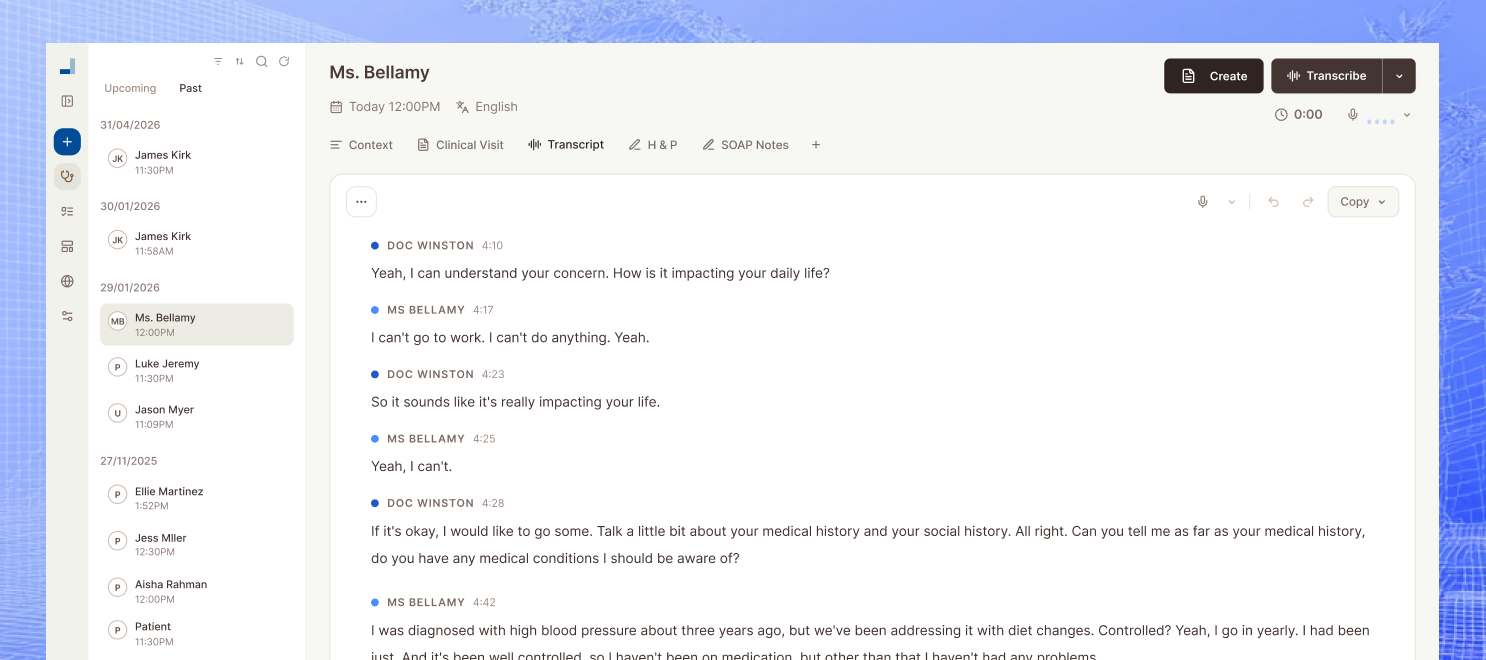
Mcoy AI is an AI medical scribe that records and transcribes patient encounters, then generates multiple clinical note types (H&P, progress notes, consult notes, follow-up notes, procedure notes, discharge summaries, referral letters, and more). With access to over 200+ customizable templates and an interactive AI chat, clinicians can effortlessly create letters, forms, and documents based on the captured data. This allows providers to focus on the human element of medicine while the AI handles the complex administrative requirements of modern practice.
Conclusion
Mastering how to document clinical reasoning efficiently is about more than just typing faster; it’s about adopting a workflow that supports the cognitive demands of medicine. By integrating AI-assisted documentation, clinics can reduce burnout, improve note accuracy, and return the focus to where it belongs: the patient. The transition to an AI-enhanced practice is a journey that begins with a single pilot and leads to a future of sustainable, high-quality care. Start your pilot today and see how documenting clinical reasoning can become a seamless part of your day.
What a serious review table should cover
| Decision area | Common mistake | Better clinic-ready approach | Metric to watch |
|---|---|---|---|
| Workflow design | Treat clinical reasoning efficiency: a guide to ai documentation as a one-off documentation task | Build a repeatable process with clear ownership and review points | Time to complete documentation |
| Team adoption | Assume every clinician will naturally use the same process | Train for consistency and define exception handling early | Active user adoption |
| Quality review | Only check notes when a problem is reported | Audit a sample of notes weekly and review edge cases | Edit rate per note |
| Operational follow-through | Leave admin actions outside the documentation workflow | Use the same encounter data for referrals, letters, and follow-up tasks | Completion rate for next-step tasks |
Related reading
If you are working through clinical reasoning efficiency: a guide to ai documentation, it helps to read this alongside Specialty Guides: How to Run a More Efficient Medical Practice in 2026, Specialty Guides: How to Improve Patient Encounters, and Specialty Guides: Build an AI Documentation Workflow for Clinics | Mcoy Health. Those guides cover adjacent workflow, implementation, and evaluation questions so the decision does not sit in isolation.
FAQ
How accurate are AI medical scribes in real clinics?
AI medical scribes are remarkably accurate in capturing the nuances of clinical dialogue, often reaching over 95% accuracy in medical terminology. However, they are designed to be assistive tools rather than replacements for clinical judgment. The accuracy often depends on the clarity of the audio and the clinician summarizing key findings aloud. Always perform a quick review to ensure specific dosages and instructions are perfectly captured.
Do I still need to review every note?
Yes, reviewing every note is a fundamental requirement for medical-legal safety and professional responsibility. While AI can draft the majority of the content, the clinician must verify that the reasoning and plan accurately reflect their intent. Most users find that reviewing an AI-generated note takes less than a minute, which is significantly faster than writing a note from scratch. This final check ensures the highest level of patient safety.
What note types can an AI scribe generate besides SOAP?
Modern AI scribes are highly versatile and can generate a wide array of documentation beyond the standard SOAP format. This includes comprehensive History and Physicals (H&P), detailed consult notes, and concise progress notes for daily rounds. They can also create specialized procedure notes, discharge summaries, and even formal referral letters. By using a variety of templates, the AI ensures each document meets its specific professional standards.
Will this work for telehealth and in-person consults?
AI medical scribes are designed to be flexible and work seamlessly across both telehealth and in-person environments. For telehealth, the system can often capture audio directly from the computer or via a secondary device. In person, a simple smartphone or tablet can serve as the recording device. In both scenarios, the AI identifies the different speakers and organizes the clinical data into the chosen note format.
How do I explain recording/transcription to patients?
Transparency is key to maintaining patient trust when using recording technology. A simple, honest explanation works best, such as telling the patient that the tool allows you to focus on them instead of the computer. Most patients respond positively when they realize they have your full attention. It is also helpful to mention that the data is handled securely and used solely for the purpose of creating their medical record.
How do clinics prevent note bloat?
Clinics prevent note bloat by using structured templates that prioritize essential information over exhaustive transcripts. AI scribes can be instructed to summarize specific sections and exclude repetitive ‘fluff’ that doesn’t add clinical value. By setting internal standards for note length and focusing on the Assessment and Plan, teams can ensure that the documentation remains a useful tool for care rather than a burden of text.
How long does template setup take?
Initial template setup is generally very fast, especially when using a platform that offers pre-built specialty options. Most clinicians can customize their primary templates in just a few minutes by selecting the fields they want included. Over time, these templates can be refined as the clinician discovers which structures work best for their specific workflow and patient population. It is a one-time effort that yields long-term time savings.
What’s the safest way to start if I’m skeptical?
The safest way to start is with a small, low-risk pilot program involving just a few routine patient visits. Choose encounters that are straightforward to see how the AI handles your typical speech patterns and clinical logic. This ‘test drive’ allows you to evaluate the quality of the outputs and the security of the platform without overwhelming your entire schedule. As you gain confidence, you can gradually expand its use to more complex cases.