Practice Operations: How to Set Up a Clinician Sign-Off Workflow for AI Notes
Learn how to build a Clinician Sign-Off Workflow for AI notes. Improve clinical documentation speed, accuracy, and compliance with our guide for practitioners.
Introduction
For many clinicians, the end of the patient day doesn’t mean the work is over. Instead, it marks the beginning of ‘pajama time’—hours spent hunched over a keyboard completing overdue documentation. This after-hours charting is a primary driver of burnout, leading to rushed notes that may lack the nuance required for a solid medico-legal defense. As private practices and university clinics look for relief, the transition to automated documentation introduces a new challenge: ensuring accuracy through a systematic Clinician Sign-Off Workflow for AI notes.
A Clinician Sign-Off Workflow for AI notes is not just about clicking ‘approve.’ It is a structured process designed to bridge the gap between AI generation and final clinical accountability. This guide will teach you how to design a workflow that covers various note formats, ensures quality control, maintains patient privacy, and facilitates a smooth rollout across your team. Whether you are a general practitioner or a specialist, mastering this workflow is the key to reclaiming your time while maintaining the highest standards of care.
What a medical scribe solves in modern practice
The real cost of documentation extends far beyond the time spent typing. It involves a heavy cognitive load; while a doctor should be focusing on the patient’s narrative, they are often distracted by the need to capture specific data points for the EHR. This split attention can lead to missed clinical details or delayed notes that are only completed days later when memories have faded. An AI medical scribe addresses this by acting as a silent, digital observer that captures the raw data of the encounter in real-time.
It is crucial to understand that an AI medical scribe is an assistive technology, not a replacement for clinical judgment. The AI handles the heavy lifting of transcription and structuring, but the clinician remains the final authority. By shifting the role of the doctor from ‘writer’ to ‘editor,’ practices can significantly reduce the friction inherent in modern medicine.
- Reduces cognitive load by allowing clinicians to focus on the patient instead of the screen.
- Eliminates the backlog of unfinished notes by providing drafts immediately after the encounter.
- Provides a consistent structure to every note, regardless of how busy the clinic becomes.
- Ensures that even complex, long-form encounters are captured with high levels of detail.
Note types you can generate beyond SOAP (H&P and more)
While the SOAP format is the industry standard for daily progress, it often fails to capture the complexity of specialized care or historical assessments. A robust Clinician Sign-Off Workflow for AI notes should accommodate diverse documentation needs. For instance, a History and Physical (H&P) requires a deep dive into patient background that a simple progress note might skip. Similarly, procedure notes must document specific technical steps and outcomes that differ entirely from a routine follow-up visit.
Structure matters because it dictates the quality of care continuity. When a patient is referred or handed over to another provider, the clarity of the consult note or the discharge summary can prevent medical errors. AI scribes can now generate these specialized formats automatically, ensuring that the right information is presented in the right way for every clinical scenario. This level of audit readiness protects the practice and improves the overall professional standard of the medical record.
- History and Physical (H&P) notes for comprehensive new patient intake.
- Specialized consult notes and referral letters for seamless inter-provider communication.
- Detailed procedure notes and discharge summaries to ensure patient safety and compliance.
- Follow-up notes that track longitudinal progress and treatment adjustments over time.
How to implement Clinician Sign-Off Workflow for AI notes step-by-step
To begin, do not try to overhaul your entire clinic in one day. Start by selecting one specific visit type, such as routine follow-ups or standard physicals, to test the AI integration. This allows you to calibrate the AI’s output to your personal clinical voice without the pressure of managing complex cases immediately. Setting up templates by specialty is the next logical step, ensuring the AI knows exactly which headings and data points are required for your specific field.
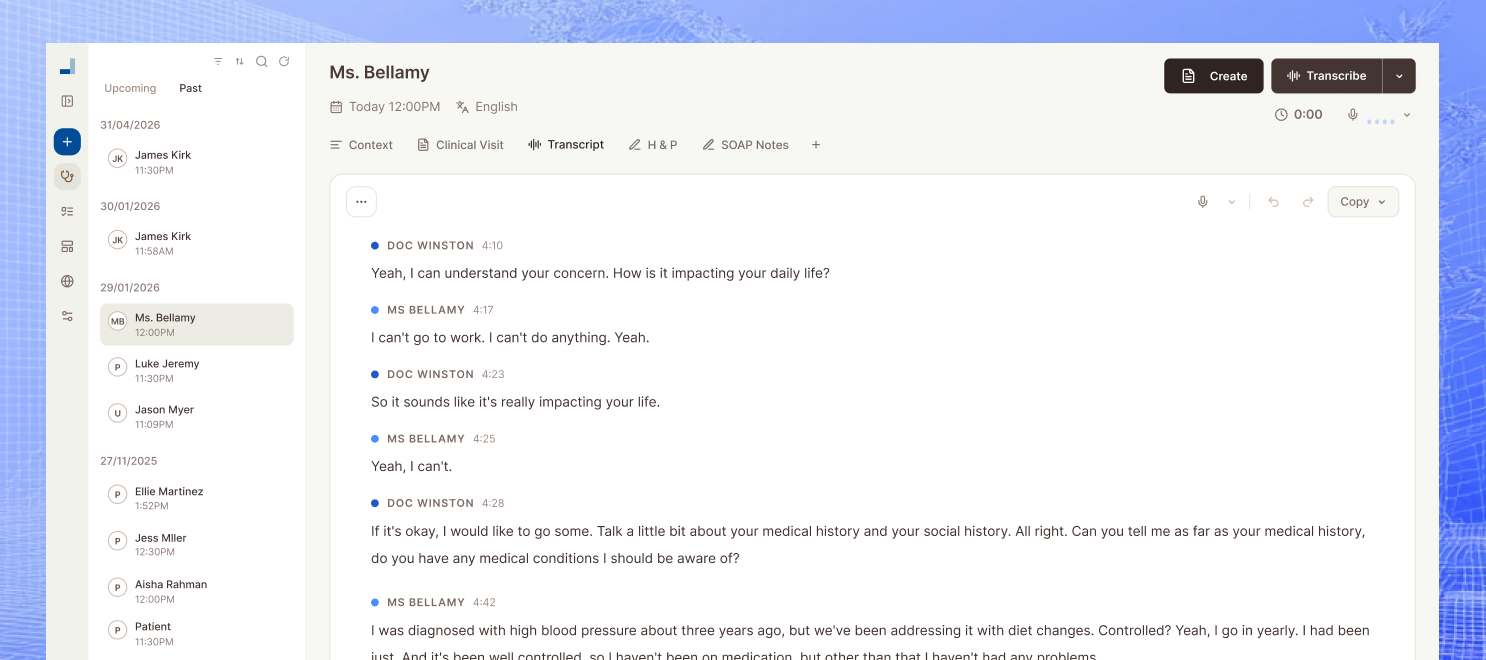
During the encounter, whether it is in-person or via telehealth, simply activate the capture tool and focus entirely on the patient. Once the visit ends, the AI generates a draft within seconds. Your role now shifts to the review phase: scan the generated note for accuracy, making quick edits to any specific dosages or nuanced observations. Because the note is produced immediately, your memory is fresh, and editing takes a fraction of the time compared to writing from scratch.
Finally, leverage the outputs beyond the EHR. A well-constructed AI note can be instantly converted into a referral letter or a patient instruction form. By reusing the core data for multiple administrative tasks, you create a ripple effect of efficiency throughout your practice.
- Choose one visit type to pilot the workflow and minimize initial disruption.
- Configure specialty-specific templates to ensure high-quality, relevant drafts.
- Review and edit the note immediately while the patient encounter is fresh in your mind.
- Repurpose note data for letters and forms to maximize administrative time savings.
How to keep note quality high and reduce mistakes
Even the most advanced AI can occasionally misinterpret a specific medical acronym or miss a subtle change in a medication list. Typical failure points include ‘note bloat,’ where the AI includes too much irrelevant conversation, or errors in numerical values like lab results. Developing a lightweight review habit is essential. Rather than reading every word, clinicians should focus on high-risk areas: the assessment and plan, medication changes, and the problem list.
Establishing team standards for documentation helps keep quality consistent across a multi-provider clinic. If everyone agrees on how certain conditions should be documented, the AI can be tuned to those preferences. Regular, brief audits of a random sample of notes can also help identify recurring errors and refine the templates used by the AI.
- Focus review efforts on high-stakes sections like the ‘Plan’ and ‘Medications.’
- Implement a ‘skim and verify’ technique to catch numerical or dosage errors quickly.
- Standardize documentation preferences across the team to improve AI consistency.
- Conduct periodic quality checks to ensure the AI remains aligned with clinical standards.
Privacy, consent, and patient trust
Patient trust is the foundation of the clinical relationship, and introducing recording technology requires transparency. While consent requirements vary significantly by region, a general rule is to always follow your local health authority’s policy. In most cases, a simple, plain-English explanation is better than a complex legal disclaimer.
You might say to a patient: ‘To ensure I give you my full attention today, I’m using a secure digital assistant to help me with my notes. It records our conversation so I don’t have to type while we talk. Is that okay with you?’ Most patients appreciate the increased eye contact and more engaged presence of their doctor when technology handles the clerical work. From a security standpoint, ensure your chosen tool uses end-to-end encryption and adheres to high standards of data retention and protection.
- Check local regulations to ensure your consent process meets legal requirements.
- Use a short, transparent script to explain the benefits of AI documentation to patients.
- Prioritize tools with robust encryption and clear data-handling policies.
- Ensure patients know they can opt out of recording at any time without penalty.
Rolling it out across a clinic without disruption
Success in a clinic-wide rollout depends on a structured phase-in period. A two-week pilot with one or two ‘power users’ allows you to identify technical hurdles or template adjustments before the whole team joins. During this time, track specific metrics like the average time saved per note and the reduction in ‘pajama time’ to build buy-in among more skeptical staff members.
Training should focus on the editing process rather than the technology itself. Most clinicians find the AI interface intuitive, but they need guidance on how to provide feedback to the system to improve future outputs. Once the pilot phase is complete, align your templates across the organization to ensure that every note, regardless of the provider, looks professional and consistent.
- Launch a two-week pilot with a small group of clinicians to iron out technical kinks.
- Track time-savings and note-completion speed to demonstrate value to the team.
- Focus training on ‘the art of the edit’ to help doctors transition from writers to reviewers.
- Align templates across the clinic to maintain a unified professional standard.
Mcoy AI is an AI medical scribe that records and transcribes patient encounters, then generates multiple clinical note types (H&P, progress notes, consult notes, follow-up notes, procedure notes, discharge summaries, referral letters, and more). It features 200+ customizable templates and an AI chat function to help you create letters, forms, and other essential documents effortlessly, helping clinicians focus on the human side of medicine.
FAQ
The transition to AI-assisted documentation often brings up practical questions about daily operations. Below are answers to the most common inquiries regarding the implementation of a Clinician Sign-Off Workflow for AI notes.
How accurate are AI medical scribes in real clinics?
AI scribes are remarkably accurate at capturing the narrative flow of a conversation, often picking up details a human might forget to type. However, they can occasionally struggle with heavy accents or very technical, non-standard medical jargon. This is why the sign-off workflow is so important; the AI provides a 95% complete draft, and the clinician provides the final 5% of critical verification. Over time, the system learns your preferences, making the drafts increasingly precise.
Do I still need to review every note?
Yes, the clinician is legally and ethically responsible for the contents of the medical record. While the AI does the heavy lifting of drafting, the sign-off process ensures that the final note is an accurate reflection of the encounter. Most clinicians find that reviewing a pre-written note takes less than 60 seconds, which is a fraction of the 10-15 minutes it takes to write one from scratch. Think of it as proofreading a report rather than writing a book.
What note types can an AI scribe generate besides SOAP?
Modern AI scribes are no longer limited to the SOAP format and can generate comprehensive History and Physicals, detailed procedure notes, and even specialized consult letters. They can also produce discharge summaries and follow-up notes tailored to specific specialties. By selecting the right template before or after the encounter, the AI structures the captured data into the format that best suits that specific clinical need. This flexibility ensures that all aspects of patient care are documented correctly.
Will this work for telehealth and in-person consults?
AI medical scribes are designed to be versatile and work seamlessly for both in-person and telehealth visits. For telehealth, the AI can often integrate directly with the video platform or capture audio via the computer’s microphone. In-person, a mobile device or tablet is used to capture the ambient audio of the room. In both scenarios, the AI filters out background noise to focus on the dialogue between the provider and the patient.
How do I explain recording/transcription to patients?
Transparency is the best approach when introducing AI to patients. Most clinicians find that a simple explanation focusing on ‘better care’ and ‘less screen time’ works best. You can explain that the tool allows you to look at them instead of the computer, ensuring that everything they say is heard and documented accurately. In practice, very few patients object once they realize it leads to a more attentive and personalized consultation.
How do clinics prevent note bloat?
Note bloat occurs when an AI captures too much irrelevant filler from a conversation. This is prevented by using high-quality templates that instruct the AI on which specific data points to prioritize and which to ignore. During the sign-off workflow, clinicians should also use ‘smart editing’ to remove any redundant sections. Many AI tools allow you to adjust the ‘verbosity’ settings to ensure the output remains concise and clinically relevant.
How long does template setup take?
Basic template setup usually takes only a few minutes, as most systems come with pre-built libraries for various specialties. Customizing these to fit your personal ‘brand’ of documentation might take an additional hour of tweaking. The most efficient way to set up templates is to start with a standard version and refine it over the first week based on the notes the AI produces. It is a one-time investment that saves hundreds of hours of work annually.
What’s the safest way to start if I’m skeptical?
The safest way to start is with a ‘shadow’ trial on a handful of non-complex patients. Record the encounter, let the AI generate a note, and then compare it to the note you wrote manually. This allows you to build trust in the AI’s ability to capture clinical nuances without any risk to your actual workflow. Once you see the accuracy and the time saved, you can gradually move toward a full Clinician Sign-Off Workflow for AI notes for all your patients.
Conclusion
Implementing a Clinician Sign-Off Workflow for AI notes is the most effective way for modern clinics to combat burnout while improving documentation quality. By moving beyond the limitations of manual SOAP notes and embracing a structured system of AI generation and clinician verification, practitioners can focus on what truly matters: patient care. The process is simple—choose your templates, capture the conversation, and conduct a quick, focused review. If you are ready to eliminate ‘pajama time’ and bring more focus back to your exam room, piloting a Clinician Sign-Off Workflow for AI notes is your next essential step toward a more sustainable practice.
What a serious review table should cover
| Decision area | Common mistake | Better clinic-ready approach | Metric to watch |
|---|---|---|---|
| Workflow design | Treat how to set up a clinician sign-off workflow for ai notes as a one-off documentation task | Build a repeatable process with clear ownership and review points | Time to complete documentation |
| Team adoption | Assume every clinician will naturally use the same process | Train for consistency and define exception handling early | Active user adoption |
| Quality review | Only check notes when a problem is reported | Audit a sample of notes weekly and review edge cases | Edit rate per note |
| Operational follow-through | Leave admin actions outside the documentation workflow | Use the same encounter data for referrals, letters, and follow-up tasks | Completion rate for next-step tasks |
Related reading
If you are working through how to set up a clinician sign-off workflow for ai notes, it helps to read this alongside Practice Operations: How Clinics Can Streamline Daily Operations, Practice Operations: How Clinics Can Improve Workflow Without Changing Their EHR, and Specialty Guides: Increase Patient Capacity with Advanced Medical Scribes. Those guides cover adjacent workflow, implementation, and evaluation questions so the decision does not sit in isolation.
FAQ
{“How accurate are AI medical scribes?”: “AI scribes are highly accurate at capturing conversational narrative, usually reaching 95% accuracy. The Clinician Sign-Off Workflow ensures the final 5% of clinical precision is met by the doctor. Most systems improve over time as they learn personal preferences.”, “Is reviewing every note mandatory?”: “Yes, clinicians are legally responsible for their documentation. However, reviewing an AI-generated note takes about a minute compared to ten minutes of manual typing. It shifts your role from transcriptionist to editor.”, “Can AI generate specialty notes?”: “Absolutely, AI tools can generate H&Ps, procedure notes, consult letters, and discharge summaries using specific templates. You are no longer limited to just the SOAP format for all visits.”, “Does it work for telehealth?”: “AI scribes are designed for both in-person and digital encounters. They capture audio through your device or integrate with telehealth platforms to ensure documentation is complete regardless of the setting.”, “How do I tell patients?”: “Use a plain-English script focusing on how it helps you pay more attention to them. Most patients are very supportive of technology that reduces doctor screen time during visits.”, “How to avoid long notes?”: “Use concise templates and adjust the AI’s verbosity settings. During the sign-off, you can quickly cut any irrelevant social chatter captured by the device.”, “How fast is the setup?”: “Initial setup takes minutes with pre-built templates. Refining them for your specific specialty usually takes about a week of minor adjustments during daily use.”, “What is the best way to start?”: “Start with a ‘shadow’ period where you record a few simple cases and compare the AI output to your manual notes. This builds trust before you rely on it for your full schedule.”}