Specialty Guides: Build a Clinic-Wide Documentation System | Mcoy AI Guide
Learn how to build a unified clinic-wide documentation system. Improve clinical note accuracy, reduce burnout, and streamline your medical practice workflow.
What a medical scribe solves in modern practice
The modern healthcare environment is plagued by the administrative burden of ‘pajama time’—the hours clinicians spend after a long shift finishing notes. This documentation fatigue leads to cognitive load that can result in missed clinical details and eventual provider burnout. A clinic-wide documentation system addresses these inefficiencies by shifting the focus back to the patient-provider interaction rather than the computer screen.
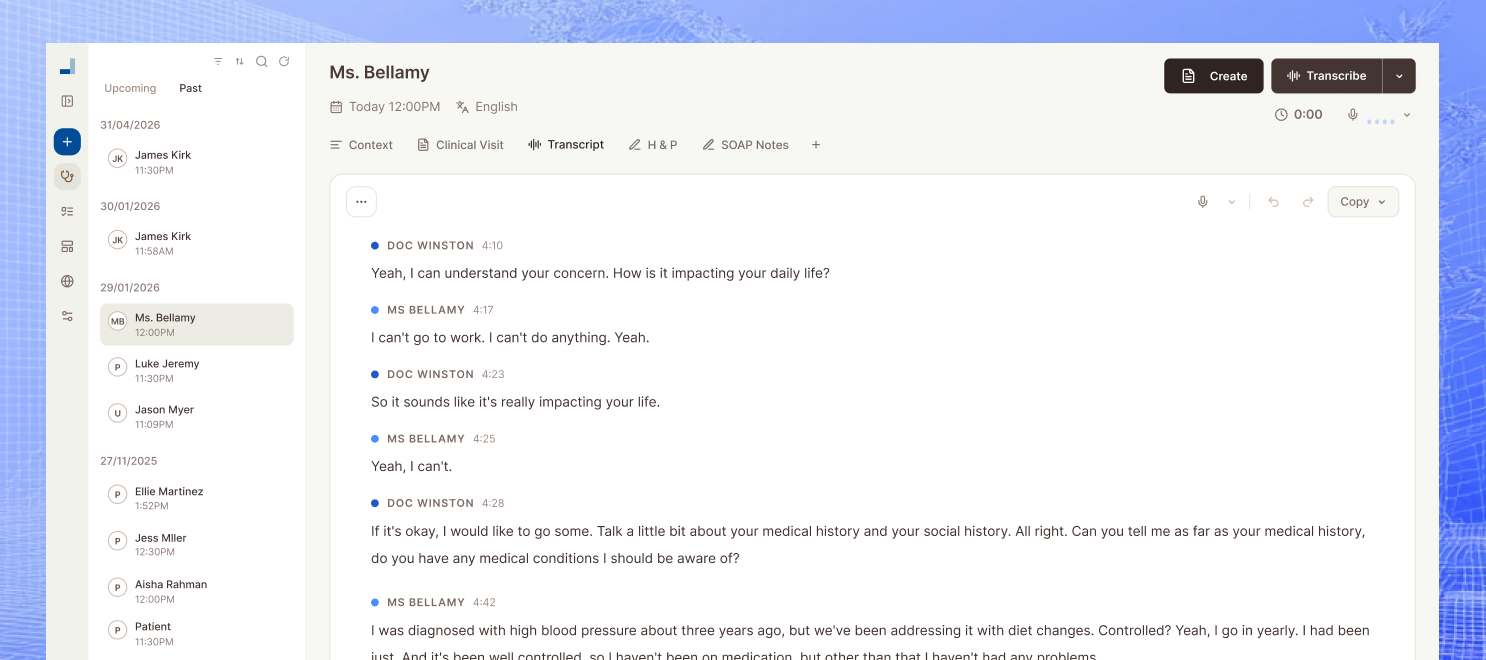
An AI medical scribe acts as an intelligent assistant that handles the heavy lifting of transcription and summarization. It is important to remember that while the technology is powerful, it is not a primary caregiver; the clinician remains the final authority, ensuring all medical records are accurate and ethically sound. By implementing this system across a university clinic or private practice, you create a standardized quality level that manual charting simply cannot match.
- Eliminates after-hours charting by generating drafts in real-time.
- Reduces cognitive load so doctors can focus on complex diagnosis.
- Standardizes note quality across multiple providers and departments.
- Captures granular details that are often forgotten during manual entry.
Note types you can generate beyond SOAP (H&P and more)
While the SOAP note is a healthcare staple, specialized care requires more diverse formats to ensure continuity of care. A robust clinic-wide documentation system must accommodate History and Physical (H&P) reports, which are vital for new admissions, as well as complex consult notes that bridge the communication gap between specialists. Using standardized formats ensures that when a patient is handed over, the receiving physician has a clear, concise roadmap of the case.
Beyond the basics, clinics frequently require procedure notes, discharge summaries, and detailed referral letters. The value of an AI-driven system lies in its ability to adapt to these specific needs without requiring the clinician to re-learn formatting rules for every encounter. This consistency is not just about convenience; it is a critical component of audit readiness and medico-legal protection, providing a high-quality paper trail for every clinical decision made within the facility.
- H&P and Progress Notes for inpatient and acute care consistency.
- Specialized Consult and Procedure notes for surgical or specialist workflows.
- Automated Referral Letters to speed up outpatient coordination.
- Discharge Summaries that improve patient safety during transitions.
How to implement clinic-wide documentation system step-by-step in a real clinic
The journey toward a unified workflow begins with a soft launch focused on a single visit type, such as routine follow-ups or initial consultations. Rather than overwhelming the entire staff, starting with one predictable encounter type allows the team to get comfortable with the interface and the presence of an AI assistant during the patient interview. This initial phase helps in identifying minor friction points before scaling to more complex procedures.
Once the initial phase is successful, the next step involves setting up specialty-specific templates. Whether it is orthopedics, mental health, or general internal medicine, each department should have access to the headers and data points that matter most to their workflow. During the encounter, the clinician simply captures the audio—whether in-person or via a telehealth platform—and lets the system process the natural conversation into a structured draft.
After the encounter ends, the clinician performs a quick review and edit cycle. This usually takes less than two minutes, as the AI has already structured the narrative logically. The finalized output can then be reused immediately to generate secondary documents like school excuses, work clearances, or specialized referral forms. By integrating these outputs into the existing EMR, the clinic-wide documentation system becomes a natural extension of the practitioner’s daily rhythm.
- Phase-in adoption starting with one specific encounter type.
- Customize templates by specialty to ensure relevant data capture.
- Capture audio seamlessly across in-person and virtual visits.
- Use AI-generated drafts to quickly produce letters and forms.
How to keep note quality high and reduce mistakes
Maintaining high standards in a clinic-wide documentation system requires a blend of technological precision and human oversight. One of the biggest risks in automated charting is ‘note bloat,’ where irrelevant details clutter the medical record. To combat this, clinicians should adopt a lightweight review habit, scanning for critical values, medication dosages, and specific problem lists before finalizing any document. This ensures that the generated note is not just long, but accurate and actionable.
Standardization across the team also plays a major role in quality control. Setting clear expectations for what constitutes a ‘good note’ helps the AI learn the preferred style of the clinic. When clinicians consistently correct the same types of errors, the system adapts, leading to higher accuracy over time. It is a collaborative process between the provider and the technology that results in a professional, legal, and highly clinical record for every patient visit.
- Establish a ‘2-minute review’ rule for every generated draft.
- Periodically audit a random sample of notes for clinical accuracy.
- Train staff on how to speak clearly to improve transcription quality.
- Focus on clarity and brevity to avoid the pitfalls of note bloat.
Privacy, consent, and patient trust (plain English)
Patient privacy is the cornerstone of any medical documentation strategy. When implementing a clinic-wide documentation system, it is vital to adhere to local regulations such as HIPAA or GDPR. While the technology handles the data, the clinic is responsible for ensuring that patient consent is obtained and recorded properly. Transparency is the best tool for maintaining trust; most patients are supportive of the technology when they realize it allows their doctor to look them in the eye rather than at a keyboard.
A simple way to introduce the technology is to say: ‘To ensure I don’t miss any details of our conversation, I’m using a secure digital assistant to help me write your medical note so I can focus entirely on you.’ This short script addresses the ‘why’ behind the recording and reinforces the patient-centered nature of the tool. Most clinics find that after the first few minutes, patients completely forget the recording is even happening.
- Always follow regional compliance and data retention policies.
- Use a standardized script to explain the benefit to the patient.
- Ensure all data is encrypted and handled by secure medical-grade servers.
- Integrate consent forms into the standard intake paperwork.
Rolling it out across a clinic without disruption
A successful rollout is measured by how little it disrupts the existing flow of patient care. A two-week pilot program is generally the sweet spot, allowing a core group of ‘power users’ to master the system and then act as mentors for the rest of the staff. During this time, the clinic should track key metrics like the reduction in after-hours charting and the time spent per note. Seeing tangible data on time saved is often the best way to gain buy-in from skeptical staff members.
Training should be hands-on but brief. Since modern AI tools are designed to be intuitive, the focus should be on template alignment and EMR integration. When every clinician is using the same baseline clinic-wide documentation system, it simplifies administrative tasks and ensures that the quality of patient records remains high, regardless of which provider the patient sees. This unified approach transforms the clinic from a collection of individual practitioners into a streamlined, modern medical facility.
- Launch with a 14-day pilot to gather feedback and build confidence.
- Track ‘Time-to-Note’ metrics to prove ROI and efficiency gains.
- Align templates across departments for a unified medical record style.
- Designate internal experts to help troubleshoot and onboard peers.
Mcoy AI is an AI medical scribe that records and transcribes patient encounters, then generates multiple clinical note types (H&P, progress notes, consult notes, follow-up notes, procedure notes, discharge summaries, referral letters, and more). It offers 200+ customizable templates and features an AI chat to create letters, forms, and other documents, helping busy practitioners streamline their entire workflow without sacrificing clinical detail.
FAQ
Transitioning to a digital scribe often brings up practical questions. Here are the answers to the most common queries from clinic owners and practitioners looking to modernize their workflow.
How accurate are AI medical scribes in real clinics?
Modern AI scribes are highly accurate at capturing the nuances of a clinical conversation, including medical terminology and drug names. While they are significantly faster and more consistent than manual typing, they are designed to be assistive. Clinicians should always perform a quick review to ensure the nuances of the specific patient encounter are perfectly reflected in the final output.
Do I still need to review every note?
Yes, reviewing every note is a mandatory part of clinical responsibility and regulatory compliance. The AI generates a 95-98% complete draft, but the physician must verify diagnoses, treatment plans, and dosages. This review process usually takes under two minutes, which is still a fraction of the time required for traditional manual charting.
What note types can an AI scribe generate besides SOAP?
Beyond the standard SOAP format, an advanced system can generate H&P reports, consult notes, discharge summaries, and procedure notes. Through customizable templates, it can also produce specialized documents like referral letters and follow-up plans. This flexibility ensures the tool is useful across orthopedics, cardiology, primary care, and more.
Will this work for telehealth and in-person consults?
Yes, the system is designed to be versatile across different clinical settings. For in-person visits, it captures audio via a smartphone or tablet, whereas for telehealth, it can integrate with your communication platform or record the session via a browser extension. The goal is to provide a seamless documentation experience regardless of the patient’s location.
How do I explain recording/transcription to patients?
The best approach is to be direct and highlight the benefit to the patient. You can explain that the tool allows you to give them your full attention instead of typing on a computer. Most patients value the extra eye contact and the assurance that their medical history is being captured accurately through a secure, medical-grade system.
How do clinics prevent note bloat?
Note bloat is prevented by using smart templates that prioritize relevant clinical data over verbatim transcription. By selecting the right template, the AI knows to filter out small talk and focus on significant symptoms, physical exam findings, and the assessment and plan. Clinicians can also adjust settings to dictate the level of detail required.
How long does template setup take?
Initial setup can take as little as 15 minutes if you use the pre-built library of over 200 templates. Customizing a template to fit your specific clinic’s unique requirements usually takes an additional 5-10 minutes. Once a template is saved, it can be shared across the entire clinic instantly, ensuring uniform documentation standards.
What’s the safest way to start if I’m skeptical?
The safest way to start is by trialing the system on a few non-complex follow-up appointments. This allows you to see the accuracy and speed of the tool without the pressure of a high-stakes clinical case. As you grow comfortable with the output and the workflow, you can gradually expand its use to more complex histories and physical exams.
Conclusion
Implementing a clinic-wide documentation system is more than just a technological upgrade; it is a commitment to better patient care and provider well-being. By following a structured rollout, choosing the right note formats, and maintaining high standards of review, clinics can eliminate the administrative burden of manual charting. Transitioning to a smarter, AI-assisted workflow allows your team to reclaim their time and focus on the art of medicine while ensuring every patient record is accurate and comprehensive. Start your pilot today and see how a clinic-wide documentation system can transform your daily practice.
What a serious review table should cover
| Decision area | Common mistake | Better clinic-ready approach | Metric to watch |
|---|---|---|---|
| Workflow design | Treat build a clinic-wide documentation system | mcoy ai guide as a one-off documentation task | Build a repeatable process with clear ownership and review points |
| Team adoption | Assume every clinician will naturally use the same process | Train for consistency and define exception handling early | Active user adoption |
| Quality review | Only check notes when a problem is reported | Audit a sample of notes weekly and review edge cases | Edit rate per note |
| Operational follow-through | Leave admin actions outside the documentation workflow | Use the same encounter data for referrals, letters, and follow-up tasks | Completion rate for next-step tasks |
Related reading
If you are working through build a clinic-wide documentation system | mcoy ai guide, it helps to read this alongside Specialty Guides: How to Run a More Efficient Medical Practice in 2026, Specialty Guides: How to Improve Patient Encounters, and AI & Medicine: Create a Safe AI Scribe Review Checklist [Free Resources]. Those guides cover adjacent workflow, implementation, and evaluation questions so the decision does not sit in isolation.
FAQ
How accurate are AI medical scribes in real clinics?
Modern AI scribes are highly accurate at capturing the nuances of a clinical conversation, including medical terminology and drug names. While they are significantly faster and more consistent than manual typing, they are designed to be assistive. Clinicians should always perform a quick review to ensure the nuances of the specific patient encounter are perfectly reflected in the final output.
Do I still need to review every note?
Yes, reviewing every note is a mandatory part of clinical responsibility and regulatory compliance. The AI generates a 95-98% complete draft, but the physician must verify diagnoses, treatment plans, and dosages. This review process usually takes under two minutes, which is still a fraction of the time required for traditional manual charting.
What note types can an AI scribe generate besides SOAP?
Beyond the standard SOAP format, an advanced system can generate H&P reports, consult notes, discharge summaries, and procedure notes. Through customizable templates, it can also produce specialized documents like referral letters and follow-up plans. This flexibility ensures the tool is useful across orthopedics, cardiology, primary care, and more.
Will this work for telehealth and in-person consults?
Yes, the system is designed to be versatile across different clinical settings. For in-person visits, it captures audio via a smartphone or tablet, whereas for telehealth, it can integrate with your communication platform or record the session via a browser extension. The goal is to provide a seamless documentation experience regardless of the patient’s location.
How do I explain recording/transcription to patients?
The best approach is to be direct and highlight the benefit to the patient. You can explain that the tool allows you to give them your full attention instead of typing on a computer. Most patients value the extra eye contact and the assurance that their medical history is being captured accurately through a secure, medical-grade system.
How do clinics prevent note bloat?
Note bloat is prevented by using smart templates that prioritize relevant clinical data over verbatim transcription. By selecting the right template, the AI knows to filter out small talk and focus on significant symptoms, physical exam findings, and the assessment and plan. Clinicians can also adjust settings to dictate the level of detail required.
How long does template setup take?
Initial setup can take as little as 15 minutes if you use the pre-built library of over 200 templates. Customizing a template to fit your specific clinic’s unique requirements usually takes an additional 5-10 minutes. Once a template is saved, it can be shared across the entire clinic instantly, ensuring uniform documentation standards.
What’s the safest way to start if I’m skeptical?
The safest way to start is by trialing the system on a few non-complex follow-up appointments. This allows you to see the accuracy and speed of the tool without the pressure of a high-stakes clinical case. As you grow comfortable with the output and the workflow, you can gradually expand its use to more complex histories and physical exams.