Specialty Guides: Clinic Documentation Workflow That Scales | Expert Guide
Discover how to build a scalable clinic documentation workflow. Learn to reduce physician burnout, master note types, and implement AI tools effectively.
What a medical scribe solves in modern practice
The modern healthcare landscape is often defined by the ‘pajama time’ phenomenon, where clinicians spend hours after their final patient encounter completing charts. This administrative burden is more than an inconvenience; it represents a significant cognitive load that leads to burnout, delayed billing, and a higher risk of clinical errors. When a practitioner is rushing through notes at the end of a long shift, essential details about patient history or medication nuances can easily be overlooked.
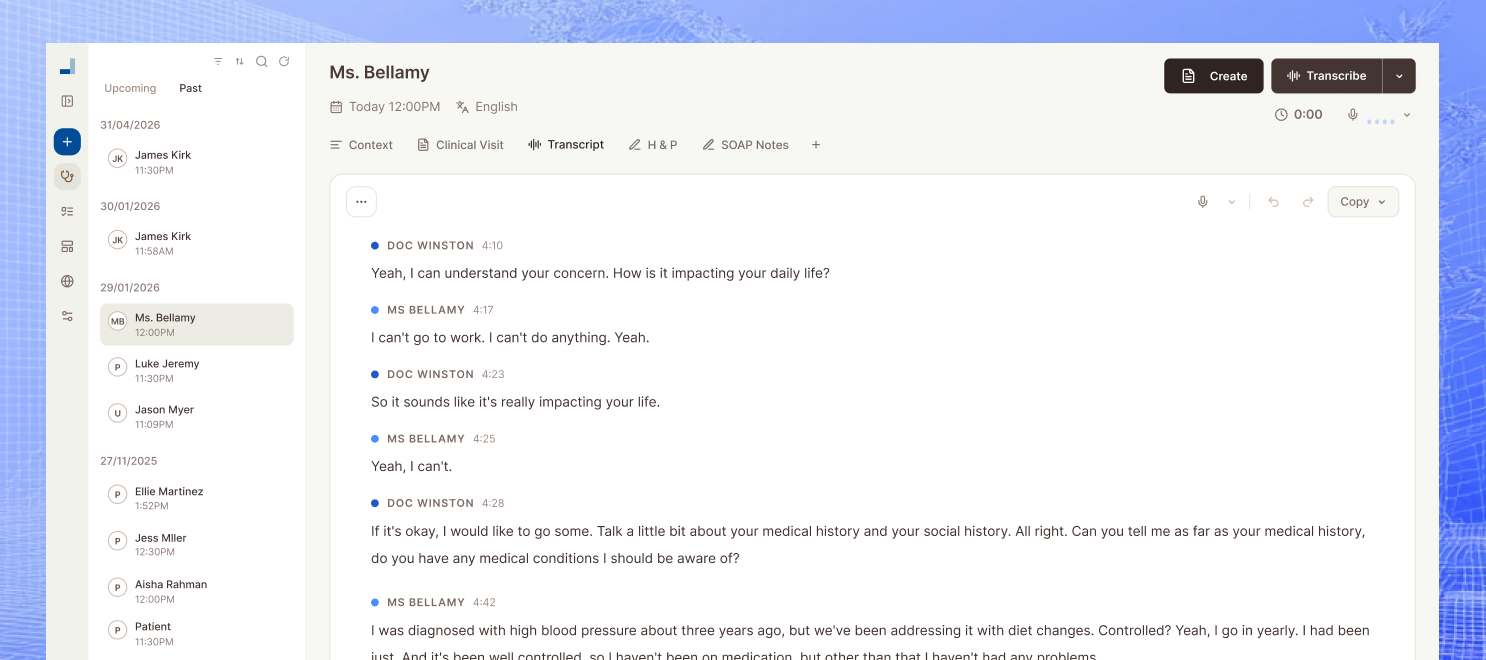
A clinic documentation workflow that scales requires a solution that captures the nuances of a patient encounter in real-time. This is where the concept of an assistive scribe becomes invaluable. An AI medical scribe acts as a digital assistant that listens to the conversation, distinguishing between clinical data and social pleasantries, and organizes that information into a structured format. This allows the clinician to remain fully present with the patient, fostering better rapport and more accurate physical examinations.
It is important to remember that these tools are assistive in nature. While they significantly accelerate the drafting process, the clinician remains the ultimate authority and is responsible for verifying the accuracy of every entry. By shifting the role of the doctor from a data entry clerk to a clinical editor, clinics can regain hours of lost time every week while improving the quality of their records.
- Significantly reduces the cognitive load and after-hours charting time.
- Captures patient nuances that are often forgotten by the end of the day.
- Allows clinicians to focus on eye contact and patient engagement.
- Serves as a drafting assistant, leaving final clinical oversight to the doctor.
Note types you can generate beyond SOAP (H&P and more)
While the SOAP note is the industry standard, a truly scalable clinic documentation workflow must accommodate a variety of clinical scenarios. A general practitioner might rely on progress notes for chronic disease management, whereas a specialist often requires detailed consult notes or referral letters. Relying solely on a rigid SOAP structure can lead to data fragmentation and a lack of clarity for the rest of the care team.
History and Physical (H&P) notes are foundational for new admissions or comprehensive annual visits, requiring a depth that standard daily notes lack. Similarly, procedure notes must document specific techniques, equipment used, and immediate post-op outcomes to ensure audit readiness and medico-legal protection. When these diverse document types are standardized across a clinic, handover quality improves and the risk of communication gaps during transitions of care is minimized.
Discharge summaries and follow-up notes also play a critical role in continuity of care. A well-structured discharge summary ensures that the primary care team understands exactly what happened during a hospital stay, while follow-up notes track the efficacy of a treatment plan over time. Having a system that can generate these specific formats automatically ensures that the clinic remains organized regardless of how complex its patient load becomes.
- H&Ps and consult notes provide depth for complex new patient encounters.
- Procedure notes and discharge summaries ensure audit compliance and safety.
- Referral letters maintain professional communication between specialists and GPs.
- Standardized formatting improves the speed of peer review and coding.
How to implement clinic documentation workflow step-by-step in a real clinic
To begin building a scalable clinic documentation workflow, start small by selecting a single, high-volume visit type. For example, a GP might focus on hypertension follow-ups. By perfecting the note structure for one specific encounter type initially, you can iron out any technical or conversational kinks before expanding. This focused approach prevents the staff from feeling overwhelmed by a total system overhaul.
Next, you should configure your templates according to your specialty’s unique needs. Every medical field has specific data points that are non-negotiable—orthopedic surgeons need range-of-motion details, while psychiatrists need mental status exams. Setting these parameters early ensures that the AI captures the specific data strings required for your specific billable codes and clinical standards.
When it comes to the encounter itself, decide on your capture method for both in-person and telehealth visits. Ensure the device is placed in a way that captures both the clinician and the patient clearly without being intrusive. Once the session ends, the drafting process should begin immediately. Instead of writing from scratch, the practitioner simply reviews the generated output, makes necessary edits, and finalizes the note.
Finally, leverage the outputs for secondary administrative tasks. A single encounter draft can be the basis for a referral letter, a patient summary, or a school excuse note. By reusing the intelligence captured during the visit, you eliminate the need to repeat yourself in different documents, effectively closing the loop on the administrative side of the visit in minutes rather than hours.
- Start with one common visit type to refine the system without stress.
- Customized specialty templates ensure all necessary clinical data is captured.
- Reviewing and editing drafts is significantly faster than manual entry.
- Repurpose encounter data for letters and forms to save additional time.
How to keep note quality high and reduce mistakes
The primary pitfall in automated documentation is the potential for ‘note bloat’ or the inclusion of irrelevant information. To maintain high standards, clinicians should adopt a lightweight review habit. This involves a quick scan for ‘hallucinations’ or misheard medications and dosages. Establishing a clinic-wide standard for what a ‘gold standard’ note looks like helps every provider maintain consistency, making it easier for billing and coding teams to do their jobs.
- A dedicated review habit prevents errors in medications and dosages.
- Standardized templates reduce the risk of irrelevant ‘note bloat.’
- Regular team audits ensure documentation remains compliant and clear.
Privacy, consent, and patient trust (plain English)
Maintaining patient trust is the cornerstone of any clinical practice. When introducing new technology into the exam room, transparency is key. Most patients are supportive of tools that allow their doctor to pay more attention to them rather than a screen, but they still deserve to know how their data is handled. Consent processes should follow local regulations and be integrated into the standard check-in or intake paperwork for the clinic.
A simple way to explain this to a patient is: ‘I’m using an AI assistant today to help me capture our conversation so I can focus entirely on you instead of typing. It records our talk and helps me write your clinical note. Is that alright with you?’ This approach is direct and highlights the benefit to the patient. From a security standpoint, ensure your workflow utilizes end-to-end encryption and that data retention policies align with professional standards.
- Always obtain verbal or written consent based on local health authority rules.
- Explain the technology as a way to prioritize patient-doctor eye contact.
- Ensure the tools used have robust encryption and data security protocols.
Rolling it out across a clinic without disruption
A successful rollout requires a phased approach, typically beginning with a two-week pilot involving a small group of ‘tech-forward’ clinicians. During this period, track metrics such as the time spent charting after 5 PM and the speed of note completion. Demonstrating a tangible reduction in administrative time will help gain buy-in from more skeptical staff members during the wider implementation phase.
- Start with a 2-week pilot to gather feedback and demonstrate time savings.
- Track metrics like ‘pajama time’ to prove the value to the whole team.
- Align templates across the clinic to ensure a unified documentation style.
Mcoy AI: Your Clinical Documentation Partner
Mcoy AI is an AI medical scribe that records and transcribes patient encounters, then generates multiple clinical note types (H&P, progress notes, consult notes, follow-up notes, procedure notes, discharge summaries, referral letters, and more). With over 200 customizable templates and an AI chat feature to create letters, forms, and documents, it streamlines the administrative side of medicine. This allows practitioners in university clinics and private practices to focus on their patients while the AI handles the heavy lifting of the documentation process.
FAQ
Building a clinic documentation workflow that scales is the best way to future-proof your practice. By moving away from manual entry and embracing an intelligent clinic documentation workflow, you can restore the joy of practicing medicine.
How accurate are AI medical scribes in real clinics?
AI medical scribes are remarkably accurate in capturing the clinical dialogue, often reaching levels of 90% or higher. However, they can occasionally misinterpret specific medical jargon or ambient noise. This is why the clinician’s role shifts to that of an editor, ensuring that every detail is clinically sound before finalizing the chart.
Do I still need to review every note?
Yes, reviewing every note is a professional and legal requirement for any clinician. While the AI does the heavy lifting of drafting and organizing the note, the final responsibility for accuracy lies with the provider. Most clinicians find that reviewing and editing takes only a fraction of the time it would take to write the note from scratch.
What note types can an AI scribe generate besides SOAP?
Modern AI scribes are capable of generating a wide variety of documentation beyond the standard SOAP format. This includes History and Physical (H&P) notes, complex consult notes, procedure descriptions, and discharge summaries. You can also generate referral letters and patient instructions based on the same encounter session.
Will this work for telehealth and in-person consults?
Most AI scribe solutions are designed to work seamlessly across both modalities. For in-person visits, a mobile device or tablet is used to capture the conversation, while for telehealth, the software can be integrated or run alongside the video conferencing platform. The resulting note quality remains consistent regardless of how the patient is seen.
How do I explain recording/transcription to patients?
The best approach is to be transparent and emphasize the benefits to the patient experience. You might say that the tool allows you to listen more closely and ignore the computer screen during their visit. Patients generally respond positively when they realize the technology is there to improve the quality of care they receive.
How do clinics prevent note bloat?
Note bloat is prevented by using specialized templates that prompt the AI to only include relevant clinical information. Settings can often be adjusted to produce more concise summaries or long-form detailed accounts depending on the visit type. Regular review of documentation standards within the clinic also helps keep notes sharp and efficient.
How long does template setup take?
Basic template setup can be completed in just a few minutes, especially if you start with pre-built specialty-specific ones. For a more customized approach, it may take an hour or two to fine-tune the output to match your specific clinical preferences. Once set, these templates scale across the entire practice effortlessly.
What’s the safest way to start if I’m skeptical?
The safest way to start is with a ‘shadow’ pilot on a handful of non-complex cases. Record a few sessions and see how the AI handles your typical patient flow without relying on it for your primary documentation immediately. As you see the accuracy and time savings, you can slowly integrate it into your full daily schedule.
Conclusion
Developing a standardized clinic documentation workflow is the most effective way to combat burnout and administrative backlog. By moving from manual typing to an assistive drafting model, clinics can improve the accuracy of their records and the quality of patient care. Implementing a clinic documentation workflow ensures that your practice can handle growth without sacrificing the well-being of your providers. Start your pilot today and see how much time you can give back to your clinical team.
What a serious review table should cover
| Decision area | Common mistake | Better clinic-ready approach | Metric to watch |
|---|---|---|---|
| Workflow design | Treat clinic documentation workflow that scales | expert guide as a one-off documentation task | Build a repeatable process with clear ownership and review points |
| Team adoption | Assume every clinician will naturally use the same process | Train for consistency and define exception handling early | Active user adoption |
| Quality review | Only check notes when a problem is reported | Audit a sample of notes weekly and review edge cases | Edit rate per note |
| Operational follow-through | Leave admin actions outside the documentation workflow | Use the same encounter data for referrals, letters, and follow-up tasks | Completion rate for next-step tasks |
Related reading
If you are working through clinic documentation workflow that scales | expert guide, it helps to read this alongside Specialty Guides: How to Run a More Efficient Medical Practice in 2026, Specialty Guides: How to Improve Patient Encounters, and AI & Medicine: How to Convert Dictation Into SOAP Notes Automatically. Those guides cover adjacent workflow, implementation, and evaluation questions so the decision does not sit in isolation.
FAQ
How accurate are AI medical scribes? Accurate but require clinician review. Do I need to review notes? Yes, legal responsibility remains with the doctor. What note types are supported? SOAP, H&P, consults, and more. Does it work for telehealth? Yes, both in-person and remote. How to explain to patients? Focus on the improved eye contact and care. How to prevent note bloat? Use specific templates. How long for setup? Just minutes with pre-built templates. Best way to start? Pilot with simple cases.