AI & Medicine: Build Specialist Note Templates | Step-By-Step Guide
Learn how to build a template pack for specialist notes to save hours on charting. Streamline H&P, consults, and follow-ups for your clinic today.
The Hidden Burden of Specialist Documentation
For specialists and private practitioners, the workday rarely ends when the last patient leaves the exam room. The administrative weight of after-hours charting, rushed notes, and the constant hum of medico-legal anxiety can lead to significant burnout. Whether you are managing a busy university clinic or a solo private practice, the pressure to produce high-quality, consistent documentation is immense. Traditional SOAP notes often fall short of the nuanced requirements needed for complex specialist encounters.
This guide will teach you how to build a comprehensive template pack for specialist notes that goes beyond simple automation. We will explore the shift from manual entry to intelligent workflow integration, covering diverse note formats like H&Ps and consults, quality control strategies, and a practical rollout plan. This is designed for GPs, specialists, telehealth providers, and clinic owners looking to reclaim their time without sacrificing clinical accuracy.
What a medical scribe solves in modern practice
The real cost of documentation isn’t just measured in minutes; it is measured in cognitive load and clinician fatigue. When surgeons or cardiologists spend three hours a night catching up on paperwork, it leads to delayed notes and a higher risk of missing critical patient details. A manual workflow often results in fragmented care where the clinician is more focused on the screen than the patient sitting across from them.
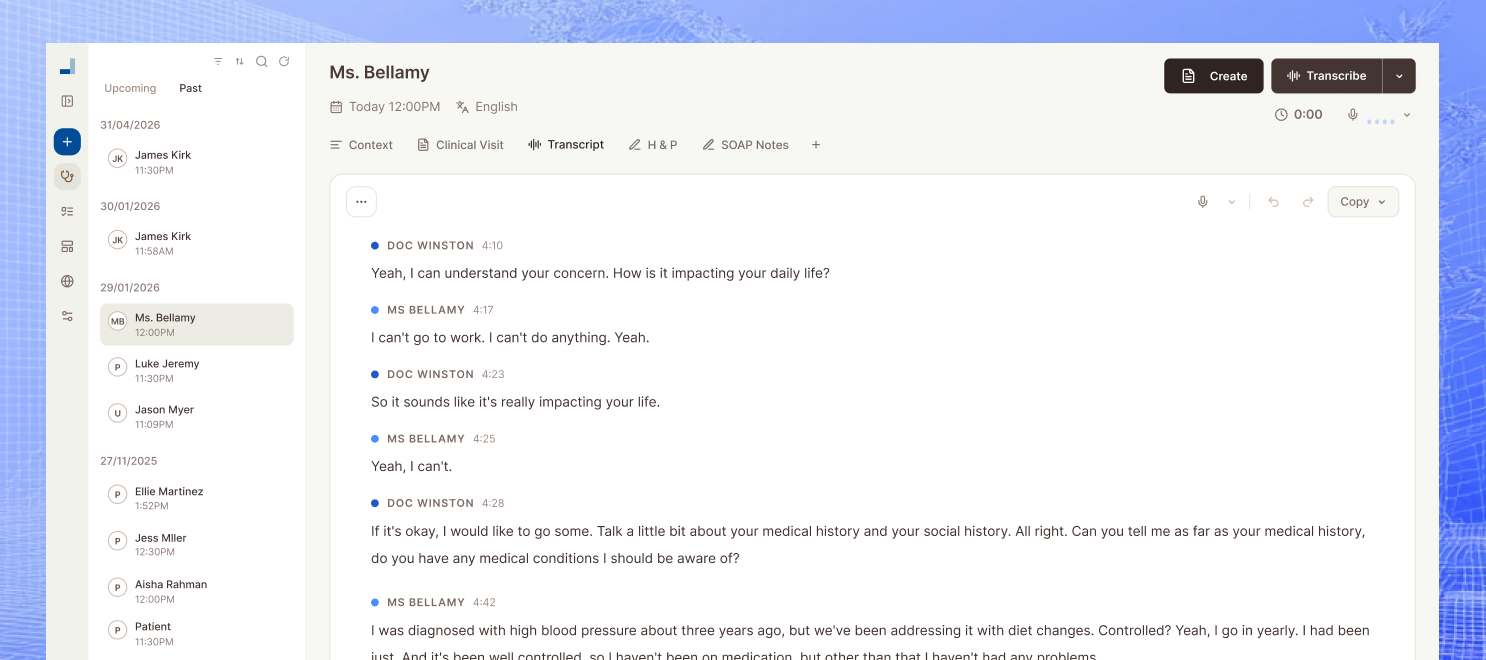
An AI medical scribe acts as an intelligent assistant to bridge this gap. It captures the natural flow of the conversation and structures it into a clinical format, allowing the provider to remain present. It is important to remember that these tools are assistive; the clinician remains the ultimate authority and is responsible for reviewing and signing off on every entry. This shift allows the brain to focus on diagnosis and treatment rather than data entry.
- Reduces the cognitive burden of remembering every patient detail.
- Eliminates the ‘pajama time’ spent on administrative tasks.
- Enhances patient satisfaction by allowing more eye contact.
- Provides a structured foundation for more accurate billing and audits.
Note types you can generate beyond SOAP (H&P and more)
While the SOAP format is a staple in medical education, specialist care often requires much more. A comprehensive template pack for specialist notes should include H&Ps (History and Physicals), which provide the essential baseline for new patients. Similarly, procedure notes and consult letters require specific data points that a standard progress note might miss. Having these diverse formats ready at your fingertips ensures that every encounter is documented with the appropriate level of detail.
Structure matters deeply for continuity of care and audit readiness. When a referral letter is generated directly from an encounter, it ensures the receiving physician has the exact context needed for the next step in the patient’s journey. Discharge summaries and follow-up notes act as the connective tissue between visits, ensuring that nothing falls through the cracks during handovers or long-term management.
Using specialized templates allows for a level of granularity that generic notes lack. For instance, a neurology consult note needs different highlights than a dermatological procedure note. By diversifying your output types, you ensure that the documentation actually serves the clinical needs of the specialty rather than just ticking a box for compliance.
- H&Ps and Consult Notes for new patient orientation.
- Procedure Notes to document specific surgical or diagnostic interventions.
- Follow-up Notes and Progress Notes for long-term management.
- Referral Letters and Discharge Summaries for seamless care transitions.
How to implement build a template pack for specialist notes step-by-step in a real clinic
The first step in building your template pack is to resist the urge to overhaul everything at once. Start by selecting one specific visit type, such as new patient consultations or a high-volume procedure. By mastering the documentation flow for a single use case, you can refine the language and structure before expanding to other areas of the practice. This focused approach prevents the team from feeling overwhelmed by a sudden change in workflow.
Next, you must set up your templates based on your specific specialty requirements. If you are in orthopedics, your template should prioritize range of motion and physical exam findings. In psychiatry, the emphasis might be on mental status exams. Once labels and sections are defined, you can capture the encounter naturally, whether it is an in-person visit or a telehealth session. The key is to let the conversation flow while the system contextually maps the data to your predefined fields.
After the encounter, the review process should be fast and efficient. Instead of writing from scratch, you are now an editor. Review the generated output, make quick adjustments to the plan or assessment if necessary, and finalize the note. This habit ensures that the documentation is completed while the encounter is still fresh in your mind. Finally, leverage these outputs to instantly generate secondary documents like referral letters or school excuse forms, further reducing the manual workload.
- Choose one high-volume visit type to pilot the new template.
- Customize sections to match specialty-specific physical exams and histories.
- Capture the dialogue naturally using a background recording tool.
- Review by exception, focusing on the assessment and plan accuracy.
- Reuse clinical data to auto-populate letters and insurance forms.
How to keep note quality high and reduce mistakes
The most common failure points in automated documentation involve missing current medications, incorrect lab values, or ‘note bloat’ where the output becomes too long to be useful. To prevent this, clinicians should adopt a lightweight review habit. This involves scanning the HPI and Assessment for 30 seconds to ensure the ‘medical story’ is accurate. Creating a team standard for what constitutes a ‘good’ note helps maintain consistency across the entire clinic.
Mistakes often happen when templates are too rigid or too vague. By regularly updating your template pack for specialist notes based on peer feedback, you can trim unnecessary sections and highlight the data that actually impacts patient outcomes. Encouraging a culture of ‘precision over volume’ ensures that notes remains legible and valuable for the next provider who reads them.
- Implement a ‘30-second scan’ rule before signing off on any note.
- Standardize the ‘Problem List’ format across the entire clinic.
- Periodically audit a random sample of notes for clarity and brevity.
- Update templates quarterly to remove redundant data fields.
Privacy, consent, and patient trust (plain English)
Patient trust is the foundation of any successful clinical documentation strategy. While consent laws vary by region, it is essential to follow local policies regarding recording and transcription. Most clinicians find that being transparent about the process actually improves the patient experience. When patients see that you are using technology to focus more on them and less on the computer, they are usually very supportive.
A simple way to explain this to a patient is: ‘I’m using a digital assistant today to take notes for us. This allows me to focus entirely on you instead of typing on my computer. Everything is secure and stays part of your private medical record.’ This brief explanation sets the stage for a more personal interaction. General security principles like end-to-end encryption and strict data retention policies should also be part of the clinic’s back-end standards.
- Always obtain verbal or written consent based on local regulatory requirements.
- Explain the ‘why’—focusing on the patient rather than the screen.
- Use secure, encrypted platforms that comply with healthcare privacy laws.
- Ensure data is only stored as long as necessary for clinical accuracy.
Rolling it out across a clinic without disruption
To roll this out successfully, begin with a two-week pilot involving one or two early-adopter physicians. This allows you to work out any technical kinks and refine the template pack for specialist notes before the rest of the staff joins. During this phase, track metrics such as time saved per day and the reduction in after-hours charting. Seeing tangible data on ‘pajama time’ reduction is a powerful motivator for more skeptical staff members.
Once the pilot is successful, align the rest of the team through a brief training session focused on template alignment. Ensure that everyone understands how to use the outputs for their specific workflows, such as administrative staff using the notes to draft referral letters. Consistent training ensures that the system is used to its full potential, transforming the clinic into a more efficient and less stressed environment.
- Launch with a 2-week pilot for a small group of clinicians.
- Measure the reduction in ‘pajama time’ and note completion speed.
- Hold a brief workshop to align templates across different specialties.
- Support staff by showing them how to pull letters from clinical notes.
Mcoy AI is an AI medical scribe that records and transcribes patient encounters, then generates multiple clinical note types (H&P, progress notes, consult notes, follow-up notes, procedure notes, discharge summaries, referral letters, and more). With 200+ customizable templates and an AI chat feature to create letters, forms, and documents, it helps clinicians focus more on the patient and less on the paperwork, making it easy to build a template pack for specialist notes tailored to any specialty.
Frequently Asked Questions
Below are some common questions clinicians have when transitioning to a modern documentation workflow.
How accurate are AI medical scribes in real clinics?
In a real-world clinical setting, high-quality AI scribes are remarkably accurate at capturing the medical context and nuances of a conversation. They are trained on millions of medical dialogues to understand terminology, abbreviations, and different accents. However, because they are assistive tools, the clinician must always perform a final review to ensure every medication and dosage is captured correctly.
Do I still need to review every note?
Yes, professional responsibility dictates that the clinician must review and sign every note. The goal of building a template pack for specialist notes is not to eliminate the clinician’s oversight, but to change their role from ‘writer’ to ‘editor.’ This transition typically saves 50-80% of the time usually spent on manual documentation.
What note types can an AI scribe generate besides SOAP?
Modern systems go far beyond the SOAP format. You can generate comprehensive H&Ps, detailed procedure notes, consult letters for referring physicians, discharge summaries, and even specific follow-up notes for chronic care management. The flexibility of the templates allows the tool to adapt to the specific administrative needs of your specialty.
Will this work for telehealth and in-person consults?
Yes, the technology is designed to work across various platforms. For in-person visits, it captures the ambient room audio, while for telehealth, it can often integrate directly with the video platform or capture the system audio. The core functionality of transcribing and structuring the medical encounter remains the same regardless of the medium.
How do I explain recording/transcription to patients?
The best approach is to be direct and highlight the benefit to the patient. Tell them that by using a digital scribe, you can look them in the eye and listen more effectively rather than typing. Most patients appreciate the extra attention and are comfortable with the technology once they understand it is part of their secure record.
How do clinics prevent note bloat?
Note bloat is prevented by using concise templates and setting specific instructions for the AI on what to include or exclude. By defining clear sections and using ‘bulleted’ output styles, the notes remain easy to read and focused on pertinent clinical facts rather than a transcript of the entire conversation.
How long does template setup take?
Setting up a basic template happens instantly, but fully customizing a template pack for specialist notes usually takes a few hours of clinical time spread over a week. Most clinicians start with standard templates and then make small tweaks after each of their first few shifts until the output matches their personal style perfectly.
What’s the safest way to start if I’m skeptical?
The safest way to start is by using the tool for your simplest, most routine follow-up appointments. This allows you to gain confidence in the accuracy of the transcription and the structure of the notes without the pressure of a complex new patient case. Once you see the time savings on the easy cases, you can gradually move to more complex encounters.
Conclusion
Building a template pack for specialist notes is the most effective way for modern clinicians to reclaim their schedule and reduce the burden of administrative tasks. By moving away from manual typing and embracing a structured, AI-assisted workflow, you can ensure that your documentation is both high-quality and timely. Start by piloting one visit type, refine your templates, and watch your after-hours charting disappear. Implement the strategies discussed in this guide to create a more sustainable practice for yourself and your team. Using a robust template pack for specialist notes is the first step toward a more focused and fulfilling clinical career.
SEO description: Learn how to build a template pack for specialist notes to save hours on charting. Streamline H&P, consults, and follow-ups for your clinic today.
What a serious review table should cover
| Decision area | Common mistake | Better clinic-ready approach | Metric to watch |
|---|---|---|---|
| Workflow design | Treat build specialist note templates | step-by-step guide as a one-off documentation task | Build a repeatable process with clear ownership and review points |
| Team adoption | Assume every clinician will naturally use the same process | Train for consistency and define exception handling early | Active user adoption |
| Quality review | Only check notes when a problem is reported | Audit a sample of notes weekly and review edge cases | Edit rate per note |
| Operational follow-through | Leave admin actions outside the documentation workflow | Use the same encounter data for referrals, letters, and follow-up tasks | Completion rate for next-step tasks |
Related reading
If you are working through build specialist note templates | step-by-step guide, it helps to read this alongside AI & Medicine: How to Simplify Clinical Notes for Busy Doctors, AI & Medicine: How Doctors Can Improve SOAP Notes, and Specialty Guides: How to Capture Differential Diagnosis With AI | Full Guide. Those guides cover adjacent workflow, implementation, and evaluation questions so the decision does not sit in isolation.
FAQ
How accurate are AI medical scribes in real clinics?
In a real-world clinical setting, high-quality AI scribes are remarkably accurate at capturing the medical context and nuances of a conversation. They are trained on millions of medical dialogues to understand terminology, abbreviations, and different accents. However, because they are assistive tools, the clinician must always perform a final review to ensure every medication and dosage is captured correctly.
Do I still need to review every note?
Yes, professional responsibility dictates that the clinician must review and sign every note. The goal of building a template pack for specialist notes is not to eliminate the clinician’s oversight, but to change their role from ‘writer’ to ‘editor.’ This transition typically saves 50-80% of the time usually spent on manual documentation.
What note types can an AI scribe generate besides SOAP?
Modern systems go far beyond the SOAP format. You can generate comprehensive H&Ps, detailed procedure notes, consult letters for referring physicians, discharge summaries, and even specific follow-up notes for chronic care management. The flexibility of the templates allows the tool to adapt to the specific administrative needs of your specialty.
Will this work for telehealth and in-person consults?
Yes, the technology is designed to work across various platforms. For in-person visits, it captures the ambient room audio, while for telehealth, it can often integrate directly with the video platform or capture the system audio. The core functionality of transcribing and structuring the medical encounter remains the same regardless of the medium.
How do I explain recording/transcription to patients?
The best approach is to be direct and highlight the benefit to the patient. Tell them that by using a digital scribe, you can look them in the eye and listen more effectively rather than typing. Most patients appreciate the extra attention and are comfortable with the technology once they understand it is part of their secure record.
How do clinics prevent note bloat?
Note bloat is prevented by using concise templates and setting specific instructions for the AI on what to include or exclude. By defining clear sections and using ‘bulleted’ output styles, the notes remain easy to read and focused on pertinent clinical facts rather than a transcript of the entire conversation.
How long does template setup take?
Setting up a basic template happens instantly, but fully customizing a template pack for specialist notes usually takes a few hours of clinical time spread over a week. Most clinicians start with standard templates and then make small tweaks after each of their first few shifts until the output matches their personal style perfectly.
What’s the safest way to start if I’m skeptical?
The safest way to start is by using the tool for your simplest, most routine follow-up appointments. This allows you to gain confidence in the accuracy of the transcription and the structure of the notes without the pressure of a complex new patient case. Once you see the time savings on the easy cases, you can gradually move to more complex encounters.