Admin Management: Build a Referral Letter Template Pack: Guide for Clinics
Learn how to build a referral letter template pack to streamline clinic workflows, improve specialist communication, and reduce administrative burnout.
What a medical scribe solves in modern practice
The administrative burden in modern medicine is a leading driver of clinician burnout. Recent data suggests that for every hour spent with a patient, physicians spend nearly two hours on electronic health record tasks. This cognitive load doesn’t just cut into personal time; it degrades the quality of the patient-doctor relationship by forcing clinicians to focus on screens rather than symptoms. Delayed notes and rushed documentation often lead to missed nuances that are critical for complex cases.
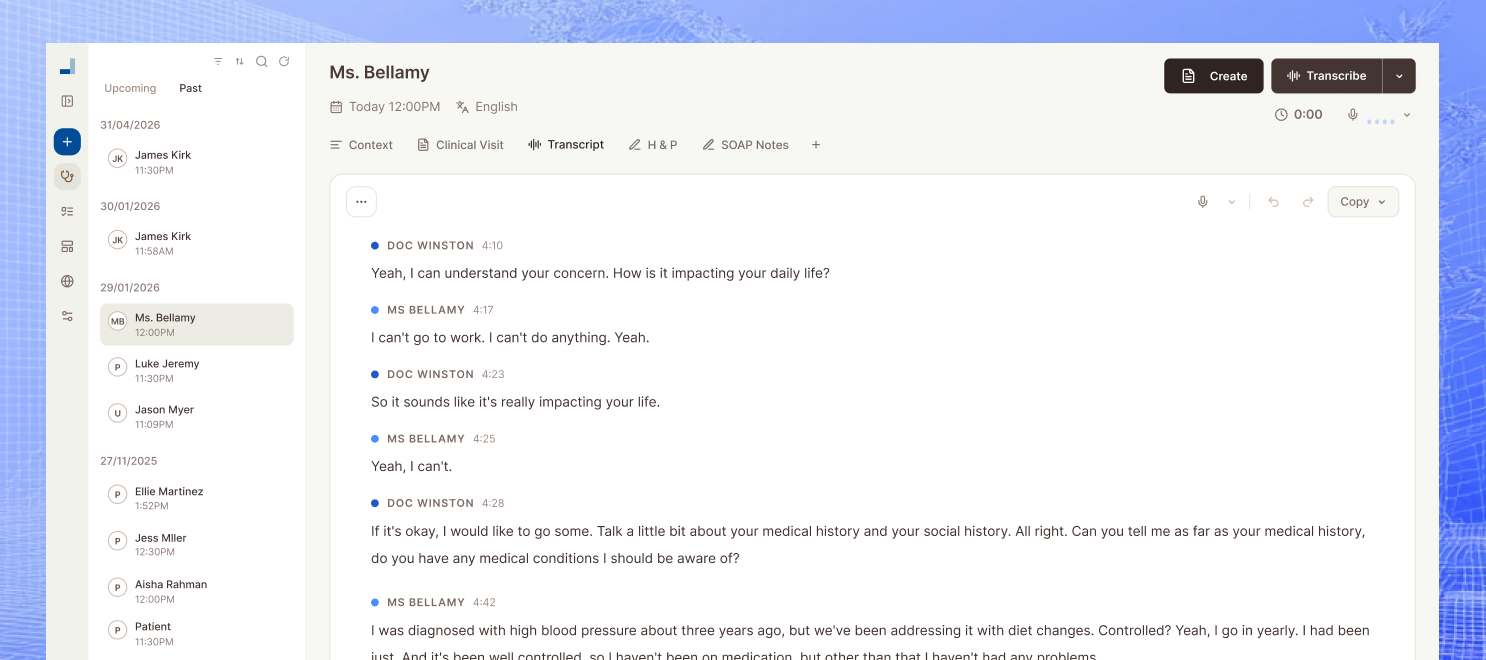
An AI medical scribe acts as a sophisticated clinical assistant that bridges the gap between the exam room and the EHR. It works by capturing the organic conversation between the provider and the patient, translating that raw dialogue into structured clinical language. It is important to remember that these tools are assistive; while they handle the heavy lifting of drafting, the clinician remains the final authority on accuracy and clinical judgement.
- Significantly reduces the ‘pajama time’ spent on after-hours charting.
- Allows for better eye contact and engagement during patient encounters.
- Standardizes note quality across different providers in a large clinic.
- Captures specific clinical details that might be forgotten by the end of the day.
Note types you can generate beyond SOAP (H&P and more)
While the SOAP note is the industry standard for daily progress, complex medical practices require far more specialized documentation. A comprehensive History and Physical (H&P) is essential for new admissions or pre-operative clearances, providing a deep dive into the patient’s system review and past medical journey. If a clinician relies solely on basic templates, these high-stakes documents often end up appearing generic or incomplete.
Specialized notes like consult reports, procedure notes, and discharge summaries serve as the primary communication channel between care teams. A well-structured referral letter, for example, ensures that the receiving specialist has immediate clarity on the clinical question being asked and the supporting evidence. This continuity of care is vital for patient safety and reduces the likelihood of redundant testing or diagnostic errors.
Beyond standard clinical encounters, documentation for follow-up visits must track progress over time, highlighting changes in symptoms or medication efficacy. Audit readiness is another critical byproduct of diverse note types; when documentation follows a logical, specialized structure, it is much easier to justify billing levels and meet regulatory requirements.
- H&P and Consult Notes provide essential foundations for complex cases.
- Procedure notes ensure technical accuracy and legal protection for interventions.
- Discharge summaries facilitate safe transitions of care between facilities.
- Referral letters streamline the specialist’s entry point into the patient’s care.
How to implement Referral Letter Template Pack step-by-step in a real clinic
Introducing a Referral Letter Template Pack into a busy clinic environment requires a methodical approach to avoid overwhelming the staff. Start by selecting one specific visit type or specialty area where referrals are most frequent—perhaps orthopedics or cardiology. By focusing on a narrow scope initially, you can refine the template language and ensure the output meets the specific needs of the receiving specialists without disrupting the entire office workflow.
Next, you should organize your documentation system to include templates specific to your specialty’s most common diagnoses. For a university clinic, this might include templates for student health clearances or chronic disease management. Once these templates are established, the clinician simply captures the encounter naturally, whether it is an in-person physical exam or a telehealth consultation, ensuring the AI is ‘listening’ to the key clinical findings.
After the encounter, the generated draft should be reviewed and edited quickly. Because the logic of the referral is already captured in the scribe’s transcript, the draft usually requires only minor adjustments for tone or specific emphasis. This speed allows for almost immediate finalization, meaning the patient can often leave the office with their referral letter already printed or transmitted to the specialist.
The final step in the narrative flow is to reuse these structured outputs for other administrative needs. Since the hard work of summarizing the clinical case is done, the data can be quickly pulled into insurance prior-authorization forms or school excuse letters. This creates a multi-purpose documentation ecosystem that saves time at every administrative touchpoint.
- Begin with a pilot for the most frequent referral type in your practice.
- Customize templates to include mandatory fields for specific specialty referrals.
- Review drafts immediately after the consult while the case is fresh in your mind.
- Leverage the note content to expedite insurance and employer-related forms.
How to keep note quality high and reduce mistakes
Even with advanced automation, clinical documentation can suffer from ‘note bloat’—the inclusion of irrelevant data that obscures the actual clinical picture. Common failure points often include the carry-over of outdated medication lists or old problem lists that no longer apply to the patient’s current status. Clinicians must stay vigilant to ensure that the AI hasn’t hallucinated specific vitals or physical exam findings that weren’t explicitly discussed.
Establishing a lightweight review habit is the most effective way to maintain high standards. Every clinician should spend 60 seconds scanning the ‘Assessment and Plan’ for logic and checking the ‘Subjective’ section for accuracy. Team standards should also be set so all providers in a clinic use similar nomenclature, which makes peer reviews and coverage for vacations much more seamless for everyone involved.
- Scan for ‘copy-paste’ errors or irrelevant historical data in every note.
- Standardize medical terminology across the practice for better consistency.
- Verify that the ‘Plan’ section clearly addresses every ‘Assessment’ point.
- Perform periodic peer reviews to ensure high-quality documentation standards.
Privacy, consent, and patient trust (plain English)
Patient privacy is the cornerstone of the therapeutic relationship, and introducing recording technology requires transparency. Consent requirements vary significantly by region and local jurisdiction; it is essential to follow your local healthcare privacy laws and facility policies strictly. Most patients are receptive to the technology when they understand it allows their doctor to focus on them rather than a keyboard.
A simple way to explain this to a patient is: ‘I’m using an AI assistant to take notes today so I can look at you and listen to your concerns instead of typing on my computer. It helps me ensure my notes are perfectly accurate. Are you okay with that?’ This brief explanation builds trust and makes the technology a shared benefit rather than a barrier.
From a technical standpoint, ensure that the data captured is encrypted and that the retention principles of your software provider align with medical-legal requirements. Transparency regarding how long data is kept and who has access to it will alleviate patient anxiety and ensure your practice remains compliant with the highest security standards.
- Always secure verbal or written consent based on local regulatory guidelines.
- Use a patient-centered script to explain the benefits of the technology.
- Ensure the software uses end-to-end encryption for all patient data.
- Establish clear policies for data storage and disposal within your clinic.
Rolling it out across a clinic without disruption
A successful rollout starts with a two-week pilot involving a single ‘champion’ provider. This allows the clinic to identify any technical hurdles, such as Wi-Fi dead zones or template adjustments, before the entire staff is onboarded. During this phase, it’s helpful to gather feedback on which templates are working best and where more customization is needed for specific workflows.
Tracking metrics is crucial to proving the value of the rollout. Monitor the time saved on documentation each day and check for a reduction in ‘after-hours’ EHR activity. Many clinics find that note completeness increases significantly, as the AI captures details that clinicians might have left out during a busy shift. Use these wins to encourage the rest of the team during the full-scale implementation.
- Start with one tech-savvy clinician to lead the pilot program.
- Create 3-5 standard templates for the most common visit types first.
- Track time saved and note quality improvements to maintain team buy-in.
- Designate a point person to handle internal questions and training updates.
Mcoy AI is an AI medical scribe that records and transcribes patient encounters, then generates multiple clinical note types (H&P, progress notes, consult notes, follow-up notes, procedure notes, discharge summaries, referral letters, and more). With over 200 customizable templates and an AI chat feature to create letters, forms, and other documents, it helps clinicians reclaim their time. This versatile tool ensures that whether you are writing a standard progress note or a complex specialist referral, the documentation is professional, accurate, and tailored to your specific clinical needs.
Conclusion
Building a robust Referral Letter Template Pack is one of the most effective ways to improve the operational efficiency of your clinic. By moving away from manual typing and toward an automated, structured workflow, you ensure that specialists receive the high-quality information they need while you save hours of administrative labor. This transition not only reduces burnout but elevates the standard of care by allowing more time for patient interaction. Implementing a Referral Letter Template Pack is the first step toward a more sustainable, high-performing practice. Start your pilot today and see how streamlined documentation can transform your workday.
What a serious review table should cover
| Decision area | Common mistake | Better clinic-ready approach | Metric to watch |
|---|---|---|---|
| Workflow design | Treat build a referral letter template pack: guide for clinics as a one-off documentation task | Build a repeatable process with clear ownership and review points | Time to complete documentation |
| Team adoption | Assume every clinician will naturally use the same process | Train for consistency and define exception handling early | Active user adoption |
| Quality review | Only check notes when a problem is reported | Audit a sample of notes weekly and review edge cases | Edit rate per note |
| Operational follow-through | Leave admin actions outside the documentation workflow | Use the same encounter data for referrals, letters, and follow-up tasks | Completion rate for next-step tasks |
Related reading
If you are working through build a referral letter template pack: guide for clinics, it helps to read this alongside Admin Management: How to Reduce Admin Errors in Clinical Notes, Admin Management: Medication List Template with Examples, and AI & Medicine: Convert Medical Transcripts to Clinical Summaries | Guide. Those guides cover adjacent workflow, implementation, and evaluation questions so the decision does not sit in isolation.
FAQ
How accurate are AI medical scribes in real clinics?
In most clinical settings, AI medical scribes are highly accurate, often capturing more detail than a clinician could manually. They excel at transcribing dialogue into medical terminology, though they may occasionally struggle with heavy accents or very fast-paced crosstalk. Generally, clinicians find the first drafts are about 90-95% accurate, requiring only minor edits. This makes them a reliable tool for reducing the daily writing load.
Do I still need to review every note?
Yes, the clinician is legally and ethically responsible for the content of every medical record. An AI scribe is an assistant, not a replacement for medical judgment. You should always review the generated note for accuracy, ensuring that the diagnosis, treatment plan, and medication dosages are correct. A quick review usually takes less than a minute but is essential for patient safety.
What note types can an AI scribe generate besides SOAP?
Modern AI scribes are incredibly versatile and can generate a wide range of documents including History and Physical (H&P) reports, consult notes, and follow-up notes. They can also produce procedure notes, discharge summaries, and professional referral letters to specialists. This flexibility ensures that regardless of the encounter type, the documentation is appropriately formatted and comprehensive.
Will this work for telehealth and in-person consults?
Yes, AI scribes are designed to work across multiple encounter platforms. For in-person visits, they typically record via a smartphone or tablet app, while for telehealth, they can integrate with the audio of your computer or video platform. The technology captures the dialogue equally well in both settings, providing a consistent documentation experience across all patient interactions.
How do I explain recording/transcription to patients?
Most clinicians find that honesty and a focus on ‘better care’ work best. You can simply explain that the device is helping you keep accurate records so you can focus 100% on the conversation instead of the screen. Most patients appreciate the extra attention and are happy to consent once they know their data is handled securely and privately. Clear communication removes any potential awkwardness.
How do clinics prevent note bloat?
To prevent note bloat, clinics should use concise templates that only include the necessary fields for a specific encounter type. Many AI tools allow you to customize the ‘brevity’ or ‘detail level’ of the output. Regularly reviewing your templates and ensuring the AI is instructed to focus on pertinent positives and negatives helps keep the notes professional and easy for other providers to scan.
How long does template setup take?
Setting up initial templates usually takes less than an hour if you are using pre-built libraries. Customizing those templates to your specific specialty or personal style might take an additional hour or two of tweaking. Once established, these templates save hours every week, making the initial time investment very profitable for the practice’s overall workflow.
What’s the safest way to start if I’m skeptical?
The safest approach is to start with a pilot program for just one or two visit types, such as routine follow-ups. Use it with a few regular patients who you have a strong rapport with to get comfortable with the workflow. Once you see the quality of the notes and the time saved on these simple cases, you can gradually expand the use of the scribe to more complex encounters.