AI & Medicine: Build a Clinic Note Template Library: The Ultimate Guide
Learn how to build a robust medical note template library to save hours on charting. Master AI workflows for H&P, progress notes, and clinical efficiency.
What a medical scribe solves in modern practice
The modern healthcare landscape is plagued by an invisible tax on every clinician’s time: administrative burden. For many practitioners, the real cost of documentation isn’t just the minutes spent typing; it is the cognitive load of remembering every detail while trying to maintain eye contact with a patient. When charting is delayed until the end of a shift, the risk of missing nuanced clinical data increases, leading to a cycle of late nights and professional burnout.
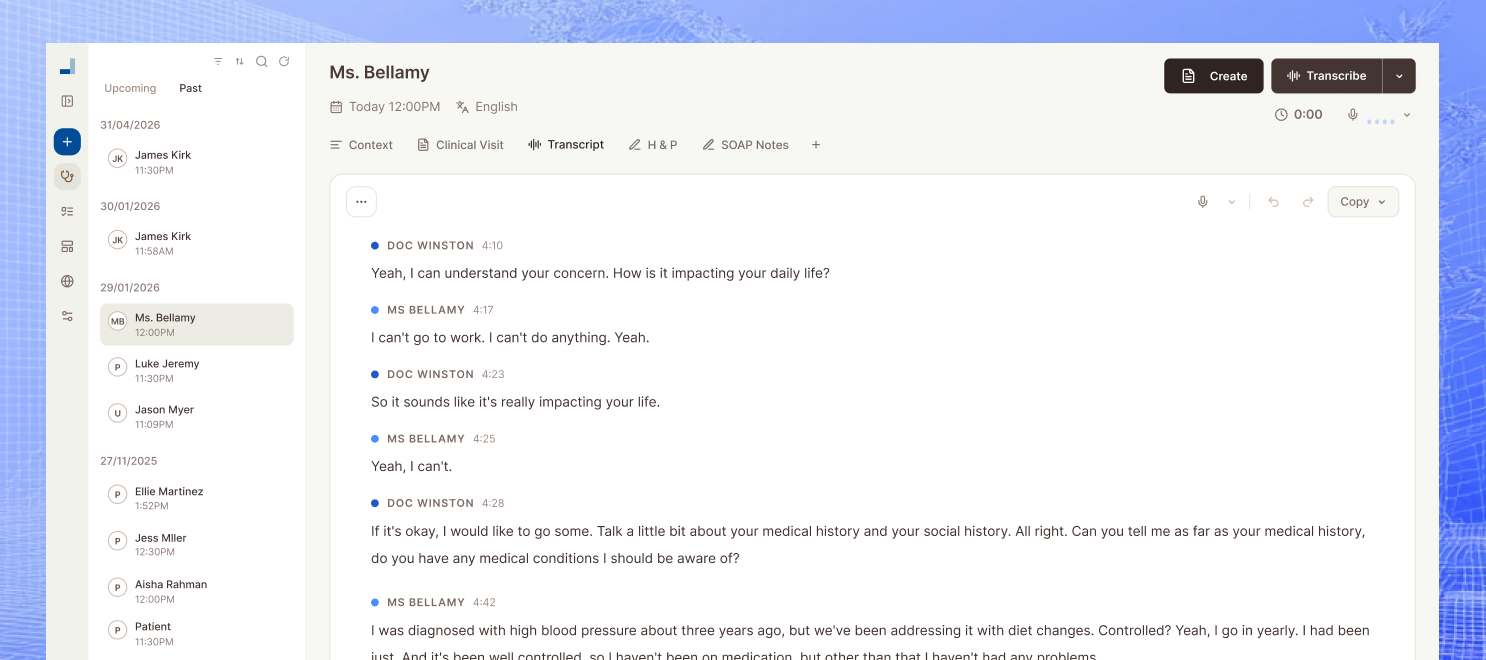
An AI medical scribe serves as a digital assistant that bridges the gap between patient care and the electronic health record. By capturing the natural dialogue of an encounter, it allows the doctor to focus entirely on the human in front of them. It is important to clarify that this technology is assistive rather than autonomous; while it captures the data, the clinician remains the final authority and must review the output for accuracy and medical necessity.
- Reduces the cognitive burden of split-attention during patient interviews.
- Eliminates after-hours charting by generating drafts in real-time.
- Improves note accuracy by capturing details often forgotten during manual entry.
- Allows clinicians to focus on patient engagement rather than a computer screen.
Note types you can generate beyond SOAP (H&P and more)
While the SOAP format is a staple in medical education, complex clinical practices require a more diverse range of documentation styles. A comprehensive note template library should include History and Physical (H&P) reports, which are essential for new admissions, as well as detailed progress notes that track patient improvement over time. For specialists, consult notes and referral letters are the primary means of communicating findings and recommendations to the broader care team.
Structuring these various note types appropriately is not just about compliance; it is about continuity of care. Procedure notes must accurately reflect the steps taken during an intervention, while discharge summaries provide the roadmap for a patient’s transition back to primary care. A well-organized library ensures that every transition of care is documented with the same level of professional rigor regardless of which clinician is writing the note.
The value of a structured library also extends to audit readiness and insurance reimbursement. By using consistent formats for follow-up notes and consults, clinics can ensure they are meeting the necessary documentation requirements for billing. This level of organization reduces the friction of administrative requests and keeps the clinical focus on improving patient outcomes through clear, concise communication.
- H&P and Consult notes provide foundational data for new or referred patients.
- Procedure and Discharge notes ensure safety during clinical transitions.
- Referral letters streamline communication between specialists and GPs.
- Standardized templates ensure audit-ready files and consistent billing levels.
How to implement a note template library step-by-step in a real clinic
Starting the journey toward a digitized note template library begins with a focused approach. Rather than attempting to overhaul every workflow at once, identify one high-volume visit type, such as routine follow-ups or standard screenings. By automating the most frequent encounter type first, the clinic sees immediate time savings and gains the momentum needed to expand the library to more complex cases.
Once the initial visit type is selected, administrators should set up specialized templates that reflect the unique needs of different departments. A pediatric clinic’s templates will look vastly different from an orthopedic surgeon’s. During the encounter, whether it is an in-person visit or a telehealth session, the clinician uses a recording tool to capture the dialogue. This ensures that the nuance of the patient’s narrative is preserved without the doctor needing to take exhaustive manual notes.
Following the encounter, the generated draft must be reviewed and edited. This step is remarkably fast when the structure is already correct. The clinician simply verifies clinical facts and adds specific observations. The final step is the strategic reuse of this data; once a progress note is finalized, the key points can be instantly pulled into a referral letter or a patient summary form, effectively doing the work once and using it multiple times.
- Begin with your most frequent encounter type to see instant time-saving results.
- Customize templates by specialty to ensure all relevant clinical metrics are captured.
- Review and edit drafts immediately to maintain high accuracy and speed.
- Repurpose finalized note content for downstream letters, forms, and summaries.
How to keep note quality high and reduce mistakes
The primary risk with any automated or template-driven documentation is the potential for ‘note bloat’—the inclusion of unnecessary information that obscures the actual clinical picture. To maintain high quality, clinics must establish a standard for what a ‘good’ note looks like. This involves ensuring that vital values, medication dosages, and the problem list are verified specifically rather than just blindly accepted from a generated draft.
Implementing a lightweight review habit is the most effective safeguard against errors. Clinicians should spend sixty seconds scanning the output for any hallucinations or missing symptoms. Setting a team-wide standard—such as verifying the ‘Assessment and Plan’ section before signing—ensures that the most critical part of the record is always accurate. Consistency across the clinic helps prevents errors that occur when different doctors use wildly different styles.
- Prevent note bloat by keeping templates focused on relevant clinical data.
- Verify medications and dosages against the actual patient record at every step.
- Adopt a ‘one-minute review’ habit before finalizing and signing any document.
- Standardize the ‘Assessment and Plan’ structure across the entire practice.
Privacy, consent, and patient trust (plain English)
Patient privacy is the cornerstone of the clinician-patient relationship. While technology can streamline documentation, it must never compromise trust. Consent requirements for recording sessions vary significantly by region and local policy, so it is essential to follow your specific jurisdictional rules. Generally, patients are receptive to technology when they understand that it allows their doctor to listen to them more closely rather than staring at a screen.
A simple, patient-friendly explanation goes a long way. You might say: ‘I’m using a secure digital assistant to help me capture our conversation so I can stay focused on you instead of typing on my computer. It transcribes our talk into a medical note, and everything remains confidential.’ This transparency demystifies the process and often makes the patient feel that they are receiving more personalized attention.
- Always align your recording and transcription protocols with local privacy laws.
- Explain the technology to patients as a tool for better eye contact and listening.
- Ensure that any third-party tools used comply with healthcare security standards.
- Maintain a clear policy on data retention and how patient transcripts are handled.
Rolling it out across a clinic without disruption
The rollout of a note template library should be treated as a two-week pilot rather than a sudden permanent change. Start with a small group of ‘super-users’ who are comfortable with technology. This group can test the templates and identify any friction points before the system is introduced to the entire staff. This phased approach allows for troubleshooting without the pressure of a clinic-wide shutdown.
During the pilot, track specific metrics such as the time spent charting after hours and the time taken from the end of a visit to the completion of the note. Seeing a tangible reduction in administrative time is the strongest motivator for resistant staff members. Finally, provide shared training sessions where clinicians can align on template usage, ensuring that everyone is utilizing the high-efficiency library in the same manner.
- Pilot the new system with tech-savvy staff for two weeks before a full rollout.
- Measure ‘time-to-completion’ for clinical notes to prove the value of the system.
- Hold template alignment meetings to ensure documentation remains consistent.
- Continuously refine templates based on staff feedback and evolving clinical needs.
Mcoy AI is an AI medical scribe that records and transcribes patient encounters, then generates multiple clinical note types (H&P, progress notes, consult notes, follow-up notes, procedure notes, discharge summaries, referral letters, and more). It features 200+ customizable templates and an AI chat to create letters, forms, and documents, allowing clinicians to build a robust note template library that meets the specific needs of their practice while drastically reducing administrative time.
Conclusion: Building a note template library is the most effective way to reclaim your time and improve clinical communication. By moving beyond simple SOAP notes and embracing a structured, automated workflow for H&P and specialty documentation, your clinic can operate with unprecedented efficiency. Start your pilot today and see how a well-organized note template library can transform your daily practice. Spending less time on the screen means more time for the patients who need you most.
What a serious review table should cover
| Decision area | Common mistake | Better clinic-ready approach | Metric to watch |
|---|---|---|---|
| Workflow design | Treat build a clinic note template library: the ultimate guide as a one-off documentation task | Build a repeatable process with clear ownership and review points | Time to complete documentation |
| Team adoption | Assume every clinician will naturally use the same process | Train for consistency and define exception handling early | Active user adoption |
| Quality review | Only check notes when a problem is reported | Audit a sample of notes weekly and review edge cases | Edit rate per note |
| Operational follow-through | Leave admin actions outside the documentation workflow | Use the same encounter data for referrals, letters, and follow-up tasks | Completion rate for next-step tasks |
Related reading
If you are working through build a clinic note template library: the ultimate guide, it helps to read this alongside AI & Medicine: How to Simplify Clinical Notes for Busy Doctors, AI & Medicine: How Doctors Can Improve SOAP Notes, and AI & Medicine: Safe Transcription of Sensitive Topics: A Clinician Guide. Those guides cover adjacent workflow, implementation, and evaluation questions so the decision does not sit in isolation.
FAQ
How accurate are AI medical scribes in real clinics?
In most clinical settings, AI scribes are remarkably accurate, often capturing nuances that clinicians might forget. However, they are designed to be assistive tools rather than autonomous replacements. The accuracy depends on the quality of the audio and the clarity of the dialogue, which is why a brief professional review is always required before signing off on a note.
Do I still need to review every note?
Yes, a clinician review is essential for every generated note. While the AI handles the heavy lifting of structure and transcription, the doctor is legally and ethically responsible for the medical record. Most users find that reviewing and editing a generated note takes less than 60 seconds, which is a fraction of the time spent typing from scratch.
What note types can an AI scribe generate besides SOAP?
Modern AI tools can generate a vast array of documents including History and Physical (H&P) reports, consult notes, discharge summaries, and procedure notes. They can also create referral letters and follow-up summaries. This flexibility allows a clinic to maintain a comprehensive documentation library for diverse medical scenarios beyond routine visits.
Will this work for telehealth and in-person consults?
Yes, most AI documentation systems are designed to function seamlessly for both in-person and telehealth consultations. For telehealth, the system typically captures audio directly from the computer, while in-person visits use a mobile device or a computer microphone. The resulting note quality remains high across both modalities.
How do I explain recording/transcription to patients?
The best approach is to be transparent and focus on the benefits to the patient. You can explain that the tool allows you to focus 100% of your attention on them rather than a screen. Most patients appreciate the increased level of engagement and are happy to consent when they know their data is handled securely.
How do clinics prevent note bloat?
Clinics prevent note bloat by using concise, specialized templates that only solicit necessary clinical data. By setting clear boundaries on what information the AI should include—and training staff to trim unnecessary fluff during the review phase—notes remain clean, relevant, and useful for other providers.
How long does template setup take?
Setting up a basic library of 10–15 core templates usually takes a few hours. Many systems come with pre-built specialty templates that can be used immediately, with minor customizations added over time. The goal is to start with a few and build the library organically as needed.
What’s the safest way to start if I’m skeptical?
The safest way to start is with a ‘shadow’ trial. Record a few encounters but still write your notes the old-fashioned way. Compare your manual note to the AI-generated one. Most skeptics are won over once they see that the AI captured exactly what was said and organized it faster than they could have typed it.