AI & Medicine: Build a Chronic Care Template Pack: Tips & Free Resources
Learn how to build a chronic care template pack for your clinic. Improve efficiency, documentation quality, and reduce burnout with this step-by-step guide.
What a medical scribe solves in modern practice
Administrative burden is the leading cause of physician burnout today. Between managing complex chronic conditions and meeting rigorous documentation standards, many clinicians find themselves spending more time behind a screen than with their patients. The real cost of documentation isn’t just time; it is the cognitive load that comes with trying to remember specific patient details while navigating clunky EHR interfaces after hours.
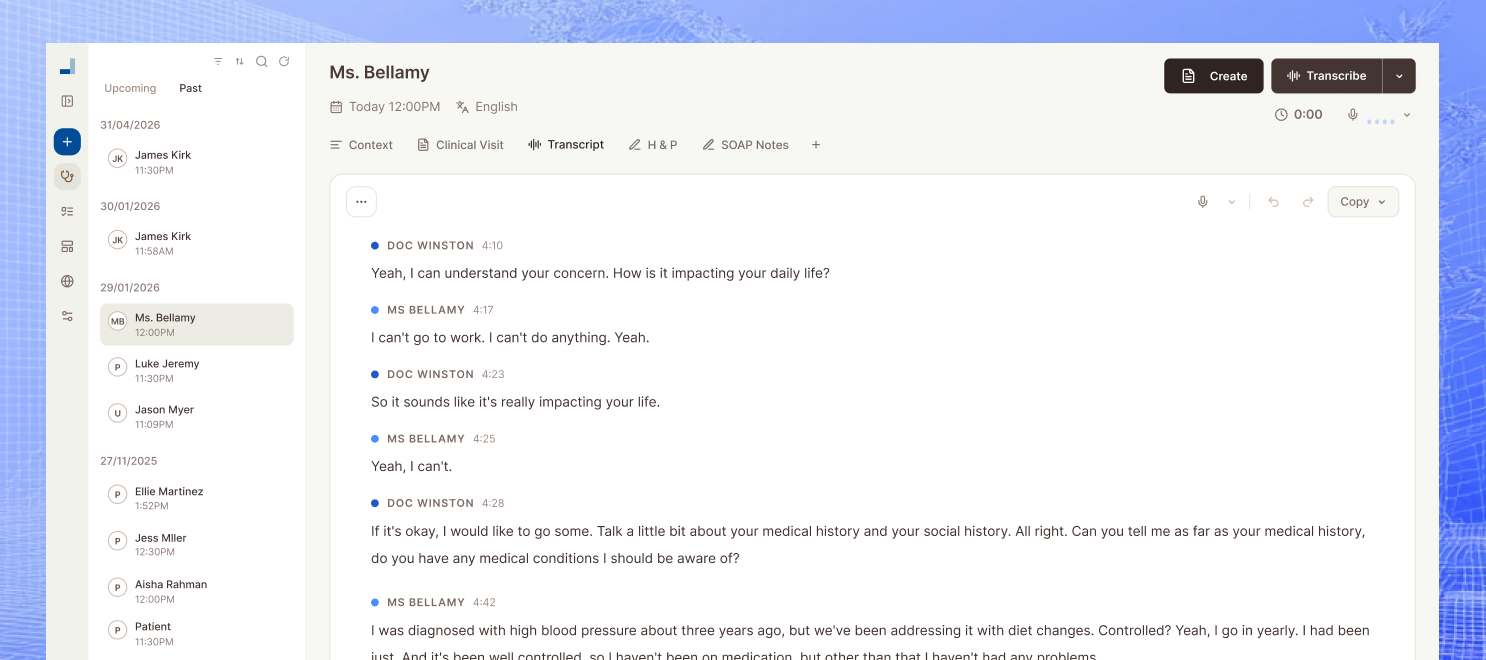
An AI medical scribe acts as an assistive partner in this process. By capturing the conversation in real-time, it allows the clinician to remain present and focused on the patient. It is important to remember that these tools are assistive; while they handle the heavy lifting of transcription and formatting, the clinician remains the final authority and must review all notes for accuracy before signing off.
- Reduces the ‘pajama time’ spent on charting after clinical hours.
- Enhances the quality of patient-provider interactions by removing the screen barrier.
- Ensures more granular detail is captured compared to manual typing.
- Streamlines the workflow for university clinics and busy private practices.
Note types you can generate beyond SOAP (H&P and more)
While the SOAP format is a staple in medicine, chronic care management often requires more specialized documentation. Managing a patient with multiple comorbidities necessitates comprehensive History and Physical (H&P) notes, detailed progress notes, and clear consult summaries. Each note type serves a specific purpose in ensuring continuity of care and maintaining an audit-ready record.
For example, a procedure note for an in-office intervention or a detailed discharge summary for post-hospitalization follow-up provides a level of detail that a standard SOAP note might miss. Referral letters are equally critical, as they summarize years of chronic management for a specialist in a way that is concise yet comprehensive. Using a variety of note types ensures that any provider reading the chart can quickly grasp the patient’s status and the rationale behind the treatment plan.
- H&P and progress notes provide a longitudinal view of chronic disease progression.
- Consultation and referral letters bridge the gap between primary care and specialists.
- Procedure notes and discharge summaries ensure billing compliance and safety.
- Specialized templates allow for better tracking of key metrics like HbA1c or BP over time.
How to implement a Template Pack for Chronic Care Notes step-by-step in a real clinic
Starting with a Template Pack for Chronic Care Notes doesn’t have to be an overnight overhaul. The best approach is to start with one specific visit type—such as a diabetic follow-up or hypertension check—and build your first template around those specific data points. This allows you to test the workflow without overwhelming your staff.
Next, you should organize your templates by specialty or condition within your digital workspace. When you enter an encounter, whether in-person or via telehealth, you simply activate the relevant template. As the conversation progresses, the system fills in the data, which you then review and edit. This refined output can then be instantly repurposed into referral letters or patient instruction forms, maximizing the utility of a single recording session.
- Pilot the system with one high-frequency chronic condition first.
- Standardize specialty-specific headers to ensure consistent data capture.
- Integrate the review process directly into your end-of-visit routine.
- Leverage the AI output to generate patient-facing summaries and letters.
How to keep note quality high and reduce mistakes
High-quality documentation in chronic care requires more than just a transcript; it requires clinical accuracy. Common failure points in automated notes often include missing medication dosages, incorrect laboratory values, or the inclusion of irrelevant ‘note bloat.’ To combat this, clinicians should adopt a lightweight review habit, checking high-stake sections like the Plan and Assessment immediately after the encounter.
Establishing team-wide standards for what constitutes a ‘good note’ helps maintain consistency across the clinic. This is especially vital in university settings where multiple residents or students may be contributing to the same patient file. By setting clear expectations for how data should be presented, you ensure that the documentation remains a valuable tool for care rather than a cluttered digital storage space.
- Focus review efforts on the Assessment and Plan (A&P) sections.
- Standardize the way medications and dosages are listed across all notes.
- Audit a small sample of notes weekly to maintain documentation standards.
- Avoid note bloat by excluding redundant social history in routine follow-ups.
Privacy, consent, and patient trust (plain English)
Patient trust is the foundation of any successful clinical relationship. When introducing new technology, transparency is key. While consent requirements vary by region and local policy, it is generally best practice to inform the patient that you are using an AI assistant to ensure their record is as accurate as possible. Most patients appreciate the extra attention they receive when the doctor isn’t staring at a keyboard.
A simple way to explain this to a patient is: ‘I’m using a secure digital scribe today so I can focus entirely on you instead of my computer. It helps me make sure I don’t miss any part of our plan.’ This frames the technology as a benefit to the patient. From a security standpoint, ensure your tools follow industry-standard encryption and data retention principles to protect sensitive health information.
- Obtain verbal or written consent based on your local regulatory requirements.
- Explain the technology as a tool for improving the doctor-patient connection.
- Use only HIPAA-compliant or locally regulated secure platforms.
- Define clear data retention and deletion policies for your clinic.
Rolling it out across a clinic without disruption
A successful rollout starts with a two-week pilot involving a small group of ‘super-users’ within the clinic. This group can identify any friction points in the workflow and suggest adjustments to the templates before a full-scale launch. During this phase, it is helpful to track metrics such as time saved per note and the reduction in after-hours documentation time.
Training should focus on template alignment—ensuring everyone knows which note type to use for different clinical scenarios. By aligning everyone’s workflow, the clinic can ensure that the transition is seamless. Regular check-ins during the first month allow staff to share tips and troubleshoot common issues, fostering a collaborative environment for technological adoption.
- Phase the rollout starting with a small group of tech-forward clinicians.
- Measure success using quantitative metrics like ‘minutes per chart.’
- Hold brief weekly huddles to refine template settings and address questions.
- Ensure all staff understand the privacy and consent protocols.
Mcoy AI is an AI medical scribe that records and transcribes patient encounters, then generates multiple clinical note types (H&P, progress notes, consult notes, follow-up notes, procedure notes, discharge summaries, referral letters, and more). With over 200+ customizable templates and an interactive AI chat, clinicians can easily create letters, forms, and complex documents tailored to their specific needs. It is designed to fit naturally into the workflow of private practitioners and university clinics alike, helping providers reclaim their time.
Conclusion
In conclusion, mastering the use of a Template Pack for Chronic Care Notes is one of the most effective ways to combat burnout and improve the quality of patient care. By transitioning from manual entry to a structured, AI-assisted workflow, you ensure that your documentation is both comprehensive and compliant. Start slow, pilot your templates, and focus on the benefits of being fully present with your patients. Implementing these tools today will provide a more sustainable practice for years to come.
What a serious review table should cover
| Decision area | Common mistake | Better clinic-ready approach | Metric to watch |
|---|---|---|---|
| Workflow design | Treat build a chronic care template pack: tips & free resources as a one-off documentation task | Build a repeatable process with clear ownership and review points | Time to complete documentation |
| Team adoption | Assume every clinician will naturally use the same process | Train for consistency and define exception handling early | Active user adoption |
| Quality review | Only check notes when a problem is reported | Audit a sample of notes weekly and review edge cases | Edit rate per note |
| Operational follow-through | Leave admin actions outside the documentation workflow | Use the same encounter data for referrals, letters, and follow-up tasks | Completion rate for next-step tasks |
Related reading
If you are working through build a chronic care template pack: tips & free resources, it helps to read this alongside AI & Medicine: How to Simplify Clinical Notes for Busy Doctors, AI & Medicine: How Doctors Can Improve SOAP Notes, and AI & Medicine: Reduce Missing Details in Clinical Notes With AI | Full Guide. Those guides cover adjacent workflow, implementation, and evaluation questions so the decision does not sit in isolation.
FAQ
How accurate are AI medical scribes in real clinics?
AI medical scribes are remarkably accurate at capturing the dialogue of a clinical encounter, often picking up nuances that a tired clinician might miss. However, they are not infallible and can occasionally misinterpret medical jargon or specific dosages if the audio quality is poor. Because of this, they are designed as assistive tools that require a final review by a licensed professional. Most clinicians find that they only need to make minor edits to the generated text to reach 100% accuracy.
Do I still need to review every note?
Yes, reviewing every note is a mandatory part of the clinical workflow for both medico-legal and safety reasons. While the AI does the heavy lifting of drafting the note, the clinician is the person responsible for the medical decisions documented within it. A quick review ensures that the assessment and plan accurately reflect the intended care path. Most users find this review takes significantly less time than writing a note from scratch.
What note types can an AI scribe generate besides SOAP?
Modern AI scribes are capable of generating a vast array of documentation beyond the standard SOAP format. This includes comprehensive H&P (History and Physical) notes, detailed consult letters for specialists, and specific procedure notes. They can also generate discharge summaries, referral letters, and routine progress notes. This variety allows clinics to maintain high-quality records across different departments and specialties.
Will this work for telehealth and in-person consults?
Yes, AI medical scribes are designed to be versatile and function well in both in-person and telehealth environments. For in-person visits, the device usually records the conversation via a mobile app or computer microphone. For telehealth, the audio is captured directly from the virtual session. The AI processes the audio similarly in both cases, ensuring consistent documentation quality regardless of how the patient is seen.
How do I explain recording/transcription to patients?
The best way to explain the use of a scribe is to focus on the benefit to the patient. You might say, ‘To help me focus on you and not my computer screen, I’m using an AI assistant to help me take notes today.’ Most patients are receptive when they realize the technology allows for better eye contact and a more engaged doctor. Always ensure you follow your local regulations regarding patient notification and consent.
How do clinics prevent note bloat?
Note bloat is prevented by using concise templates and setting the AI to focus only on clinically relevant information. Rather than transcribing every single word spoken, a good AI scribe summarizes the dialogue into structured headings. Clinicians can further reduce bloat by choosing templates that only include necessary sections for that specific visit type. Periodically reviewing and refining your templates also helps keep notes lean and useful.
How long does template setup take?
Initial template setup is usually very fast, often taking only a few minutes if you are using pre-built library templates. Customizing these to fit your specific clinic’s brand or preferences might take an hour or two of focused work. Once the templates are set up, they can be used indefinitely across the entire practice. Modern systems are designed to be ‘plug-and-play’ so that clinicians can start seeing the benefits on day one.
What’s the safest way to start if I’m skeptical?
The safest approach is to start with a ‘shadow’ pilot—use the AI scribe during a few non-complex visits while continuing your traditional note-taking method. This allows you to compare the AI-generated note against your own and build confidence in the system’s accuracy. Once you see the time saved and the quality of the output, you can gradually transition more of your workload to the AI. Starting with just one or two patients per day is a low-pressure way to test the waters.