Specialty Guides: Build a Template Pack for Patient Letters | Free Tips
Learn how to build a template pack for patient letters to save time and reduce burnout. Master clinical documentation workflows for your private practice.
Introduction
Clinicians today are facing an unprecedented administrative burden. Between back-to-back consultations, the pressure to maintain accurate records, and the late-night sessions spent catching up on correspondence, the risk of burnout is at an all-time high. Many practitioners find themselves rushing through notes or feeling a constant sense of medico-legal anxiety because their documentation doesn’t reflect the high quality of care they provide.
This guide is designed to help you regain control. We will explore how to build a template pack for patient letters that streamlines your workflow, ensures consistency across various note formats, and maintains the highest standards of privacy and quality control. Whether you are a general practitioner, a specialist in a private clinic, or a provider in a high-volume university health center, these strategies will help you transition from manual drudgery to automated efficiency.
What a medical scribe solves in modern practice
The real cost of medical documentation isn’t just the minutes spent typing; it is the cognitive load that follows a clinician home. When you are forced to recall specific details hours after a patient has left, the risk of omission increases. Delayed notes lead to fragmented care and can even impact the billing cycle of a private practice. An AI-driven approach to documentation allows clinicians to focus entirely on the person sitting across from them rather than a computer screen.
It is important to understand that an AI medical scribe is a highly sophisticated assistive tool, not a replacement for clinical judgment. While it handles the heavy lifting of transcription and formatting, the clinician remains the final authority. By capturing the nuances of the conversation in real-time, these tools ensure that the final output is a true reflection of the encounter, reducing the ‘pajama time’ traditionally spent on administrative tasks.
- Reduces the cognitive burden of remembering patient details hours later.
- Eliminates late-night charting, directly addressing a primary cause of burnout.
- Improves the accuracy of the narrative by capturing the encounter in real-time.
- Ensures clinicians remain in control through a final review and sign-off process.
Note types you can generate beyond SOAP (H&P and more)
While the SOAP note is a staple of clinical practice, modern medicine requires a much broader range of documentation. A comprehensive template pack for patient letters should include History and Physical (H&P) reports, consult notes for specialists, and detailed procedure notes. Each of these serves a specific purpose in the continuity of care, ensuring that other members of the care team have the context they need to make informed decisions.
Structure matters because it impacts audit readiness and handover quality. For example, a discharge summary needs to be concise yet inclusive of all follow-up requirements, while a referral letter must highlight the specific clinical question being asked. Having a centralized library of these formats allows a clinic to maintain a professional standard that is recognizable to both patients and peer providers. Using a diverse range of templates ensures that no matter the visit type, the documentation is fit for purpose.
- H&P and Progress Notes for routine and comprehensive clinical tracking.
- Consult and Referral Letters to improve communication between specialists.
- Procedure Notes and Discharge Summaries for surgical or acute care settings.
- Customized follow-up letters to enhance patient engagement and adherence.
How to implement build a template pack for patient letters step-by-step in a real clinic
Starting the journey to build a template pack for patient letters begins with identifying your most frequent visit types. Rather than trying to overhaul your entire system overnight, select one or two common scenarios—such as initial consultations or routine follow-ups—and create optimized templates for these first. This narrow focus allows you to refine the structure without feeling overwhelmed by the transition.
Once your primary templates are established, you should organize them by specialty or clinician role. In a university clinic, for example, the needs of a sports medicine physician differ greatly from those of a mental health counselor. By categorizing your templates, you make it easier for staff to select the right format the moment the encounter begins. When the patient arrives, the professional captures the encounter naturally, knowing the system is mapped to their specific workflow.
After the session, the software generates the draft based on the selected template. The clinician then performs a rapid review and edit. This step is crucial for maintaining clinical accuracy. Because the draft is generated almost instantly, the details are still fresh in the clinician’s mind, making the review process significantly faster than traditional dictation or manual typing.
Finally, the outputs should be reused across multiple documents. A single well-captured encounter can populate a clinical note, a patient summary, and a referral letter simultaneously. This ‘write once, use many’ approach is the secret to reclaiming hours of administrative time every week. Over time, your library of templates becomes a valuable asset that ensures every patient interaction is documented with precision and ease.
- Start with your top three most common visit types to avoid initial overwhelm.
- Organize templates by specialty to ensure high relevance for every clinician.
- Review drafts immediately after the encounter while the details are fresh.
- Leverage one-click conversions to turn clinical notes into referral letters or forms.
How to keep note quality high and reduce mistakes
Quality control is the cornerstone of any medical documentation system. Common failure points often include missing current medications, incorrect numerical values, or ‘note bloat’ where irrelevant information masks critical data. To counter this, clinicians should adopt a lightweight review habit. Spending sixty seconds checking the AI-generated output against the actual encounter ensures that the problem list and plan are perfectly aligned with the clinical intent.
Establishing team standards also helps maintain high quality. If everyone in the clinic agrees on how specific data points should be recorded, the resulting notes become much more useful for long-term care. Regular peer reviews of a small sample of notes can also identify areas where templates might need adjustment to better capture the specific nuances of your patient population.
- Implement a ‘60-second check’ for every note to verify meds and plan details.
- Standardize the ‘Problem List’ format across the entire clinical team.
- Periodically audit a small sample of notes to ensure they remain concise.
- Update templates quarterly to reflect changes in clinical guidelines or billing codes.
Privacy, consent, and patient trust (plain English)
Maintaining patient trust is paramount when introducing any technological tool into the exam room. While consent requirements vary by region, the best practice is always transparency. Most patients are supportive of tools that allow their doctor to look at them instead of a keyboard, provided they understand that the data is handled securely and according to local healthcare regulations.
You can explain the process to a patient simply: ‘To make sure I’m fully present with you today, I use an assistant that helps me document our conversation so I don’t have to type while we talk. It’s secure and helps me provide better care. Are you comfortable with that?’ This approach frames the technology as a benefit to the patient experience rather than an administrative hurdle.
- Always follow local jurisdictional laws regarding recording and data storage.
- Use a simple, benefit-focused script to gain verbal consent from patients.
- Ensure data retention policies align with professional medical board standards.
- Highlight that the tool allows for better eye contact and more focused care.
Rolling it out across a clinic without disruption
A successful rollout starts with a short pilot phase. Select a small group of ‘early adopters’ within the clinic to test the template pack for two weeks. During this time, focus on gathering feedback regarding the ease of use and the accuracy of the outputs. This allows you to iron out any procedural kinks before a full-scale deployment across the entire organization.
Monitor specific metrics to judge success, such as the reduction in ‘after-hours’ charting and the time taken from the end of a visit to the completion of the note. When other staff members see their colleagues leaving the clinic on time with their notes finished, the internal buy-in for the new system happens naturally. Training should be brief and focused on the practicalities of choosing templates and reviewing drafts.
- Run a 14-day pilot with two clinicians to gather real-world feedback.
- Track ‘Time to Completion’ for notes as a key performance indicator.
- Align templates across the team to ensure consistent professional branding.
- Shift focus from ‘learning a tool’ to ‘reclaiming personal time’ during training.
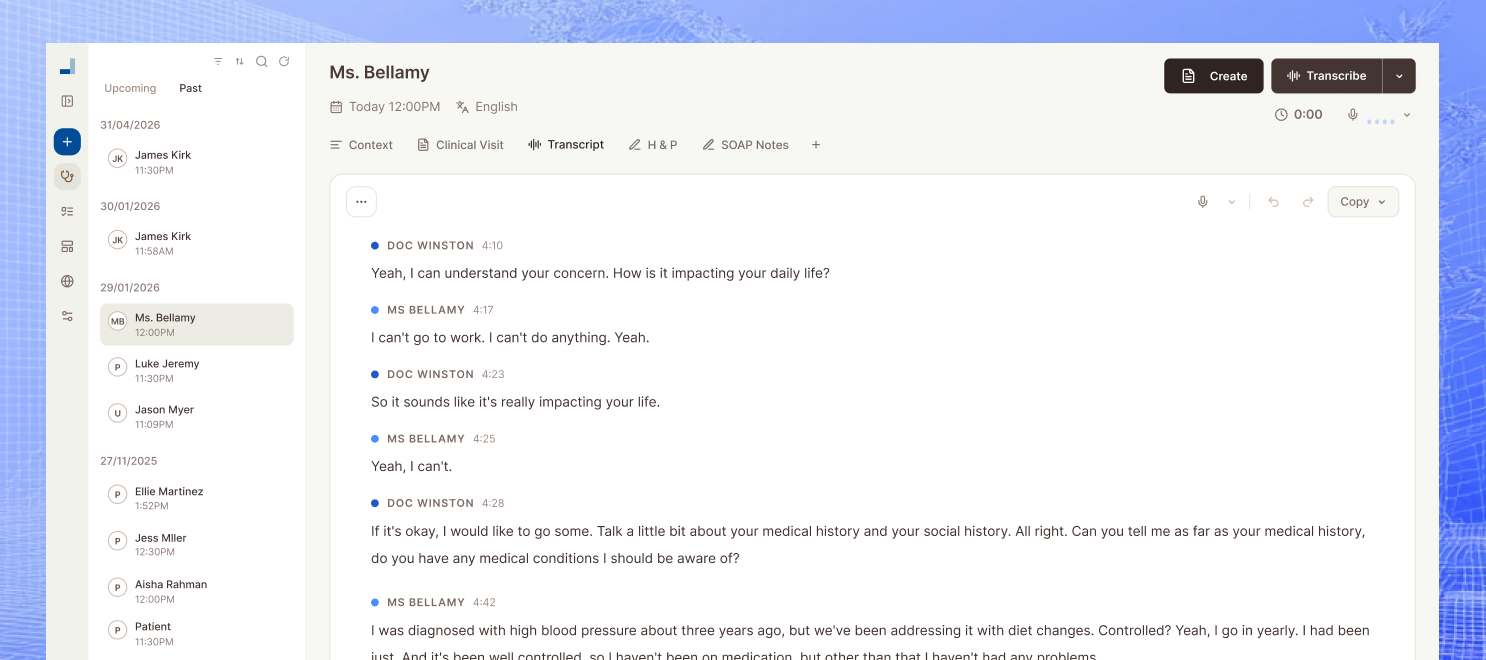
Mcoy AI is an AI medical scribe that records and transcribes patient encounters, then generates multiple clinical note types (H&P, progress notes, consult notes, follow-up notes, procedure notes, discharge summaries, referral letters, and more). With over 200+ customizable templates and an interactive AI chat, clinicians can effortlessly create letters, forms, and complex documents based on the conversation. It is designed to fit naturally into the workflow, allowing healthcare providers to focus on the patient while the AI handles the administrative heavy lifting.
Conclusion
Building a robust documentation workflow doesn’t have to be an overnight revolution. By starting small and focusing on the most common clinical needs, you can build a template pack for patient letters that transforms how your practice operates. The goal is simple: reduce the time spent on administrative tasks so you can get back to what matters most—caring for your patients. If you are ready to eliminate the burden of late-night charting, starting a pilot with organized templates is the most effective next step toward a sustainable medical career.
What a serious review table should cover
| Decision area | Common mistake | Better clinic-ready approach | Metric to watch |
|---|---|---|---|
| Workflow design | Treat build a template pack for patient letters | free tips as a one-off documentation task | Build a repeatable process with clear ownership and review points |
| Team adoption | Assume every clinician will naturally use the same process | Train for consistency and define exception handling early | Active user adoption |
| Quality review | Only check notes when a problem is reported | Audit a sample of notes weekly and review edge cases | Edit rate per note |
| Operational follow-through | Leave admin actions outside the documentation workflow | Use the same encounter data for referrals, letters, and follow-up tasks | Completion rate for next-step tasks |
Related reading
If you are working through build a template pack for patient letters | free tips, it helps to read this alongside Specialty Guides: How to Run a More Efficient Medical Practice in 2026, Specialty Guides: How to Improve Patient Encounters, and Specialty Guides: Problem-Oriented Notes With AI Scribe: Complete Guide. Those guides cover adjacent workflow, implementation, and evaluation questions so the decision does not sit in isolation.
FAQ
How accurate are AI medical scribes in real clinics?
AI medical scribes are remarkably accurate at capturing the narrative flow and clinical facts of an encounter. Most modern systems can distinguish between different speakers and accurately transcribe complex medical terminology. However, they are designed to be assistive, meaning the clinician should always perform a quick review to ensure specific details like dosages or dates are exactly as intended before finalizing the note.
Do I still need to review every note?
Yes, reviewing every note is a fundamental part of the clinical workflow and a legal requirement for practitioners. While the AI does the majority of the writing, the clinician is the only one who can verify that the documented plan accurately reflects their clinical judgment. Fortunately, because the AI provides a high-quality draft, the review process usually takes only a minute or two compared to the ten or fifteen minutes required for manual typing.
What note types can an AI scribe generate besides SOAP?
Beyond the standard SOAP note, an advanced AI scribe can generate History and Physical (H&P) reports, consultation letters, procedure notes, and even discharge summaries. It can also produce referral letters and patient-friendly summaries that translate complex medical jargon into plain English. This versatility allows the tool to support virtually every administrative aspect of a busy clinical practice.
Will this work for telehealth and in-person consults?
Most AI medical scribes are designed to be platform-agnostic, meaning they work equally well for in-person visits using a mobile device or for telehealth consultations via a computer. The AI processes the audio from the encounter regardless of whether the patient is in the room or on a screen. This makes it a perfect solution for modern hybrid practices that offer a mix of visit types.
How do I explain recording/transcription to patients?
The best way to explain the technology is to focus on the benefits for the patient. You might say that it allows you to listen more closely and avoid staring at a computer screen during the visit. Most patients appreciate the extra attention and are happy to consent when they realize it leads to better, more accurate documentation of their health journey.
How do clinics prevent note bloat?
Note bloat is prevented by using templates that are specifically designed for brevity and clinical relevance. Instead of transcribing every single word spoken, a good AI system summarizes the key clinical points into the relevant sections of the note. Clinicians can also customize their templates to exclude certain types of small talk or administrative chatter, ensuring the final output is concise and useful.
How long does template setup take?
Setting up your initial template pack can take as little as 30 to 60 minutes if you use pre-built clinical standards. Most providers start with a few foundational templates and then refine them over their first week of use. Because the system is flexible, you can constantly tweak and add to your library as your practice evolves without needing deep technical knowledge.
What’s the safest way to start if I’m skeptical?
The safest way to start is with a ‘shadow’ trial. Use the technology during a few non-complex visits while still keeping your traditional notes as a backup. Once you see the consistency and accuracy of the AI-generated drafts, you can gradually transition your main workflow and start applying it to more complex patient encounters.