Specialty Guides: How to Use an AI Scribe for Sports Medicine Notes Guide
Master sports medicine documentation with an AI scribe. Learn to generate H&Ps, procedure notes, and referral letters while saving hours on charting.
What a medical scribe solves in modern practice
For sports medicine clinicians, the documentation burden is unique. You aren’t just recording a cough; you are documenting complex biomechanical assessments, range-of-motion degrees, and specific orthopedic tests while often moving quickly between exam rooms or training facilities. After-hours charting is a common pain point, leading to burnout and a feeling that you are never truly ‘off the clock.’ This guide will teach you how to master a digital workflow, utilizing note formats far beyond basic SOAP notes to ensure quality control and patient privacy.
Implementing an AI scribe for sports medicine notes helps bridge the gap between high-volume patient lists and the legal necessity of detailed documentation. Whether you are a general practitioner specializing in sports, an orthopedic surgeon, or a clinician in a university athletic clinic, the goal is to reduce cognitive load. By delegating the heavy lifting of transcription and formatting to an AI assistant, you can focus on the physical exam and the patient’s recovery trajectory rather than a computer screen.
It is important to understand that an AI medical scribe is an assistive tool, not a replacement for clinical judgment. While the technology excels at capturing the dialogue and synthesizing it into structured data, the clinician remains the final authority on the note’s accuracy. The real-world cost of traditional documentation isn’t just time; it is the risk of missed details and the erosion of the patient-provider relationship when a doctor is distracted by a keyboard.
- Eliminates hours of manual typing and after-hours charting sessions.
- Captures specific orthopedic tests and patient-reported symptoms in real-time.
- Reduces cognitive fatigue by handling the structural organization of clinical data.
- Allows for more eye contact and engagement during physical assessments.
Note types you can generate beyond SOAP (H&P and more)
In the world of sports medicine, the standard SOAP note often feels restrictive. While useful for quick follow-ups, complex cases require comprehensive History and Physical (H&P) reports, detailed procedure notes for injections or minor surgeries, and robust consultation notes for multidisciplinary teams. Structure matters deeply for continuity of care, especially when handing over an athlete’s case to a physical therapist or a surgical team.
AI scribes allow you to move seamlessly between these formats. For instance, a new patient presenting with a suspected ACL tear requires a formal H&P that includes mechanism of injury, prior surgical history, and a detailed musculoskeletal exam. Conversely, a follow-up for a stable stress fracture might only require a progress note focusing on weight-bearing status and imaging results. An AI can differentiate these needs based on the context of the conversation.
Additionally, generating referral letters and discharge summaries becomes an automated byproduct of the encounter. Instead of drafting a separate letter to a coach or a primary care physician, the AI extracts relevant findings to create a professional summary. This level of audit readiness ensures that your clinic meets all regulatory standards while maintaining a high standard of professional communication.
- Comprehensive H&P notes for new athletic consultations and injury assessments.
- Specific procedure notes for joint aspirations, injections, and diagnostic imaging.
- Detailed referral letters for physical therapy, orthopedics, or specialized imaging.
- Structured progress notes to track recovery milestones and return-to-play timelines.
How to implement AI scribe for sports medicine notes step-by-step in a real clinic
To successfully integrate an AI scribe for sports medicine notes, start small by selecting a single visit type, such as routine follow-ups for muscle strains. This allows you to get comfortable with the device interface and the transcription quality without the pressure of a complex new-patient case. Once the initial workflow feels natural, you can expand to more complex encounters.
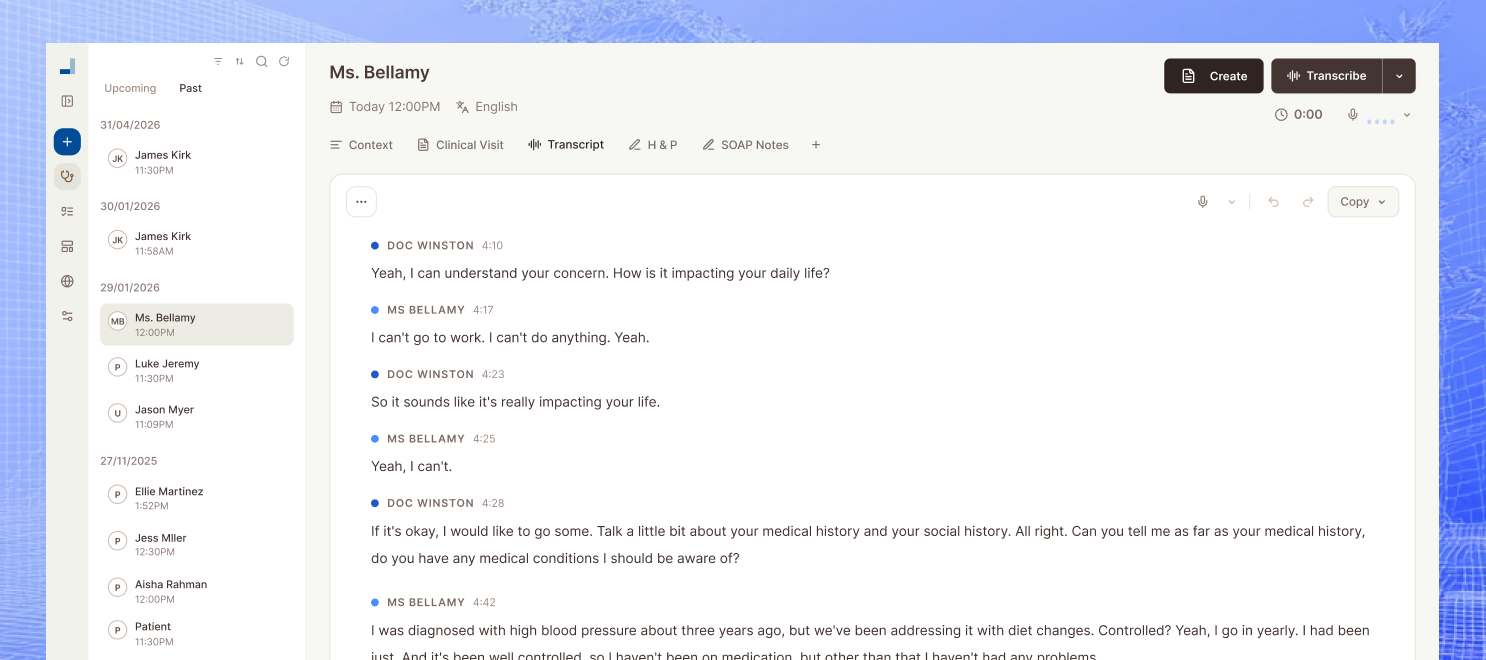
Setting up templates by specialty is the next crucial step. Sports medicine involves specific language—Lachman tests, Neer’s signs, and specific range-of-motion measurements. Customize your templates so the AI knows exactly where to place these data points. When you enter the exam room, capture the encounter by simply starting the recording on your mobile device or tablet. You can dictate physical exam findings aloud as you perform them, ensuring the AI captures the exact degrees of flexion or points of tenderness.
After the encounter, review and edit the generated draft immediately. Most AI outputs are highly accurate, but a quick thirty-second scan allows you to verify that lateral vs. medial was captured correctly. Once the note is polished, leverage the AI’s ability to reuse that clinical data. You can instantly generate a work/school excuse or a physical therapy referral based on the note you just approved.
- Begin with routine follow-up visits to build confidence in the AI workflow.
- Customize templates for specific orthopedic exams and sports-specific assessments.
- Dictate exam findings during the physical assessment for real-time data capture.
- Perform a rapid review of the draft to ensure clinical precision before finalizing.
How to keep note quality high and reduce mistakes
Common failure points in medical documentation include missing medications, incorrect lateralities, and ‘note bloat’ where irrelevant information clutter the record. To minimize these risks, develop a lightweight review habit. Instead of waiting until the end of the day, review the AI-generated draft while the patient is still in the building. This ensures the details are fresh in your mind.
Standardizing how your team uses the AI also helps maintain quality. If all clinicians in a university clinic use the same template for concussion protocols, the data remain consistent across the board. High-quality notes should be concise yet comprehensive, focusing on the clinical reasoning and the specific plan for the athlete’s return to play.
- Verify all lateralities (left vs. right) and specific measurements immediately.
- Use standardized templates across the clinic to ensure record consistency.
- Encourage a ‘review-and-sign’ habit immediately following each patient encounter.
- Filter out redundant information to prevent cognitive-overload note bloat.
Privacy, consent, and patient trust (plain English)
Patient privacy is paramount, especially when handling high-profile athletes or university students. Consent basics vary by region, so it is vital to follow your local policies regarding recording medical encounters. Generally, patients are receptive when they understand that the technology allows you to focus entirely on their care rather than a screen.
A simple way to explain this to a patient is: ‘I’m using a secure AI assistant to help me capture our conversation today. This allows me to focus on your exam and ensures your records are perfectly accurate. Is that okay with you?’ Most athletes appreciate the thoroughness and the extra attention you can provide during the visit. Ensure your chosen tool adheres to general security and data retention principles consistent with healthcare regulations.
- Always obtain verbal or written consent based on local regulatory requirements.
- Explain the benefit clearly: more focus on the athlete, less on the keyboard.
- Ensure the recording is stored and processed according to healthcare-grade security.
- Maintain transparency about how data is used and who has access to the notes.
Rolling it out across a clinic without disruption
Scaling AI implementation in a clinic requires a phased approach. A two-week pilot plan is usually sufficient to identify any technical hurdles and refine templates. During this phase, track metrics such as time saved per note and the reduction in after-hours work. These data points help build buy-in from other staff and clinicians.
Training should focus on template alignment and the specifics of ‘talking to the AI’—such as clearly stating physical exam findings. A well-aligned team will find that the AI scribe for sports medicine notes becomes an invisible assistant that enhances clinic efficiency without disrupting the flow of a busy training room or clinic day.
- Conduct a 2-week pilot with a small group of clinicians to iron out workflows.
- Track time-saving metrics and note completeness to measure success.
- Provide team training on template customization and dictation best practices.
- Align clinic-wide standards for referral letters and discharge summaries.
Mcoy AI is an AI medical scribe that records and transcribes patient encounters, then generates multiple clinical note types (H&P, progress notes, consult notes, follow-up notes, procedure notes, discharge summaries, referral letters, and more). With over 200+ customizable templates and an integrated AI chat to create personalized letters, forms, and documents, it streamlines the administrative side of medicine. This allows clinicians to maintain high documentation standards while focusing their energy on patient care and clinical outcomes.
In conclusion, adopting an AI scribe for sports medicine notes is a transformative step for any modern clinician. By following a structured implementation plan, focusing on quality control, and prioritizing patient privacy, you can reclaim your time and improve the quality of your records. The efficiency gained allows for a more sustainable practice and better care for the athletes you serve. Start your pilot today and experience the difference in your daily workflow.
What a serious review table should cover
| Decision area | Common mistake | Better clinic-ready approach | Metric to watch |
|---|---|---|---|
| Workflow design | Treat how to use an ai scribe for sports medicine notes guide as a one-off documentation task | Build a repeatable process with clear ownership and review points | Time to complete documentation |
| Team adoption | Assume every clinician will naturally use the same process | Train for consistency and define exception handling early | Active user adoption |
| Quality review | Only check notes when a problem is reported | Audit a sample of notes weekly and review edge cases | Edit rate per note |
| Operational follow-through | Leave admin actions outside the documentation workflow | Use the same encounter data for referrals, letters, and follow-up tasks | Completion rate for next-step tasks |
Related reading
If you are working through how to use an ai scribe for sports medicine notes guide, it helps to read this alongside Specialty Guides: How to Run a More Efficient Medical Practice in 2026, Specialty Guides: How to Improve Patient Encounters, and Practice Operations: How to Use an AI Scribe for Multi-Provider Clinics Guide. Those guides cover adjacent workflow, implementation, and evaluation questions so the decision does not sit in isolation.
FAQ
How accurate are AI medical scribes in real clinics?
AI medical scribes are highly accurate in capturing clinical dialogue, often reaching 95% or higher in terms of transcription precision. They excel at understanding medical terminology and context, reducing the need for manual corrections. However, since every clinic environment is different, the accuracy can be influenced by background noise or very complex multi-person conversations. Clinicians should always perform a quick review to ensure the nuances of the encounter are perfectly reflected.
Do I still need to review every note?
Yes, the clinician is legally and professionally responsible for the accuracy of the medical record. While the AI does the heavy lifting of drafting, a final review is necessary to catch any potential lateral errors or misinterpreted measurements. Most doctors find that this review takes less than a minute, which is still a massive time saving compared to manual entry. Think of the AI as a highly efficient draftsperson that requires your final signature.
What note types can an AI scribe generate besides SOAP?
Modern AI scribes are capable of generating a vast array of documents including History & Physical (H&P) reports, consultation notes, and procedure notes. In sports medicine specifically, they can create return-to-play summaries, physical therapy referrals, and discharge summaries for athletes. By using specialized templates, the AI can organize the same encounter data into different formats depending on the required output. This versatility ensures that all stakeholders in an athlete’s care receive the information they need.
Will this work for telehealth and in-person consults?
Yes, AI scribes are designed to work across various practice models including in-person physical exams and telehealth sessions. For in-person visits, the system typically uses a mobile app or a dedicated microphone to capture the room audio. For telehealth, the AI can often integrate directly with the video platform or record the audio from the computer. This flexibility is essential for sports medicine clinics that may provide remote longitudinal care for traveling athletes.
How do I explain recording/transcription to patients?
The best approach is to be transparent and focus on the benefits for the patient. You can explain that using an AI assistant allows you to spend more time looking at them and their injury rather than typing on a computer. Most patients value the extra attention and the knowledge that their medical record will be more detailed and accurate. A simple, one-sentence explanation at the start of the visit is usually all that is required to build trust.
How do clinics prevent note bloat?
Note bloat is prevented by using concise templates and setting specific instructions for the AI on what to include. Instead of transcribing every single word of small talk, the AI can be trained to focus only on clinically relevant data and the assessment/plan. Regular template audits by the clinic manager or lead physician can also help ensure that only necessary information is being populated into the final notes. This keeps the records professional and easy for other providers to read.
How long does template setup take?
Setting up basic templates usually takes only a few minutes per note type. Most AI tools come with pre-built libraries for various specialties, including sports medicine and orthopedics, which you can then tweak to your preference. Fine-tuning a template to perfectly match your specific style of musculoskeletal exam might take an additional hour of use as you see how the AI responds to your dictation. Once set, these templates automate the process indefinitely.
What’s the safest way to start if I’m skeptical?
The safest way to start is with a ‘shadow’ pilot on a few non-complex cases. Use the AI scribe alongside your current documentation method for three to five patients to compare the results. This allows you to verify the accuracy and see the time-saving potential firsthand without any risk to your current workflow. Most skeptical clinicians find that once they see the quality of the first few notes, they quickly transition to using the AI as their primary documentation tool.