Specialty Guides: AI Scribe Imaging Requests: Full Implementation Guide
Learn how to use an AI medical scribe to streamline imaging requests, clinical notes, and physician workflows. Boost clinic efficiency and reduce burnout.
What a medical scribe solves in modern practice
The modern clinical environment is increasingly defined by the weight of its documentation. For many practitioners, the real cost of medical care isn’t just the time spent with the patient, but the hours of cognitive labor required to document that encounter afterward. This administrative burden often leads to ‘pajama time’—the practice of finishing charts long after the clinic has closed—which is a primary driver of clinician burnout and mental fatigue.
An AI medical scribe serves as an intelligent bridge between the verbal patient encounter and the structured electronic health record. It is designed to capture the nuance of a conversation without the practitioner needing to turn their back on the patient to type. However, it is important to understand that these tools are assistive technologies; while they excel at drafting high-quality notes, the clinician remains the final authority and must review all outputs for accuracy.
- Reduces the cognitive load of multitasking during consultations.
- Eliminates hours of after-hours charting through real-time drafting.
- Ensures that subtle clinical details are captured rather than forgotten.
- Allows for more direct eye contact and patient engagement.
Note types you can generate beyond SOAP (H&P and more)
While the SOAP note is the industry standard for daily progress, complex clinical workflows often require a much wider variety of documentation. For instance, an initial History and Physical (H&P) requires a broader scope than a simple follow-up, and specialized consult notes must address the specific questions of a referring physician. Effective documentation ensures continuity of care and protects the practice during audits by providing a clear rationale for every medical decision.
Using an AI scribe allows clinicians to pivot between these formats instantly. Whether you are drafting a detailed procedure note for a minor surgery or a comprehensive discharge summary, the AI can structure the captured audio into the appropriate template. This versatility is especially useful for creating referral letters or imaging requests, where specific clinical indications must be linked to the proposed diagnostic path to ensure insurance approval and specialist clarity.
- H&P and comprehensive admission notes for new patients.
- Specialized consult notes that focus on specific clinical questions.
- Detailed procedure notes and complex discharge summaries.
- Referral letters that automatically summarize the relevant patient history.
How to implement AI Scribe Imaging Requests step-by-step in a real clinic
To begin using an AI scribe to create imaging requests and clinical documentation, start by selecting a single, common visit type, such as musculoskeletal complaints or routine follow-ups. This allows you to calibrate the tool’s output without overwhelming your current system. By focusing on a narrow scope first, you can ensure the AI learns the specific terminology and urgency levels typical of your practice style.
Next, you should configure your specific templates by specialty. If you frequently order MRIs for neurology or X-rays for orthopedics, ensure the AI knows which clinical markers are mandatory for those requests. During the encounter, whether in-person or via telehealth, simply let the AI capture the dialogue naturally. You don’t need to change how you speak; simply vocalizing your clinical reasoning for the imaging will provide the AI with the data it needs.
Once the encounter ends, review the generated draft immediately. The speed of the AI allows for a ‘review while fresh’ habit, where you can verify the imaging indications before the patient even leaves the building. Finally, reuse these outputs to populate your EHR’s order fields or to generate a formal letter to the radiology department, ensuring that the ‘reason for exam’ is always robust and evidence-based.
- Start with one common visit type to build trust in the tool.
- Customize specialty templates to include mandatory imaging markers.
- Capture natural dialogue without altering your bedside manner.
- Review drafts immediately to ensure high-velocity documentation.
How to keep note quality high and reduce mistakes
High-quality documentation is not just about quantity; it is about precision. Common failure points in traditional charting—such as missing medications, incorrect dosage values, or ‘note bloat’—can be amplified if an AI is not properly supervised. Clinicians must be wary of ‘hallucinations’ or the inclusion of irrelevant information that does drift into the final note. Establishing a standard for what constitutes a ‘good’ note within your team is essential for long-term success.
A lightweight review habit is the most effective safeguard. Rather than proofreading every word like an editor, focus on the ‘high-stakes’ data: the assessment, the plan, and the specific imaging requests. By implementing a standardized team review process, you can ensure that every practitioner is producing notes that meet both legal and clinical requirements while keeping the documentation concise and actionable.
- Focus review efforts on the assessment and plan sections.
- Verify all dosages, dates, and specific lateralities (left vs. right).
- Standardize templates across the clinic to prevent note bloat.
- Maintain a human-in-the-loop requirement for all finalized charts.
Privacy, consent, and patient trust (plain English)
Maintaining patient trust is the cornerstone of any medical technology implementation. While privacy laws like HIPAA or GDPR provide the framework, the actual conversation with the patient is what determines their comfort level. Most patients are supportive of technology that allows their doctor to listen better and type less, provided they understand that the data is handled securely and is not being sold to third parties.
A simple script can demystify the process for the patient: ‘I use a secure AI assistant to help me take notes so I can focus entirely on you instead of my computer screen. It transcribes our conversation into my clinical notes and then the recording is handled according to our strict privacy policy. Is that okay with you?’ This transparency satisfies consent requirements and often improves the patient’s perception of the care they are receiving.
- Always follow local regional regulations regarding recording consent.
- Use a patient-friendly script to explain the benefits of the AI.
- Ensure data retention policies align with your clinic’s security standards.
- Provide an easy ‘opt-out’ for patients who prefer manual charting.
Rolling it out across a clinic without disruption
Successful rollout requires a phased approach rather than a ‘big bang’ transition. Start with a two-week pilot involving a small group of tech-forward clinicians who can troubleshoot minor workflow shifts. During this phase, track specific metrics such as the time spent on charts after 5:00 PM and the completeness of the ‘Reason for Study’ in imaging requests. These data points will prove the ROI to the rest of the staff.
After the pilot, align your templates across the organization. This ensures that the documentation produced by a GP at university health services looks and feels the same as the note produced by a specialist. Training should be focused on the ‘capture’ and ‘edit’ phases, teaching providers how to quickly verify AI-generated content so they can move on to the next patient without delay.
- Execute a 2-week pilot with a small, focused group of providers.
- Monitor time-saved and note-completion metrics for ROI.
- Align templates across the clinic for consistent documentation.
- Focus training on efficient review and editing techniques.
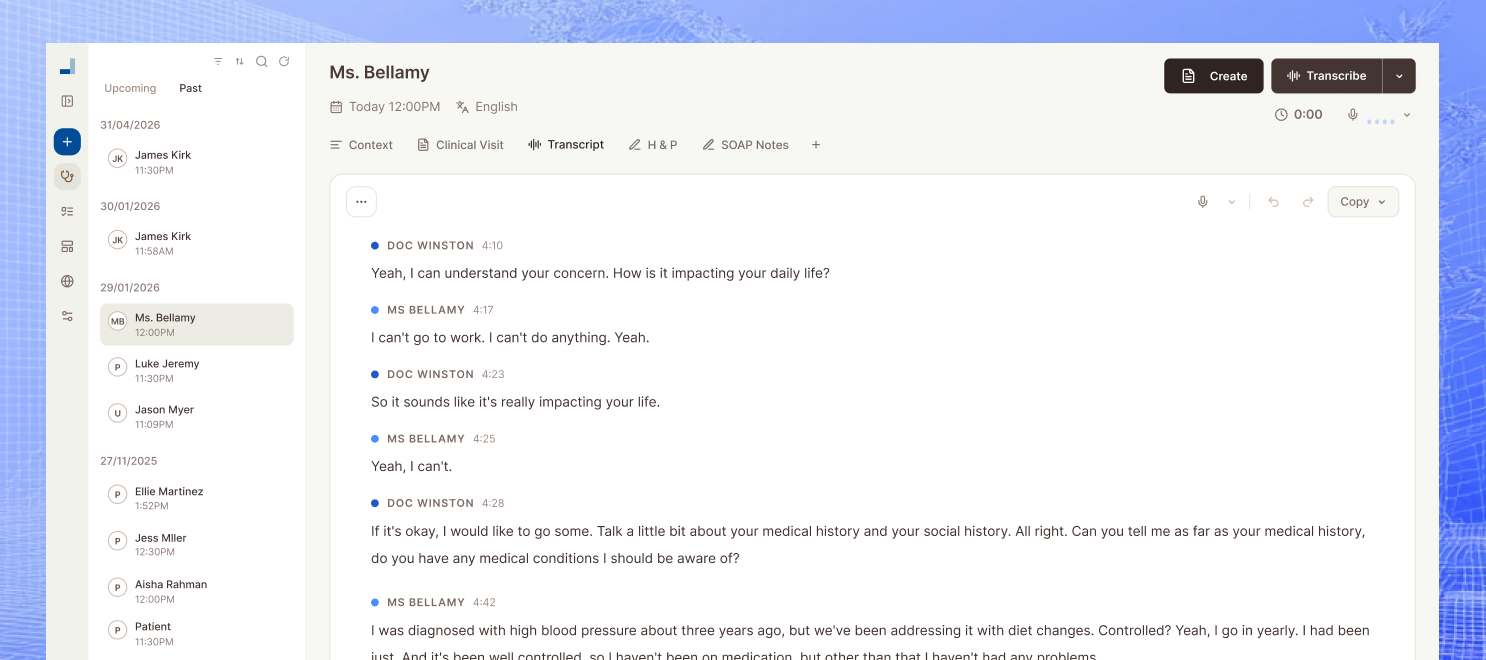
Mcoy AI is an AI medical scribe that records and transcribes patient encounters, then generates multiple clinical note types (H&P, progress notes, consult notes, follow-up notes, procedure notes, discharge summaries, referral letters, and more). With over 200 customizable templates and an interactive AI chat, clinicians can easily create letters, forms, and complex medical documents directly from the captured encounter data, allowing for a seamless transition from conversation to a structured imaging request or clinical summary.
Implementing an AI Scribe Imaging Requests workflow is the most effective way to reclaim your time and improve the accuracy of your clinical orders. By following a structured rollout and maintaining a high standard of review, you can eliminate the ‘pajama time’ that plagues modern medicine. Start your pilot today and see how capturing natural conversation yields the most precise imaging requests and clinical notes your practice has ever seen.
What a serious review table should cover
| Decision area | Common mistake | Better clinic-ready approach | Metric to watch |
|---|---|---|---|
| Workflow design | Treat ai scribe imaging requests: full implementation guide as a one-off documentation task | Build a repeatable process with clear ownership and review points | Time to complete documentation |
| Team adoption | Assume every clinician will naturally use the same process | Train for consistency and define exception handling early | Active user adoption |
| Quality review | Only check notes when a problem is reported | Audit a sample of notes weekly and review edge cases | Edit rate per note |
| Operational follow-through | Leave admin actions outside the documentation workflow | Use the same encounter data for referrals, letters, and follow-up tasks | Completion rate for next-step tasks |
Related reading
If you are working through ai scribe imaging requests: full implementation guide, it helps to read this alongside Specialty Guides: How to Run a More Efficient Medical Practice in 2026, Specialty Guides: How to Improve Patient Encounters, and AI & Medicine: Choosing AI Scribe Templates by Specialty: A Complete Guide. Those guides cover adjacent workflow, implementation, and evaluation questions so the decision does not sit in isolation.
FAQ
How accurate are AI medical scribes in real clinics?
In real-world clinical settings, AI scribes are remarkably accurate at capturing the core medical facts and the ‘story’ of the patient encounter. They typically reach over 95% accuracy in transcribing medical terminology, though they require a clinician to verify the final interpretation. Their performance is often superior to manual note-taking, which is prone to human memory bias and fatigue.
Do I still need to review every note?
Yes, the clinician is legally and ethically responsible for the contents of the medical record. While the AI does the ‘heavy lifting’ by drafting the note, a quick review is essential to ensure that the clinical reasoning is captured correctly and that no errors were introduced. Most clinicians find that this review takes only 60-90 seconds compared to 10-15 minutes of manual typing.
What note types can an AI scribe generate besides SOAP?
Modern AI scribes can generate a wide array of documentation including History and Physicals (H&P), detailed procedure notes, discharge summaries, and referral letters. They are also highly effective at creating structured imaging requests by extracting the relevant clinical indications from the conversation. This flexibility allows the tool to serve almost every specialty and encounter type.
Will this work for telehealth and in-person consults?
Yes, AI scribes are designed to work across various platforms. For in-person consults, they typically use a smartphone or tablet microphone to capture the audio. For telehealth, they can integrate with the audio stream of the video call to provide the same level of detailed transcription and note generation without requiring additional hardware.
How do I explain recording/transcription to patients?
The best approach is transparency and a focus on the benefit to the patient. Explain that using an AI assistant allows you to give them your full attention rather than looking at a screen. Most patients respond positively when they realize the technology leads to a more focused and personal consultation with their doctor.
How do clinics prevent note bloat?
Note bloat is prevented by using concise templates and setting specific instructions for the AI on what to include and what to omit. By training the AI to focus only on relevant clinical findings and actionable plans, clinics can produce notes that are shorter, more readable, and more useful for other healthcare providers than traditional ‘copy-paste’ EHR notes.
How long does template setup take?
Initial template setup is surprisingly fast. Most clinicians can be up and running with standard templates in less than 30 minutes. Customizing those templates to fit a specific specialty or a unique way of phrasing imaging requests might take an additional hour of fine-tuning over the first few days of use.
What’s the safest way to start if I’m skeptical?
The safest way to start is with a ‘shadow’ pilot. Use the AI scribe during a few encounters each day but continue your normal documentation process as a backup. Compare the AI-generated note to your own; once you see the consistency and quality of the AI’s output, you can gradually transition to the AI-first workflow with confidence.