Specialty Guides: AI Scribe for Respiratory Clinic Notes: A Complete Guide
Discover how to streamline respiratory clinic documentation with an AI scribe. Master H&P, follow-ups, and referral letters while reducing burnout.
Modern Respiratory Practice and Clinical Documentation
For pulmonologists and respiratory therapists, the struggle with documentation is constant. Between performing spirometry, interpreting imaging, and managing chronic conditions like COPD or asthma, the time required to chart every breath sound and medication adjustment is immense. Many clinicians find themselves finishing notes long after the clinic has closed, leading to a cycle of burnout and mental fatigue that impacts both professional satisfaction and personal time.
This guide serves as a comprehensive roadmap for integrating an AI medical scribe into a respiratory setting. We will explore more than just the basics of note-taking; we will dive into diverse note formats, quality control measures, and a strategic rollout plan tailored for private practices and university clinics alike. Whether you are conducting telehealth consultations or complex in-person diagnostic assessments, these workflows are designed to return your focus to the patient.
What a medical scribe solves in modern practice
The real cost of documentation extends far beyond the time spent typing. It includes a heavy cognitive load—the mental energy required to recall specific patient symptoms or physical exam findings while simultaneously navigating an EHR. When notes are delayed, accuracy often suffers, and the clinician loses the opportunity to capture nuanced details that inform long-term care plans for chronic respiratory diseases. Delayed documentation can also lead to billing bottlenecks and administrative friction.
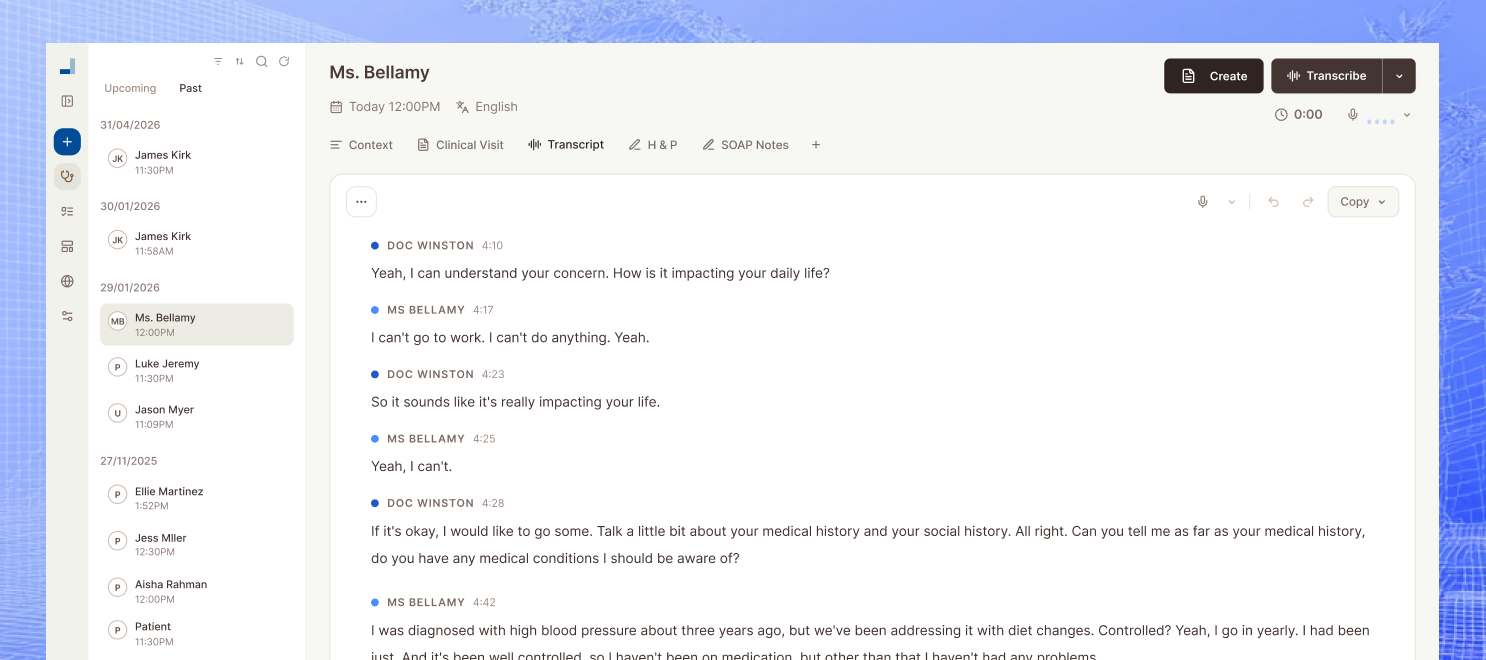
An AI medical scribe acts as an intelligent assistant that captures the dialogue of the patient encounter in real-time. It is important to distinguish that while the AI handles the heavy lifting of transcription and summarization, it does not replace the clinician. The doctor remains the ultimate authority, responsible for reviewing, editing, and signing off on every document to ensure medical accuracy and legal compliance. It is an assistive tool designed to remove the mechanical burden of record-keeping.
- Significantly reduces after-hours charting and administrative burnout.
- Improves note accuracy by capturing details in real-time during the encounter.
- Decreases cognitive load, allowing for better eye contact and patient rapport.
- Streamlines the transition of data from the exam room to the electronic health record.
Note types you can generate beyond SOAP (H&P and more)
While the SOAP format is a staple in general medicine, respiratory clinics often require more specialized documentation. An AI scribe can effectively generate History and Physical (H&P) reports for new admissions, detailed consult notes for secondary opinions, and specific procedure notes for interventions like bronchoscopies or thoracentesis. Having the right structure ensures that handovers between different departments or specialties are seamless and that the patient’s history is easily accessible.
Structure is vital for audit readiness and continuity of care. Using specialized templates for follow-up notes allows clinicians to track the efficacy of treatments like CPAP therapy or biologic medications over time. Discharge summaries and referral letters are equally critical, as they ensure that primary care providers and other specialists are fully informed of the patient’s respiratory status and upcoming care requirements. High-quality documentation acts as the backbone of a safe and efficient healthcare system.
- H&P and comprehensive initial assessments for complex respiratory cases.
- Procedure notes for specialized diagnostic and therapeutic interventions.
- Follow-up notes focusing on chronic disease management and treatment efficacy.
- Detailed referral letters that communicate clinical findings clearly to peers.
How to implement AI Scribe for Respiratory Clinic Notes step-by-step
The first step in a successful implementation is to select a single visit type to pilot, such as routine asthma follow-ups. By narrowing the scope initially, you can refine your workflow without the pressure of managing your most complex cases. Familiarize yourself with the specific triggers and keywords the AI needs to recognize to categorize respiratory symptoms correctly, such as ‘expiratory wheezing’ or ‘nocturnal dyspnea’.
Next, ensure your templates are aligned with your specialty requirements. Respiratory clinics benefit from templates that highlight pulmonary function test results, tobacco history, and environmental triggers. Once the templates are set, begin capturing the encounter. Whether you are seeing a patient in a physical exam room or via a telehealth platform, ensure the device is positioned to capture clear audio from both the clinician and the patient to maximize transcription quality.
After the encounter concludes, the AI will generate a draft based on the captured audio. This is the stage where you should perform a quick review and edit for any nuances or specific clinical judgments. Finally, use the generated outputs to fill out other necessary paperwork. If the AI has summarized a follow-up visit, that same data can be used to populate a referral letter or a school action plan for a pediatric patient with asthma, saving you from repetitive entry.
- Start with one common visit type to build confidence in the tool.
- Customize templates to capture respiratory-specific data like PFTs and social history.
- Capture audio clearly during both in-person and virtual consultations.
- Review the AI draft immediately to maintain high standards of accuracy and detail.
How to keep note quality high and reduce mistakes
Common failures in clinical notes often include missing medications, incorrect dosage values, or ‘note bloat’—where irrelevant information makes the note difficult to read. In a respiratory context, missing a change in an inhaler regimen or an oxygen flow rate can have significant consequences. To mitigate this, clinicians should adopt a lightweight review habit, spending two minutes at the end of each session to verify that the key medical facts are correctly captured before the note is finalized.
Establishing team standards for documentation also helps maintain high quality. Discuss with your colleagues which elements of the physical exam are mandatory and which can be summarized. By creating a standard for what a ‘gold standard’ note looks like in your clinic, you provide the AI with a better framework to follow. Consistency across the practice not only improves patient safety but also makes internal audits and peer reviews much simpler and more effective.
- Verify medication lists and specific respiratory dosages in every note.
- Avoid note bloat by focusing on relevant clinical changes and objective data.
- Implement a consistent review phase for every AI-generated draft.
- Align with clinic-wide standards for documentation structure and detail.
Privacy, consent, and patient trust
Patient privacy is paramount when introducing any new technology into the exam room. While laws vary by region, the core principle is transparency. Most patients are receptive to the technology when they realize it allows their doctor to spend more time listening and less time typing. It is essential to follow your local healthcare regulations regarding data storage and patient recording consent, ensuring that all security protocols are strictly adhered to.
Explaining the process to a patient can be done simply and effectively. You might say: ‘To help me focus entirely on our conversation today, I’m using a digital assistant to help me with my medical notes. It records what we say and turns it into a clinical summary for your chart. Is that okay with you?’ This approach centers the benefit on the patient and reinforces trust. Most patients appreciate the extra attention they receive during the visit.
- Follow local data privacy laws and institutional security policies.
- Use a clear, patient-centered script to explain the recording process.
- Ensure all recordings are handled with the highest level of encryption and care.
- Maintain transparency about how the technology benefits the patient’s care experience.
Rolling it out across a clinic without disruption
To avoid disrupting a busy clinic, a phased 2-week pilot plan is recommended. During the first week, let one or two ‘tech-forward’ clinicians test the system while others observe. This allows the team to identify any technical hurdles or workflow bottlenecks in a controlled environment. In the second week, expand usage to more team members while providing peer-to-peer training on how to optimize the AI’s output for respiratory-specific needs.
During the rollout, it is helpful to track metrics such as time saved on charting and the reduction in after-hours work. Seeing tangible evidence of improved efficiency can help drive adoption among more skeptical staff members. Training sessions should focus on template alignment, ensuring that the entire clinic is using the tools in a way that provides consistent and high-quality data. A smooth rollout ensures that the technology becomes a help, not a hindrance.
- Conduct a 2-week pilot with small groups before a full clinic rollout.
- Track time-saving metrics to demonstrate the value of the AI tool.
- Provide focused training on template customization for pulmonary care.
- Align the entire team on documentation standards and review processes.
Mcoy AI is an AI medical scribe that records and transcribes patient encounters, then generates multiple clinical note types including H&P, progress notes, consult notes, follow-up notes, procedure notes, discharge summaries, referral letters, and more. It features over 200 customizable templates and an AI chat function that can help create letters, forms, and other administrative documents, ensuring that clinicians spend less time on paperwork and more time delivering high-quality patient care.
Frequently Asked Questions
Adapting to new technology can raise many questions for busy medical professionals. Below are some of the most common inquiries regarding the use of AI scribes in a clinical setting.
How accurate are AI medical scribes in real clinics?
AI scribes are highly accurate in capturing the dialogue between a doctor and a patient, often picking up on details that might be missed during manual charting. However, the accuracy of the final clinical note depends on the clarity of the audio and the specific context provided during the conversation. While the AI is excellent at summarizing and formatting, it is designed as an assistant; the clinician must always perform a final review to ensure every clinical detail is correct.
Do I still need to review every note?
Yes, reviewing every note is a fundamental part of the clinical workflow, regardless of whether a human or an AI generates it. The AI acts as a powerful first-draft generator, but the clinician remains the person responsible for the medical accuracy of the record. Most users find that reviewing and editing an AI-generated note is significantly faster than writing one from scratch, often taking only a minute or two per patient encounter.
What note types can an AI scribe generate besides SOAP?
An AI scribe is highly versatile and can generate a wide range of documents including History and Physicals (H&P), procedure notes, consult notes, and discharge summaries. It can also be used to draft referral letters and patient education summaries. This flexibility makes it a valuable tool for specialized clinics where a standard SOAP note might not capture the full complexity of a patient’s diagnostic workup or surgical history.
Will this work for telehealth and in-person consults?
Most AI scribes are designed to work across various platforms, including in-person exam room consultations and telehealth visits. For telehealth, the AI can often capture the audio directly from the computer’s sound output and microphone. For in-person visits, a mobile device or tablet is typically used to record the encounter. The goal is to provide a consistent documentation experience regardless of how the patient is being seen.
How do I explain recording/transcription to patients?
The best way to explain it is to focus on the benefit to the patient, such as better eye contact and undivided attention. A simple script like ‘I am using a digital tool to take notes so I can focus more on you’ usually puts patients at ease. It is also important to mention that the recording is secure and used only for their medical record. Most patients are very supportive when they see that it improves their time with the doctor.
How do clinics prevent note bloat?
Note bloat is prevented by using structured templates that tell the AI exactly which information is relevant to include. By setting parameters for brevity and focusing on clinical findings rather than a verbatim transcript, the AI can produce concise, readable notes. Clinicians can also adjust their templates over time to filter out redundant information or long lists that do not add clinical value to the daily progress note.
How long does template setup take?
Initial template setup can take anywhere from a few minutes to an hour, depending on how customized you want the notes to be. Many AI scribes come with pre-built templates for various specialties that can be used immediately. Over the first few days of use, clinicians usually refine these templates to better match their personal style and the specific needs of their practice, leading to a perfectly tailored documentation process.
What’s the safest way to start if I’m skeptical?
The safest way to start is with a small pilot program involving non-complex cases or follow-up visits. This allows you to see the technology in action without the stress of documenting a high-stakes or emergency situation. You can compare the AI-generated note with your manual notes to verify accuracy and build trust in the system’s ability to capture the relevant medical details you need for your daily practice.
Conclusion
Adopting an AI scribe for Respiratory Clinic Notes represents a significant shift toward a more sustainable and patient-focused medical practice. By following a structured implementation plan—starting with specific note types, refining templates, and ensuring patient transparency—clinicians can dramatically reduce their administrative burden. This technology not only helps in creating accurate H&P and follow-up notes but also ensures that the high standards of pulmonary care are maintained without the cost of physician burnout. Take the first step by piloting an AI solution in your clinic today and rediscover the joy of practicing medicine without the weight of endless charting.
SEO description: Learn how to use an AI scribe for Respiratory Clinic Notes. Improve documentation for H&P, follow-ups, and more while reducing physician burnout.
What a serious review table should cover
| Decision area | Common mistake | Better clinic-ready approach | Metric to watch |
|---|---|---|---|
| Workflow design | Treat ai scribe for respiratory clinic notes: a complete guide as a one-off documentation task | Build a repeatable process with clear ownership and review points | Time to complete documentation |
| Team adoption | Assume every clinician will naturally use the same process | Train for consistency and define exception handling early | Active user adoption |
| Quality review | Only check notes when a problem is reported | Audit a sample of notes weekly and review edge cases | Edit rate per note |
| Operational follow-through | Leave admin actions outside the documentation workflow | Use the same encounter data for referrals, letters, and follow-up tasks | Completion rate for next-step tasks |
Related reading
If you are working through ai scribe for respiratory clinic notes: a complete guide, it helps to read this alongside Specialty Guides: How to Run a More Efficient Medical Practice in 2026, Specialty Guides: How to Improve Patient Encounters, and Specialty Guides: Improve Student Health Clinic Documentation with AI Guide. Those guides cover adjacent workflow, implementation, and evaluation questions so the decision does not sit in isolation.
FAQ
How accurate are AI medical scribes in real clinics?
AI scribes are highly accurate in capturing the dialogue between a doctor and a patient, often picking up on details that might be missed during manual charting. However, the clinician must always perform a final review.
Do I still need to review every note?
Yes, reviewing every note is fundamental. The AI acts as a powerful first-draft generator, but the clinician remains responsible for the medical accuracy of the record.
What note types can an AI scribe generate besides SOAP?
An AI scribe can generate History and Physicals (H&P), procedure notes, consult notes, discharge summaries, and even referral letters tailored to respiratory care.
Will this work for telehealth and in-person consults?
Yes, most AI scribes work across both platforms. They use internal mics for in-person visits and can capture audio directly from telecommunications software for remote visits.
How do I explain recording/transcription to patients?
Focus on the benefit to the patient. A script like ‘I am using a digital tool to take notes so I can focus more on you’ usually puts patients at ease.
How do clinics prevent note bloat?
By using structured templates that define which information is relevant. This tells the AI to ignore redundant dialogue and focus on clinical findings.
How long does template setup take?
Initial setup takes minutes with pre-built templates. Refinement usually happens over the first few days of use to match the clinician’s specific style.
What’s the safest way to start if I’m skeptical?
Start with a small pilot using routine follow-up visits. This allows you to verify accuracy and build trust in the system without high-stakes pressure.