Specialty Guides: Master AI Scribe for Family Medicine | 2024 Workflow Guide
Learn how to integrate an AI scribe for family medicine into your clinic workflow to stop after-hours charting and improve clinical note accuracy.
The Crisis of Documentation in Family Practice
For most family medicine practitioners, the workday doesn’t end when the last patient leaves. Instead, it transitions into a second shift known as ‘pajama time,’ where hours are spent catching up on EHR entries. This administrative burden is a primary driver of clinician burnout, leading to rushed patient encounters and a persistent sense of medico-legal anxiety. The struggle to maintain detailed, accurate records while staying present with a patient is a balancing act that many are currently losing.
This guide serves as a practical roadmap for general practitioners, specialists, and university clinic directors who want to reclaim their time. We will explore how to transition from manual typing to an automated workflow, covering everything from diverse note formats and quality control to patient privacy and clinic-wide rollout strategies. You will learn how to implement an AI scribe for family medicine effectively, ensuring that your documentation is not only faster but also of higher quality than traditional methods.
What a medical scribe solves in modern practice
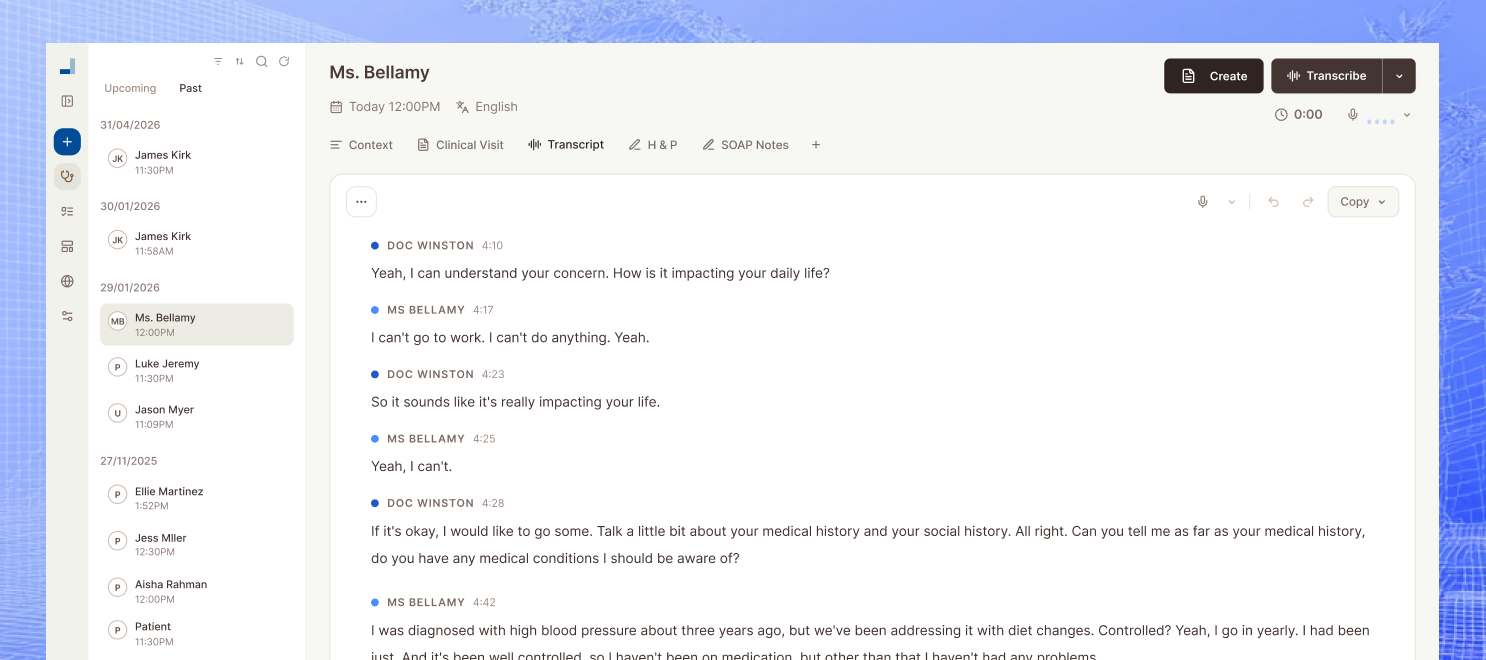
The real cost of manual documentation is measured in more than just minutes; it is measured in cognitive load. When a doctor is focused on a screen, they are less likely to catch subtle non-verbal cues from the patient. This distraction often leads to delayed notes, which can compromise the accuracy of the record as details fade from memory. An AI medical scribe addresses this by acting as an invisible assistant that captures the dialogue in real-time, allowing the physician to focus entirely on the human in the room.
It is important to understand that an AI scribe is an assistive tool, not a replacement for clinical judgment. The AI handles the heavy lifting of transcription and structural organization, but the clinician remains the final authority. By automating the ‘clerical’ side of the visit, these tools ensure that missed details are caught and that the final note reflects the actual depth of the conversation without requiring the doctor to be a high-speed typist.
- Eliminates ‘pajama time’ by completing notes during or immediately after visits.
- Reduces cognitive fatigue by allowing clinicians to stay eye-to-eye with patients.
- Increases note accuracy by capturing specific patient phrasing and histories.
- Acts as a supportive assistant while keeping the doctor in the final reviewer role.
Note types you can generate beyond SOAP (H&P and more)
While the SOAP note is the industry standard for daily progress, family medicine often requires a broader range of documentation. Modern tools can now generate comprehensive History and Physicals (H&P), complex consult notes for specialists, and detailed follow-up notes for chronic disease management. When a patient is referred out or returning from a hospital stay, having the ability to quickly produce a discharge summary or referral letter is invaluable for continuity of care.
Structure matters immensely in a clinical setting, particularly for audit readiness and multi-disciplinary handovers. A well-organized procedure note or a clear referral letter ensures that the next provider in the chain of care has exactly what they need. By moving beyond the basic SOAP template, clinics can ensure that every aspect of the patient journey—from the initial consultation to specialized procedures—is documented with professional-grade precision.
- H&P and Progress Notes: Essential for new patients and routine check-ups.
- Consult & Referral Letters: Streamlines communication between primary care and specialists.
- Procedure & Follow-up Notes: Ensures detailed records of interventions and chronic care.
- Audit Readiness: Standardized structures that satisfy billing and legal requirements.
How to implement AI scribe for family medicine step-by-step in a real clinic
The transition starts with a narrow focus. Rather than trying to automate every visit on day one, choose a single visit type, such as routine physicals or follow-up appointments. This allows you to get comfortable with the interface without the pressure of a complex multi-symptom case. Once you have a rhythm, you can begin setting up templates specific to your specialty, whether that is pediatrics, geriatrics, or general family practice.
During the encounter, the process should be as unobtrusive as possible. Whether the visit is in-person or via telehealth, you simply start the capture and proceed with your natural clinical dialogue. You don’t need to change how you talk to patients; in fact, being more descriptive during the physical exam can actually improve the final note quality. Once the session ends, the AI processes the audio and presents a structured draft within seconds.
Review and editing is the most critical step. You should skim the generated note to ensure all medications, dosages, and specific vitals are correct. Because the AI has done 90% of the work, this review usually takes less than two minutes. Once verified, you can instantly reuse these outputs to generate secondary documents like referral letters or patient instruction forms, effectively multiplying your productivity from a single recording.
- Pilot the system with one specific visit type to build confidence.
- Configure specialty-specific templates to match your preferred clinical style.
- Captures natural dialogue easily for both in-person and remote visits.
- Rapidly review drafts and repurpose content for letters and forms.
How to keep note quality high and reduce mistakes
AI tools are powerful, but they aren’t immune to errors—particularly when it comes to specific dosages or complex medication names. Common failure points include ‘note bloat,’ where the AI includes irrelevant small talk, or missing specific lab values if they weren’t explicitly spoken aloud. To combat this, clinicians should adopt a lightweight review habit, checking the ‘Plan’ and ‘Medications’ sections with extra scrutiny before finalizing the record.
Establishing team standards for note review ensures consistency across the practice. If every clinician in the clinic follows a similar verification protocol, the overall integrity of the medical records remains high. This collective approach also helps in identifying which templates might need adjustment to better capture the specific nuances of your patient population.
- Self-correction: Always double-check medication names and numerical values.
- Avoid Bloat: Use templates that prioritize concise, actionable clinical data.
- Standardization: Implement a clinic-wide ‘final check’ protocol.
- Verbal Cues: Narrate your findings during the exam to ensure the AI captures them.
Privacy, consent, and patient trust (plain English)
Patient trust is the foundation of family medicine. When introducing an AI scribe, transparency is key. Most patients are supportive once they realize the tool allows their doctor to actually look at them instead of a computer screen. While consent requirements vary by region, it is best practice to follow your local healthcare privacy laws and keep a clear record of patient agreement.
A simple explanation goes a long way. You might say: ‘I’m using a digital assistant today to take notes for us so I can focus on our conversation. It records our talk, turns it into a medical note, and then the recording is deleted. Are you okay with that?’ This approach addresses the ‘why’ and the ‘how’ in one sentence, usually putting patients at ease immediately. General security principles like encryption and HIPAA/GDPR compliance should be standard features of any tool you choose.
- Always obtain and document patient consent based on local regulations.
- Explain the benefits (more eye contact, better notes) to the patient.
- Ensure the tool uses industry-standard encryption for data security.
- Maintain a clear policy on how long data is retained and when it is deleted.
Rolling it out across a clinic without disruption
A successful rollout requires a phased approach rather than a ‘big bang’ implementation. We recommend a 2-week pilot involving one or two ‘tech-forward’ providers. During this period, track metrics like time saved per day and the reduction in after-hours charting. These data points will be instrumental in convincing more skeptical staff members of the tool’s value.
Training should focus on template alignment. If the entire university clinic or private practice uses the same set of high-quality templates, the quality of care becomes more uniform. Regular feedback loops during the first month allow the team to share tips on how to handle specific patient scenarios and further refine the workflow to minimize disruption to the patient schedule.
- Start with a 2-week pilot to gather data and clinician feedback.
- Monitor ‘pajama time’ reduction as a key metric of success.
- Align team templates to ensure standardized documentation quality.
- Conduct weekly check-ins during the launch phase to troubleshoot issues.
Mcoy AI is an AI medical scribe that records and transcribes patient encounters, then generates multiple clinical note types including H&P, progress notes, consult notes, follow-up notes, procedure notes, discharge summaries, referral letters, and more. With over 200 customizable templates and an interactive AI chat feature, clinicians can instantly create professional letters, forms, and documents, significantly reducing administrative strain.
Frequently Asked Questions
Integrating new technology can lead to many questions. Here are the most common inquiries regarding AI scribes in a family medicine setting.
How accurate are AI medical scribes in real clinics?
In a real-world clinical setting, AI scribes are remarkably accurate at capturing the narrative flow and clinical facts of a visit. However, accuracy can vary depending on background noise and the clarity of the dialogue. It is estimated that they get about 90-95% of the content correct on the first pass. This is why a final clinician review is always mandatory to catch any minor transcription errors.
Do I still need to review every note?
Yes, the clinician is legally and ethically responsible for the accuracy of the medical record. While the AI does the majority of the drafting, you must review the note to ensure it reflects your clinical judgment and that all data points are correct. Most doctors find that this review process takes a fraction of the time compared to writing the note from scratch.
What note types can an AI scribe generate besides SOAP?
Modern AI scribes are highly versatile and go far beyond the standard SOAP format. They can generate History and Physicals (H&P), procedure notes, discharge summaries, and even complex referral letters. Because they use customizable templates, they can be adapted to almost any clinical scenario you encounter in family medicine.
Will this work for telehealth and in-person consults?
Absolutely. Most AI scribe tools are designed to work across various platforms, whether you are using a mobile device in an exam room or a laptop for a telehealth video call. The AI captures the audio from the speaker and microphone, ensuring that the documentation is consistent regardless of how the care is delivered.
How do I explain recording/transcription to patients?
The best approach is complete transparency focused on patient benefits. Explain that the tool allows you to listen more closely and provides a more accurate record of their visit. Once patients realize it leads to better care and a more attentive doctor, they are almost always comfortable with it.
How do clinics prevent note bloat?
Note bloat is prevented by using structured templates that tell the AI exactly what information is relevant. By selecting a template that focuses on specific clinical findings rather than a verbatim transcript, the resulting note remains concise and professional. Clinicians can also briefly edit out any irrelevant social conversation during the review phase.
How long does template setup take?
Basic template setup is usually very quick, often taking only a few minutes to select and tweak pre-built options. For more advanced, highly-customized specialty templates, it may take an hour or two to perfectly align the output with your specific clinical style. However, this is a one-time investment that saves hundreds of hours later.
What’s the safest way to start if I’m skeptical?
The safest way is to run a ‘shadow pilot’ with a handful of non-complex cases. Record the encounter, let the AI generate the note, and then compare it to the note you would have written manually. This low-risk comparison allows you to see the quality firsthand before fully committing your workflow to the new system.
Conclusion
Adopting an AI scribe for family medicine is more than just a tech upgrade; it is a fundamental shift toward sustainable practice. By following a structured implementation plan—starting small, using diverse templates, and maintaining a strict review habit—clinicians can virtually eliminate the burden of manual charting. This guide has shown that with the right approach, you can improve documentation quality while reclaiming your personal time. Now is the time to pilot these tools and experience a more focused, efficient clinical day.
SEO description: Master your documentation with our guide on using an AI scribe for family medicine. Reduce burnout, improve note accuracy, and reclaim your time today.
What a serious review table should cover
| Decision area | Common mistake | Better clinic-ready approach | Metric to watch |
|---|---|---|---|
| Workflow design | Treat master ai scribe for family medicine | 2024 workflow guide as a one-off documentation task | Build a repeatable process with clear ownership and review points |
| Team adoption | Assume every clinician will naturally use the same process | Train for consistency and define exception handling early | Active user adoption |
| Quality review | Only check notes when a problem is reported | Audit a sample of notes weekly and review edge cases | Edit rate per note |
| Operational follow-through | Leave admin actions outside the documentation workflow | Use the same encounter data for referrals, letters, and follow-up tasks | Completion rate for next-step tasks |
Related reading
If you are working through master ai scribe for family medicine | 2024 workflow guide, it helps to read this alongside Specialty Guides: How to Run a More Efficient Medical Practice in 2026, Specialty Guides: How to Improve Patient Encounters, and Practice Operations: How to Create Shared Templates for Group Practices. Those guides cover adjacent workflow, implementation, and evaluation questions so the decision does not sit in isolation.
FAQ
How accurate are AI medical scribes in real clinics?
Do I still need to review every note?
What note types can an AI scribe generate besides SOAP?
Will this work for telehealth and in-person consults?
How do I explain recording/transcription to patients?
How do clinics prevent note bloat?
How long does template setup take?
What’s the safest way to start if I’m skeptical?