AI & Medicine: How to Use an AI Medical Scribe in a Noisy Clinic
Learn how to use an AI medical scribe in busy, noisy clinics. Optimize workflows, improve note quality, and reduce burnout with this step-by-step guide.
The Reality of Documentation in a Modern Clinic
For many clinicians, the end of the patient day is just the beginning of a second shift. After-hours charting is one of the leading causes of professional burnout, often resulting in rushed notes or a constant sense of medico-legal anxiety. When you are rushing through your clinical documentation, it is easy to miss subtle details that could be critical for long-term patient care. This problem is amplified in university clinics or high-volume private practices where the pace rarely slows down.
This guide will teach you how to use an AI medical scribe to reclaim your time and improve the quality of your records. We will explore more than just the basic SOAP note, looking into specialized formats like H&P, consult notes, and referral letters. Whether you are a GP, a specialist, or managing a large team of residents, this workflow-focused guide will show you how to maintain privacy, ensure quality control, and roll out an AI solution without disrupting your existing patient flow.
What a medical scribe solves in modern practice
In a traditional setting, the cognitive load of documenting a visit while simultaneously engaging with a person is immense. This divided attention often leads to delayed notes, where clinicians rely on memory hours later, or missed details that were discussed but never recorded. The real cost isn’t just time; it is the mental exhaustion that comes from constant data entry and the administrative friction of modern healthcare.
An AI medical scribe acts as an assistive layer, capturing the nuances of the conversation so the clinician can focus entirely on the patient. It is important to remember that these tools are assistive; the clinician remains the ultimate authority and is responsible for the final accuracy of the record. By acting as a digital listener, the AI ensures that the narrative of the encounter is preserved without the doctor having to stare at a screen during the visit.
- Reduces cognitive load by allowing clinicians to maintain eye contact with patients.
- Eliminates “pajama time” by completing notes shortly after the encounter.
- Captures natural conversation nuances that are often lost in manual typing.
- Acts as a high-fidelity assistant while leaving final clinical judgment to the provider.
Note types you can generate beyond SOAP (H&P and more)
While the SOAP note is the industry standard for daily progress, many clinical encounters require more specialized documentation. A comprehensive History and Physical (H&P) is essential for new admissions or complex initial consultations, requiring a deeper dive into past medical history and systems review. Similarly, consult notes and referral letters need to be concise yet thorough to ensure effective communication between different members of the care team.
Structure matters immensely for continuity of care and audit readiness. Using an AI scribe allows for the seamless generation of procedure notes, discharge summaries, and follow-up assessments that follow a consistent logic. This consistency makes it easier for other providers to find information and ensures that the clinic remains compliant with various insurance and legal requirements without adding extra work for the staff.
- H&P and Consult Notes: Perfect for complex initial evaluations and specialty referrals.
- Procedure and Discharge Summaries: Ensures clear handovers and legal documentation of interventions.
- Follow-up Notes: Tracks progress over time with consistent formatting and metric tracking.
- Referral Letters: Automatically summarizes the visit into a professional format for other specialists.
How to implement how to use an AI medical scribe step-by-step in a real clinic
The best way to start is by selecting one specific visit type—such as standard follow-ups—to build confidence with the tool. Before bringing the technology into the exam room, take a moment to select or customize templates that align with your specialty. Having your preferences set for how you want the physical exam or assessment and plan to appear will save significant editing time later on.
During the encounter, whether it is in-person or via telehealth, simply let the tool listen to the natural flow of the conversation. In a noisy clinic environment, position the device closer to the speaker to ensure maximum clarity. Once the visit is over, the AI processes the audio and presents a draft. Review the output immediately while the details are fresh, making any necessary clinical adjustments.
After the note is finalized, you can leverage the AI to reuse that data for secondary documents. This might include generating a patient-friendly summary or a quick referral letter based on the findings. By integrating these steps into your daily routine, the transition from ‘doctor as data entry clerk’ to ‘doctor as healer’ happens naturally within a few days.
- Start with one visit type to master the recording workflow before scaling up.
- Customize specialty-specific templates to reduce the need for manual structural edits.
- Position recording devices strategically to mitigate background noise in busy clinics.
- Finalize notes immediately after the encounter to maintain the highest level of accuracy.
How to keep note quality high and reduce mistakes
Common failure points in medical documentation often include missing specific dosages, misinterpreting lab values, or creating ‘note bloat’ where irrelevant information clutter the record. To combat this, clinicians should adopt a lightweight review habit. Instead of reading every word, scan for the critical clinical facts: the problem list, the plan for medications, and follow-up instructions.
Establishing team standards for documentation also helps maintain high quality. When everyone in the clinic uses the same logic for what constitutes a high-quality note, the AI can be better calibrated to meet those needs. Regular audits of the AI-generated notes can help identifying any recurring patterns of error, ensuring the system remains a reliable asset rather than a liability.
- Adopt a structured scan-and-verify method for checking medications and dosages.
- Use standardized templates to prevent irrelevant data from cluttering the clinical record.
- Set clear clinical standards to ensure the AI output matches your professional style.
- Conduct weekly mini-audits during the first month to ensure high-fidelity documentation.
Privacy, consent, and patient trust (plain English)
Consent is the foundation of the patient-provider relationship, and it is vital to follow local regulations and your own facility’s policies regarding recording. In most cases, patients are happy to consent when they understand that the technology allows their doctor to pay more attention to them rather than a computer screen. Transparency is key to maintaining trust.
A simple script can make this conversation easy. You might say: “I’m using a secure AI tool to help me record our conversation today so I can focus on you instead of typing on my computer. It helps me create more accurate medical notes. Is that okay with you?” Most patients appreciate the honesty and the focus on their care. From a security standpoint, ensure your chosen tool uses end-to-end encryption and follows data retention principles that align with your regional laws.
- Always obtain verbal or written consent based on your specific local healthcare policies.
- Explain the benefit to the patient: better eye contact and focused clinical attention.
- Use a clear, non-technical script to make the conversation comfortable and fast.
- Ensure the technology provider adheres to strict healthcare security and privacy standards.
Rolling it out across a clinic without disruption
For a clinic-wide rollout, a two-week pilot program is usually the most effective strategy. Start with one or two “super-user” clinicians who are tech-savvy and can troubleshoot minor workflow issues. This allows the clinic to refine its processes before every doctor and nurse begins using the system, preventing a logistical bottleneck during the transition.
During the pilot, track specific metrics such as time saved on documentation, the reduction in after-hours charting, and the overall completeness of the notes. Once the benefits are proven, align the rest of the team through a brief training session focused on template selection and the consent process. This staged approach ensures that the clinic’s daily operations remain smooth and that the staff feels supported rather than overwhelmed.
- Launch with a two-week pilot involving tech-receptive staff to refine the workflow.
- Track metrics like ‘hours of charting saved’ to demonstrate value to the whole team.
- Provide short, practical training sessions on template use and consent scripts.
- Standardize templates early to ensure consistent documentation across the entire clinic.
Mcoy AI: Your Advanced Clinical Documentation Partner
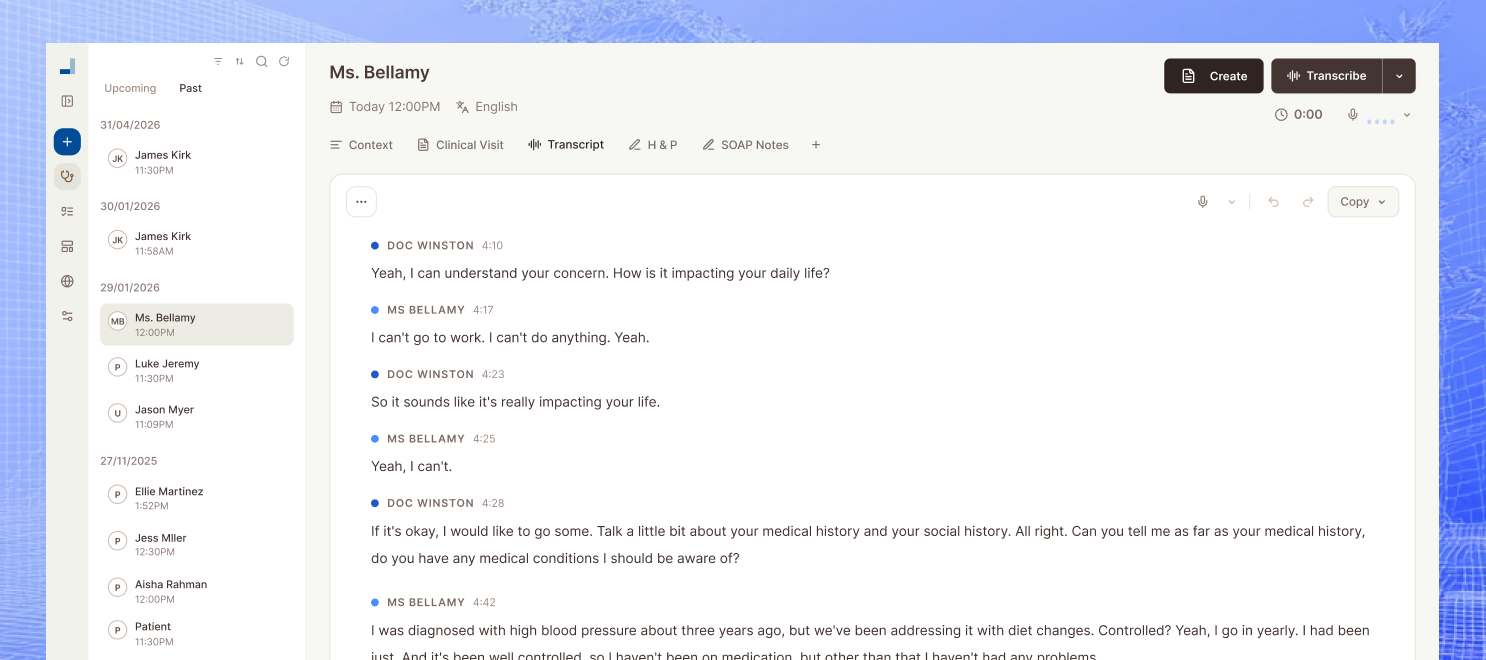
Mcoy AI is an AI medical scribe that records and transcribes patient encounters, then generates multiple clinical note types (H&P, progress notes, consult notes, follow-up notes, procedure notes, discharge summaries, referral letters, and more). With over 200+ customizable templates and a built-in AI chat to create letters, forms, and other documents, it streamlines the administrative side of medicine. It is designed to work seamlessly in various environments, ensuring clinicians can focus on care while the AI handles the heavy lifting of documentation.
Conclusion
Mastering how to use an AI medical scribe is about more than just technology; it is about refining your clinical workflow to prioritize patient care over paperwork. By starting small, selecting the right templates, and maintaining a quick review habit, you can virtually eliminate the burden of manual charting. Whether you are generating complex H&P documents or simple referral letters, the consistency and time saved will transform your daily practice. Take the first step by setting up a pilot in your clinic today and experience the relief of a complete, accurate, and stress-free documentation process.
What a serious review table should cover
| Decision area | Common mistake | Better clinic-ready approach | Metric to watch |
|---|---|---|---|
| Workflow design | Treat how to use an ai medical scribe in a noisy clinic as a one-off documentation task | Build a repeatable process with clear ownership and review points | Time to complete documentation |
| Team adoption | Assume every clinician will naturally use the same process | Train for consistency and define exception handling early | Active user adoption |
| Quality review | Only check notes when a problem is reported | Audit a sample of notes weekly and review edge cases | Edit rate per note |
| Operational follow-through | Leave admin actions outside the documentation workflow | Use the same encounter data for referrals, letters, and follow-up tasks | Completion rate for next-step tasks |
Related reading
If you are working through how to use an ai medical scribe in a noisy clinic, it helps to read this alongside AI & Medicine: How to Simplify Clinical Notes for Busy Doctors, AI & Medicine: How Doctors Can Improve SOAP Notes, and Practice Operations: Audit Clinical Notes Produced by AI: Complete 2024 Guide. Those guides cover adjacent workflow, implementation, and evaluation questions so the decision does not sit in isolation.
FAQ
How accurate are AI medical scribes in real clinics?
Modern AI scribes are highly accurate, capable of filtering out background noise and understanding complex medical terminology across various specialties. They are designed to capture the core of the conversation, though their performance can be affected by very loud environments or multiple speakers talking at once. In a real-world clinic setting, they typically achieve a high level of fidelity that rivals or exceeds manual note-taking. It is always best to position the recording device near the speaker for optimal results.
Do I still need to review every note?
Yes, as a clinician, you are legally and professionally responsible for the contents of the medical record. While the AI does the heavy lifting, you must review and verify the note for clinical accuracy, ensuring medications, dosages, and plans are correct. Most clinicians find that this review process takes only a minute or two compared to the ten or fifteen minutes required to write a note from scratch. It is a collaborative process between the AI and the provider.
What note types can an AI scribe generate besides SOAP?
AI scribes are incredibly versatile and can generate a wide range of documents including History and Physicals (H&P), detailed consult notes, and procedure summaries. They are also excellent at creating discharge summaries and referral letters by synthesizing the key points of a visit into the requested format. Many platforms offer customizable templates that allow you to dictate exactly how these different note types should look to match your specialty. This flexibility makes them useful for everything from oncology to primary care.
Will this work for telehealth and in-person consults?
Most AI scribes are built to be platform-agnostic, meaning they work just as well for remote telehealth visits as they do for face-to-face encounters. For telehealth, you can often record the audio directly from your computer or a secondary device. For in-person visits, a smartphone or tablet placed on the desk is usually sufficient to capture the conversation. This versatility ensures that your documentation remains consistent regardless of how you are seeing patients.
How do I explain recording/transcription to patients?
The best approach is to be brief and emphasize the benefit to the patient’s care. You can explain that the tool allows you to listen more closely to their concerns without the distraction of typing on a computer. Most patients value the increased eye contact and undivided attention that comes with the use of a digital scribe. Being transparent about the process and confirming that the data is handled securely helps to maintain a high level of trust.
How do clinics prevent note bloat?
Clinics prevent note bloat by using concise templates that prompt the AI to focus only on relevant clinical data. By setting specific instructions on what information should be included or excluded, you can ensure the resulting notes are pithy and useful. Clinicians should also get into the habit of deleting any repetitive or unnecessary narrative text during their quick review phase. This keeps the medical record clean and easier for other providers to navigate.
How long does template setup take?
Initial template setup can take as little as 15 to 30 minutes, especially if you start with pre-built templates provided by the software. Fine-tuning those templates to perfectly match your personal writing style or specific specialty requirements might take a few extra days of minor adjustments. Once they are set, however, they function automatically for every subsequent visit, saving you hours of time in the long run. Most clinicians find the initial time investment pays for itself within the first day of use.
What’s the safest way to start if I’m skeptical?
The safest way to start is by running a small-scale pilot with just a few non-complex patients or follow-up visits. This allows you to see the accuracy of the transcripts and the quality of the generated notes without the pressure of a full, complex schedule. You can compare the AI-generated note to your manual note to see how much detail was captured. Once you see the time saved and the quality of the output, you can gradually expand its use to more complex encounters.
Can the AI handle multiple people speaking in the room?
Yes, advanced AI scribes use speaker diarization technology to distinguish between the doctor, the patient, and any family members or medical students present. While background noise in a busy clinic can be a challenge, the AI is designed to focus on the primary conversation. If the room is exceptionally noisy, using a directional microphone or simply moving the device closer to the patient can significantly improve the clarity of the transcription. In most standard exam room settings, the built-in microphone on a phone or laptop works perfectly.