Physician Wellbeing: How to Stop After-Hours Charting With an AI Scribe
End late-night documentation with an AI medical scribe. Learn to automate H&P, SOAP notes, and referrals to reclaim your personal time today.
The Crisis of the ‘Pajama Time’ Charting
Every practitioner knows the feeling: the last patient leaves the clinic at 5:00 PM, but the workday is far from over. Hours of documentation, referrals, and progress notes loom ahead, leading to what many call ‘pajama time’—the arduous task of completing charts from the couch at 9:00 PM. This chronic after-hours charting is the leading driver of clinician burnout, causing mental fatigue and reducing the quality of patient care.
This guide provides a comprehensive roadmap for integrating an AI medical scribe into your daily workflow. Whether you lead a private practice, manage a busy university clinic, or work as a specialist, you will learn how to transition from manual data entry to a streamlined, automated system. We will cover note formats beyond simple SOAP notes, quality control strategies, and a step-by-step rollout plan to ensure your evenings remain your own.
What a medical scribe solves in modern practice
The primary cost of traditional documentation isn’t just time; it is the cognitive load. When a doctor must simultaneously listen to a patient, perform a physical exam, and mentally structure a note, ‘attentional blink’ occurs. Crucial details are often missed, and the emotional connection with the patient is severed by the presence of a computer screen. An AI medical scribe acts as a silent observer, capturing the nuance of the conversation so the clinician can focus entirely on the human in front of them.
It is important to remember that an AI tool is assistive, not a replacement for clinical judgment. The technology handles the heavy lifting of transcription and structural formatting, but the clinician remains the final authority on the note’s accuracy. By shifting the burden of drafting to an AI, practitioners often find they can save up to two hours per day, drastically reducing the backlog that usually accumulates by the end of the week.
- Eliminates the ‘pajama time’ charting burden and reduces burnout.
- Improves clinician-patient eye contact and engagement.
- Reduces cognitive load by handling complex note structuring.
- Ensures more detailed and accurate patient encounter records.
Note types you can generate beyond SOAP (H&P and more)
While SOAP notes are the industry standard, modern medicine requires a diverse range of documentation. A robust AI medical scribe system should do much more than just summarize a visit. For example, a new patient intake requires a comprehensive History and Physical (H&P), while a surgical follow-up requires a specific procedure note or progress report. Relying on one-size-fits-all templates often leads to messy or incomplete records.
High-quality documentation is essential for continuity of care, especially in university clinics or multi-provider practices where handovers are frequent. Accurate discharge summaries and referral letters ensure that the next provider in the care chain has exactly what they need without searching through pages of fluff. By automating these specific formats, you ensure audit readiness and improved communication across the healthcare ecosystem.
- Generate comprehensive H&P, consult notes, and progress notes instantly.
- Create tailored referral letters and discharge summaries.
- Maintain high-quality documentation for audits and handovers.
- Utilize specific templates for procedures and follow-up visits.
How to implement an AI medical scribe step-by-step in a real clinic
To begin using an AI medical scribe effectively, you should start small to avoid overwhelming your current staff. Choose one specific visit type—such as standard follow-ups or routine physicals—and commit to using the scribe for those encounters exclusively for the first three days. This allows you to get comfortable with the interface without the pressure of a complex multi-symptom case early on.
Next, you should configure your preferred templates by specialty. Most clinics find success by setting up distinct ‘styles’ for their notes, ensuring the AI understands the level of detail required for a cardiology consult versus a pediatric wellness check. During the encounter, whether in-person or via telehealth, simply let the device record the conversation naturally. Do not feel the need to narrate your actions; the AI is designed to filter out the noise and capture the clinical substance.
After the patient leaves, take sixty seconds to review and edit the generated output. The goal is a quick ‘sanity check’ rather than a total rewrite. Once the note is validated, you can then reuse the output to generate auxiliary documents like referral letters or patient instruction forms. This recursive use of the captured data is where the most significant time savings occur.
- Start with one visit type to build confidence and habit.
- Configure specialty-specific templates for precise formatting.
- Let the AI capture and filter clinical data naturally.
- Perform a one-minute review before finalizing the note.
How to keep note quality high and reduce mistakes
Even the most advanced AI can occasionally include ‘note bloat’ or misinterpret a complex medication dosage if the ambient audio quality is poor. To maintain high standards, practitioners should establish a lightweight review habit. Instead of reading every word like a proofreader, scan for key data points: medications, dosages, specific physical exam findings, and the final assessment/plan. These are the areas where accuracy is non-negotiable.
Establishing team standards also helps in multiclinic environments. When everyone agrees on what a ‘good note’ looks like, the AI can be tuned to meet those specific criteria. Encourage your staff to provide feedback on any recurring errors, as this allows for template adjustments that prevent the same mistake from happening twice. Consistency is the enemy of medico-legal risk.
- Focus reviews on high-stakes data like medications and plans.
- Establish clinic-wide standards for note structure and length.
- Regularly update templates based on recurring feedback.
- Encourage a culture of brief, focused ‘spot-checks’.
Privacy, consent, and patient trust (plain English)
Patient privacy is the cornerstone of the medical profession, and introducing a recording device can feel daunting. However, most patients are incredibly receptive when they realize the technology allows their doctor to actually look at them rather than a screen. Always ensure your clinic follows local regulations regarding consent; while some regions require a signed form, others only require a verbal ‘okay’ recorded at the start of the session.
A simple way to explain this to a patient is: ‘I’m using a secure AI assistant to help me capture our conversation so I can focus on you instead of my computer. It transcribes our talk into my notes and then securely processes it. Is that okay with you?’ This transparency builds trust and usually results in a 95% or higher acceptance rate among patients.
- Follow local and regional guidelines for patient consent.
- Use a patient-friendly script to explain the benefits of the AI.
- Ensure all data processing meets high security and retention standards.
- Maintain transparency about how patient data is used and stored.
Rolling it out across a clinic without disruption
A successful rollout requires a clear timeframe. A 2-week pilot plan is usually sufficient to see the initial ROI. In week one, focus on a single provider to act as the ‘champion’ who can troubleshoot and learn the nuances. In week two, expand to the rest of the team. During this time, track metrics such as the time saved per day and the reduction in after-hours charting to demonstrate the value to stakeholders.
Training should focus less on the technical aspects—since the tools are usually intuitive—and more on template alignment. When the whole clinic uses the same logic for their notes, the data becomes more searchable and useful for long-term patient tracking. Regular check-ins during the first month will ensure that any friction points are smoothed out before they become habits.
- Use a 2-week pilot program to test and refine the workflow.
- Track time savings as a key metric for success.
- Align templates across the clinic for data consistency.
- Provide brief, practical training sessions for all staff.
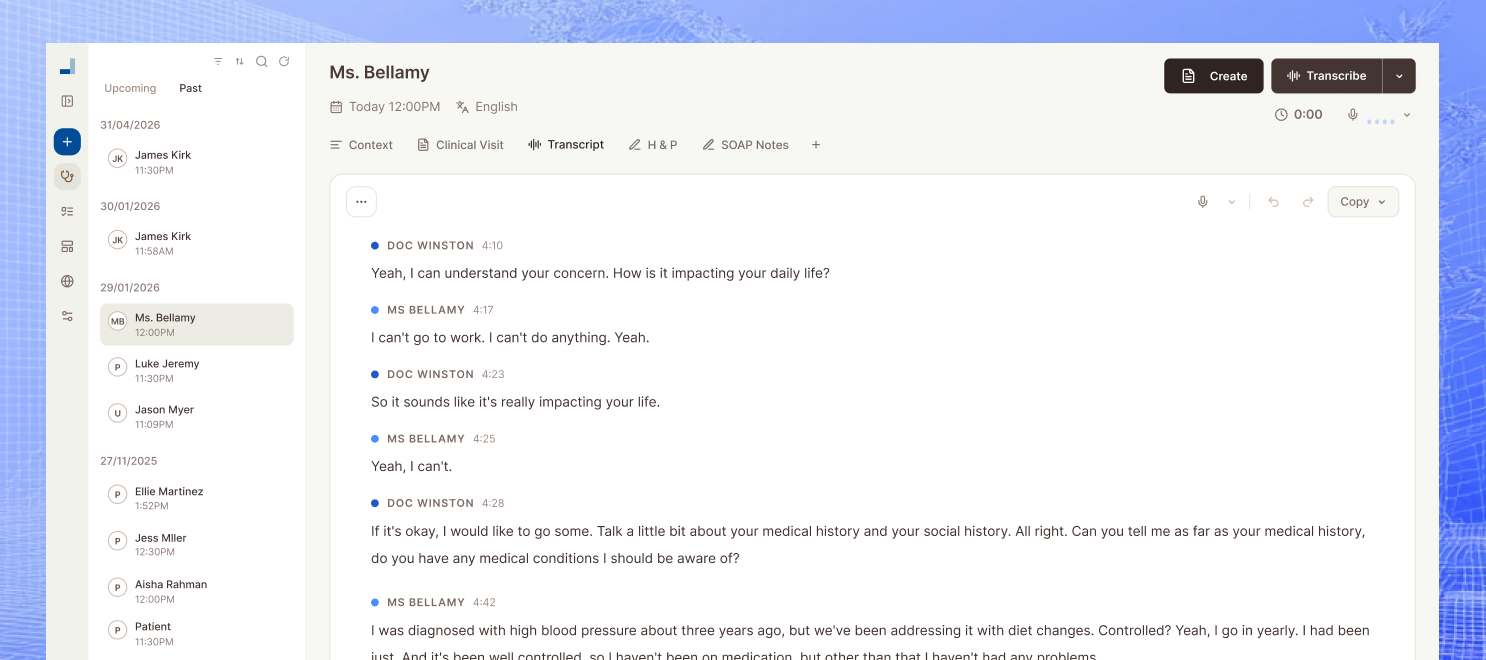
Mcoy AI is an AI medical scribe that records and transcribes patient encounters, then generates multiple clinical note types (H&P, progress notes, consult notes, follow-up notes, procedure notes, discharge summaries, referral letters, and more). With over 200+ customizable templates and an integrated AI chat to create letters, forms, and administrative documents, it helps clinicians spend more time on care and less on paperwork.
Conclusion
Modern medicine doesn’t have to mean modern burnout. By implementing a structured workflow and using an AI medical scribe, practitioners can finally reclaim their personal time. The transition from manual entry to AI-assisted documentation is more than just a productivity hack; it is a fundamental shift in how we approach the patient-doctor relationship. Start your pilot today and see how quickly you can stop the cycle of after-hours charting.
What a serious review table should cover
| Decision area | Common mistake | Better clinic-ready approach | Metric to watch |
|---|---|---|---|
| Workflow design | Treat how to stop after-hours charting with an ai scribe as a one-off documentation task | Build a repeatable process with clear ownership and review points | Time to complete documentation |
| Team adoption | Assume every clinician will naturally use the same process | Train for consistency and define exception handling early | Active user adoption |
| Quality review | Only check notes when a problem is reported | Audit a sample of notes weekly and review edge cases | Edit rate per note |
| Operational follow-through | Leave admin actions outside the documentation workflow | Use the same encounter data for referrals, letters, and follow-up tasks | Completion rate for next-step tasks |
Related reading
If you are working through how to stop after-hours charting with an ai scribe, it helps to read this alongside Physician Wellbeing: Why Documentation Is the Biggest Time Drain for Doctors, Physician Wellbeing: How Doctors Can Reduce Paperwork Without Compromising Care, and Specialty Guides: How to Create Treatment Plans From a Transcript | Full Guide. Those guides cover adjacent workflow, implementation, and evaluation questions so the decision does not sit in isolation.
FAQ
How accurate are AI medical scribes in real clinics?
AI medical scribes currently offer very high accuracy, typically capturing 90-98% of relevant clinical data correctly. They are particularly good at following the structure of a conversation and identifying the chief complaint and plan. However, the accuracy can depend on audio quality, so clinicians should always perform a quick review to catch any technical errors.
Do I still need to review every note?
Yes, as a licensed practitioner, you remain legally responsible for the medical record. The AI is a powerful assistant that creates a 95% complete draft, but you must spend a minute reviewing the output to ensure the assessment and plan are accurate. This review is significantly faster than writing a note from scratch.
What note types can an AI scribe generate besides SOAP?
Sophisticated AI scribes can generate a wide range of documents including History and Physical (H&P) reports, consult notes, procedure notes, and even discharge summaries. They can also be used to draft referral letters and patient education materials based on the encounter. This versatility makes them useful for both general and specialized practices.
Will this work for telehealth and in-person consults?
Yes, most AI scribe tools are designed to work seamlessly across different platforms. For in-person visits, you can use a smartphone or tablet microphone; for telehealth, the scribe can often integrate directly with the video software or record the system audio. The core technology remains the same regardless of how the audio is captured.
How do I explain recording/transcription to patients?
The best approach is to be brief and emphasize patient-centric benefits. Explain that the tool allows you to look at them and listen better instead of typing on a keyboard. Most patients appreciate the extra attention and are happy to consent when they see the doctor is more engaged in the conversation.
How do clinics prevent note bloat?
Clinics can prevent note bloat by using concise templates and setting specific instructions for the AI. You can direct the AI to focus only on ‘new’ information or clinical facts rather than a verbatim transcript. Regularly refining your templates ensures the output stays focused and avoids unnecessary filler text.
How long does template setup take?
Basic template setup usually takes only a few minutes. Most platforms come with pre-built library templates that you can use immediately. Customizing a template to fit your specific specialty or personal shortcut style typically takes about 10-15 minutes of initial configuration to get it exactly right.
What’s the safest way to start if I’m skeptical?
The safest way to start is with a ‘shadow’ pilot. Use the AI scribe for a few patients but continue your manual notes for those same encounters for the first day. Once you see that the AI is capturing all the necessary details accurately, you will gain the confidence to stop the manual notes and fully transition to the AI-assisted workflow.