Physician Wellbeing: How to Minimize Cognitive Load With an AI Medical Scribe
Discover how an AI medical scribe reduces burnout and cognitive load for busy clinicians. Learn to automate H&P, SOAP notes, and more effectively.
What a medical scribe solves in modern practice
The mental burden of modern medicine extends far beyond diagnostic reasoning. For many clinicians, the primary source of fatigue is ‘documentary hygiene’—the constant pressure to capture every detail while maintaining eye contact with the patient. This split attention creates a high cognitive load that often leads to errors, missed clinical nuances, and the dreaded ‘pajama time’ spent finishing charts at home.
An AI medical scribe acts as a sophisticated cognitive assistant that bridges the gap between the conversation and the electronic health record. By taking over the heavy lifting of data capture, it allows the doctor to remain present in the moment. It is important to remember that these tools are assistive technologies; while they automate the transcription and synthesis of the encounter, the clinician remains the final authority and must always review the output for accuracy.
By implementing this technology, private practitioners and university clinics can recapture hours of lost time each week. The shift from manual typing to active listening not only improves the patient experience but also protects the provider from the chronic stress associated with administrative backlog.
- Reduces the ‘split-attention’ effect by automating note capture in real-time.
- Eliminates after-hours charting, directly addressing a core cause of clinician burnout.
- Captures specific patient clinical details that are often forgotten during manual entry.
- Enhances the patient-provider relationship by allowing for better eye contact and engagement.
Note types you can generate beyond SOAP (H&P and more)
While the SOAP note is the industry standard, medical practice requires a diverse array of documentation styles to ensure continuity of care. Relying solely on a one-size-fits-all format can lead to gaps in the patient story, particularly during complex admissions or specialized consultations. Using an AI medical scribe allows for the seamless generation of various note types without additional effort from the provider.
Common outputs now include History and Physical (H&P) reports, progress notes for ongoing hospital stays, and detailed consult notes for specialist referrals. For surgical or procedural specialties, generating procedure notes and discharge summaries immediately after the encounter ensures that the most critical information is fresh and documented correctly. This diversity in documentation is essential for audit readiness and high-quality handovers between departments.
Beyond standard clinical notes, the ability to generate formal referral letters and follow-up instructions adds significant value to the administrative workflow. When the documentation is properly structured, it flows better into the EHR and provides a clearer roadmap for the entire care team. This level of detail is particularly vital in university clinics where multiple residents and attending physicians may be reviewing the same file.
- Supports a wide range of formats including H&P, progress notes, and consult letters.
- Ensures high-quality data for handovers, discharge summaries, and audits.
- Automates the creation of referral letters based on the actual patient encounter.
- Maintains consistent structure across various specialties and visit types.
How to implement an AI medical scribe step-by-step in a real clinic
Starting with an AI tool doesn’t require a total overhaul of your current workflow. The most successful implementations begin with a focused approach, such as selecting one specific visit type—like standard follow-ups or routine physicals—to test the system. This allows the team to get comfortable with the interface without the pressure of a complex multi-system case. Once the basic flow is established, you can begin exploring specialty-specific templates that align with your practice’s unique needs.
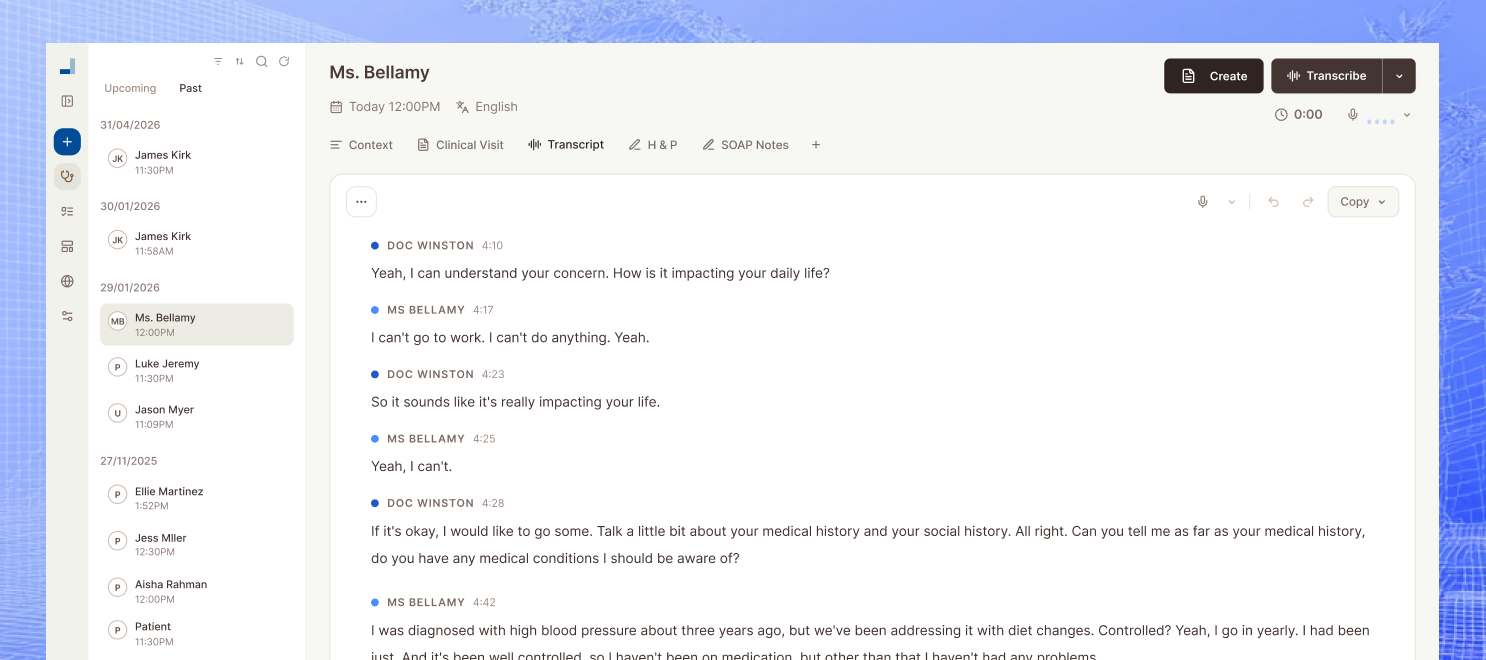
The next phase involves the actual capture of the encounter. Whether you are seeing a patient in-person or via a telehealth platform, you simply initiate the recording. During the conversation, you can speak naturally as you normally would, as the AI is trained to filter out conversational filler and focus on clinical relevance. After the patient leaves the room, the draft is generated almost instantly, allowing for a rapid review while the details are still fresh in your mind.
Revision is a critical step in the narrative flow. You should quickly scan the generated text to ensure the AI correctly interpreted specific medications or values. Because the scribe has already organized the data into the correct headers, this review process typically takes less than sixty seconds. Finally, you can reuse the finalized content to populate other necessary documents, such as work excuse notes or school forms, ensuring that all paperwork remains consistent with the clinical record.
- Start by applying the tool to a single, high-volume visit type to build confidence.
- Use specialty-specific templates to ensure the output matches your clinical needs.
- Review and edit the draft immediately after the visit for maximum efficiency.
- Leverage the clinical text to quickly generate secondary documents like letters and forms.
How to keep note quality high and reduce mistakes
Quality control is the cornerstone of safe medical documentation. Even with advanced AI, failure points can occur, such as the misinterpretation of sound-alike medications or the inclusion of ‘note bloat’—unnecessary boilerplate text that obscures the actual clinical findings. To mitigate these risks, clinics should establish a lightweight review habit where the physician checks the subjective and objective sections for precise values and correct problem lists before signing off.
Standardization across the team also helps maintain high quality. By selecting clear, concise templates, clinics can prevent irrelevant data from cluttering the record. It is helpful to conduct periodic ‘chart audits’ where a lead physician reviews a small sample of AI-generated notes to ensure they meet the practice’s gold standard for clarity and medico-legal robustness.
- Always verify medication names and dosages for accuracy before finalization.
- Prevent note bloat by using concise templates that focus on pertinent findings.
- Implement a quick ‘60-second review’ habit for every draft the AI generates.
- Perform periodic team audits to maintain documentation standards across the clinic.
Privacy, consent, and patient trust (plain English)
Integrating recording technology into the exam room requires transparency and clear communication. While specific consent requirements vary significantly by region and local jurisdiction, the general goal is to ensure the patient feels comfortable and informed. You should always follow the specific policies set by your institution or local medical board, but generally, patients are receptive when they understand the tool allows you to focus more on their health and less on your computer screen.
A simple way to explain this to a patient is to say: “To help me be fully present with you today, I’m using an AI assistant that securely transcribes our conversation into my clinical notes. This ensures I don’t miss any details while I focus on our discussion. Is that okay with you?” Most patients appreciate the extra attention and the fact that their doctor is using modern tools to improve their care quality.
From a security standpoint, it is important to choose tools that adhere to modern encryption and data retention principles. Ensuring that data is handled securely and that patient privacy is prioritized will strengthen the trust between the clinician and the patient. Always verify that your chosen platform aligns with your clinic’s compliance standards before a wider rollout.
- Follow local laws and institutional policies regarding patient consent for recording.
- Use a simple, transparent script to explain the benefits of the AI scribe to patients.
- Choose a platform with robust encryption and clear data handling policies.
- Emphasize that the AI tool helps you provide more focused, attentive patient care.
Rolling it out across a clinic without disruption
A successful rollout is more of a marathon than a sprint. We recommend a two-week pilot program involving one or two ‘super-users’—clinicians who are tech-savvy and can provide internal feedback. During this pilot, the focus should be on time-saved metrics and identifying which templates work best for the clinic’s specific workflow. This small-scale start prevents the disruption of daily operations and allows for troubleshooting in a controlled environment.
Once the pilot is complete, training sessions can be scheduled for the rest of the staff. These sessions should focus on template alignment and the specific workflow for review and EHR integration. By tracking metrics like the reduction in after-hours charting and the time to note completion, clinic owners can demonstrate the tangible value of the tool to the entire team, making the transition much smoother.
- Conduct a 2-week pilot with a small group of users before a full-scale launch.
- Track metrics like after-hours charting time to measure the tool’s impact.
- Align templates across the clinic to ensure documentation consistency.
- Provide focused training on the review and editing process to maximize speed.
Mcoy AI is an AI medical scribe that records and transcribes patient encounters, then generates multiple clinical note types (H&P, progress notes, consult notes, follow-up notes, procedure notes, discharge summaries, referral letters, and more). With 200+ customizable templates and an integrated AI chat, clinicians can easily create letters, forms, and other essential documents, ensuring that every piece of paperwork is accurate and professionally formatted without the manual grind.
Conclusion
Adopting an AI medical scribe is one of the most effective ways for a modern clinic to reduce clinician burnout and improve patient care quality. By automating the transcription and formatting of complex notes—from SOAP to H&P and beyond—providers can reclaim their time and focus on what truly matters: the patient. Implementing a structured workflow, maintaining clinical oversight, and choosing the right templates are the keys to a successful transition. Start with a small pilot today to see how much cognitive load you can shed. Minimize your administrative burden and take the first step toward a more sustainable practice by integrating an AI medical scribe into your daily clinical routine.
What a serious review table should cover
| Decision area | Common mistake | Better clinic-ready approach | Metric to watch |
|---|---|---|---|
| Workflow design | Treat how to minimize cognitive load with an ai medical scribe as a one-off documentation task | Build a repeatable process with clear ownership and review points | Time to complete documentation |
| Team adoption | Assume every clinician will naturally use the same process | Train for consistency and define exception handling early | Active user adoption |
| Quality review | Only check notes when a problem is reported | Audit a sample of notes weekly and review edge cases | Edit rate per note |
| Operational follow-through | Leave admin actions outside the documentation workflow | Use the same encounter data for referrals, letters, and follow-up tasks | Completion rate for next-step tasks |
Related reading
If you are working through how to minimize cognitive load with an ai medical scribe, it helps to read this alongside Physician Wellbeing: Why Documentation Is the Biggest Time Drain for Doctors, Physician Wellbeing: How Doctors Can Reduce Paperwork Without Compromising Care, and Compare & Choose: Best Chronic Care Note Template Guide for Clinicians. Those guides cover adjacent workflow, implementation, and evaluation questions so the decision does not sit in isolation.
FAQ
How accurate are AI medical scribes in real clinics?
AI medical scribes are exceptionally accurate at capturing the dialogue of a patient encounter, often picking up nuances that a tired clinician might overlook. However, their accuracy depends on the quality of the audio and the clarity of the conversation. While they are highly reliable for generating drafts, they are not perfect, and the final clinical responsibility always rests with the physician to review and verify the information.
Do I still need to review every note?
Yes, reviewing every note is a mandatory part of the clinical workflow. The AI acts as a sophisticated assistant that does the drafting, but the clinician must check for medical accuracy, correct dosages, and ensure the plan reflects their clinical judgment. A quick 60-second review is usually all it takes to finalize a high-quality note.
What note types can an AI scribe generate besides SOAP?
Modern AI scribes are capable of generating a vast array of documentation beyond the standard SOAP format. This includes History and Physical (H&P) reports, progress notes, procedure notes, consult letters, and discharge summaries. By using specialized templates, the AI can structure the transcribed data into almost any clinical format used in a medical practice.
Will this work for telehealth and in-person consults?
Yes, AI medical scribes are designed to be versatile and function well in both settings. For in-person visits, a mobile device or tablet is used to capture the room audio, while for telehealth, the system can often integrate directly with the video platform or record the audio from the computer. The transcription quality remains high regardless of the delivery method.
How do I explain recording/transcription to patients?
The best approach is to be brief and focus on the benefit to the patient. You might say that you are using a secure tool to help you stay focused on them rather than your computer. Most patients are very supportive when they realize it means you will be looking at them instead of typing for fifteen minutes.
How do clinics prevent note bloat?
Clinics can prevent note bloat by selecting or customizing templates that prioritize brevity and clinical relevance. Instead of using generic ‘catch-all’ templates, using specific templates for different visit types ensures only the necessary information is included. Regular training on review habits also helps providers keep their notes concise.
How long does template setup take?
Initial setup is usually quite fast, especially if the platform provides pre-built templates for your specialty. Customizing a few core templates to match your specific style might take 15 to 30 minutes, but once they are set, they can be used for thousands of encounters without further adjustment.
What’s the safest way to start if I’m skeptical?
The safest approach is to run a small pilot program. Start by using the tool for just one or two non-complex patient visits per day. This allows you to see the quality of the output and get a feel for the workflow without any risk to your schedule. As your confidence grows, you can gradually expand its use to more complex cases.