Admin Management: How to Improve Handover Notes with an AI Medical Scribe
Discover how to improve handover notes and clinical documentation using AI medical scribes. Streamline workflows and reduce clinician burnout today.
The Crisis of Clinical Documentation and Post-Shift Fatigue
For many clinicians, the end of a shift doesn’t mean the end of work. Instead, it marks the beginning of ‘pajama time’—hours spent hunched over a keyboard trying to recall the nuances of a patient encounter from six hours prior. This delay in documentation often leads to rushed, inconsistent notes and a mounting sense of medico-legal anxiety. When handover notes are incomplete, patient safety is at risk, and the continuity of care suffers across the entire medical team.
This guide will teach you how to overhaul your documentation workflow using modern technology. We will explore various note formats that go beyond the basic SOAP structure, discuss quality control measures, and address privacy concerns. Whether you are a general practitioner, a specialist in a busy private practice, or a provider at a university clinic, learning how to improve handover notes is essential for long-term practice sustainability and personal well-being.
What a medical scribe solves in modern practice
The real cost of documentation isn’t just measured in minutes; it is measured in cognitive load. When a doctor has to memorize details while simultaneously engaging with a distressed patient, the quality of both the interaction and the subsequent record declines. Traditional methods, such as manual typing or basic dictation, often lead to delayed notes that miss critical subtle findings mentioned during the conversation.
An AI medical scribe acts as an assistive intelligence that captures the natural dialogue of a clinical encounter. It is important to understand that these tools are not replacements for clinical judgment; the clinician remains the final authority and responsible party for the medical record. However, by offloading the mechanical task of drafting, the scribe allows the provider to focus entirely on the patient.
- Reduces the ‘documentation tax’ that leads to physician burnout.
- Captures granular details that are often forgotten by the end of the day.
- Ensures notes are completed in real-time, improving the speed of handovers.
- Shifts the clinician’s role from ‘data entry clerk’ back to ‘care provider.‘
Note types you can generate beyond SOAP (H&P and more)
While the SOAP note is a staple of medical training, it isn’t always the most effective way to communicate complex patient data during a transition of care. Advanced documentation workflows require diverse formats such as History and Physicals (H&P), detailed consult notes, and comprehensive procedure records. Each of these serves a specific purpose in ensuring that the next provider in the care chain has a clear, actionable roadmap.
High-quality structure matters because it impacts audit readiness and handover quality. For example, a well-structured discharge summary or a precise referral letter can prevent medication errors and unnecessary readmissions. By utilizing specialized templates for follow-up notes and progress updates, clinics can ensure that every team member, from the resident to the attending, is on the same page.
- H&P and Consult Notes for comprehensive new patient assessments.
- Procedure Notes and Discharge Summaries for acute care transitions.
- Referral Letters that clearly communicate clinical reasoning to specialists.
- Progress Notes that track longitudinal changes in patient status.
How to implement how to improve handover notes step-by-step in a real clinic
To begin improving your workflow, do not attempt to change every note type at once. Start by selecting one specific visit type, such as routine follow-ups or standard physicals, to test the AI integration. This allows the clinical team to get used to the presence of the technology without the pressure of complex multi-system cases. Once the initial comfort level is established, you can begin to customize templates specific to your specialty, whether that is pediatrics, oncology, or primary care.
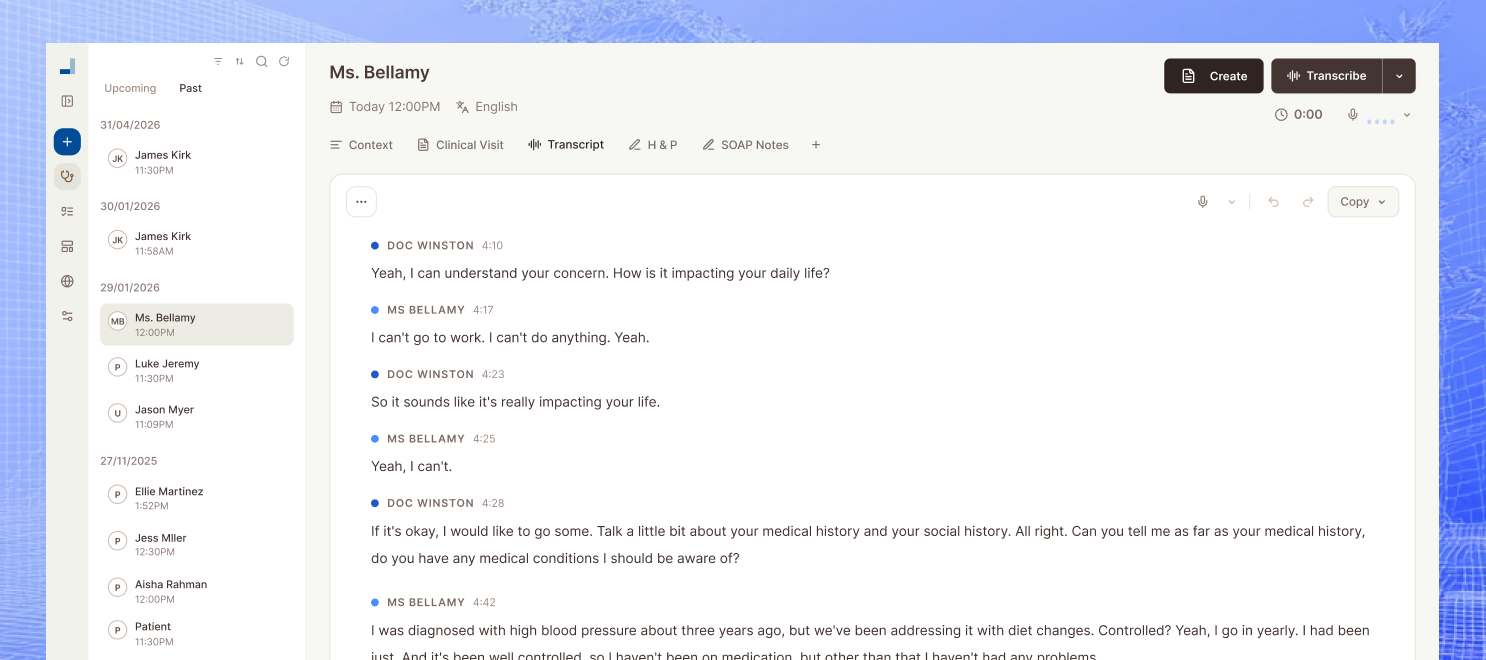
During the encounter, whether it is in-person or via telehealth, simply capture the conversation as it happens naturally. There is no need to change how you speak to the patient; in fact, the more natural the dialogue, the better the context for the scribe. After the visit ends, the AI will provide a draft that you should review and edit immediately while the details are still fresh. This rapid review cycle is the secret to high-quality documentation.
Once the note is finalized, you can leverage the captured data for secondary purposes. The same information used for the clinical note can be instantly repurposed to generate referral letters or patient instruction forms. This ‘write once, use many’ approach significantly slashes administrative time and ensures that the information shared with the patient and other providers is perfectly aligned with the official medical record.
- Start with one visit type to build trust and technical familiarity.
- Customize templates to match your specific specialty’s requirements.
- Review drafts immediately post-encounter to ensure 100% accuracy.
- Repurpose clinical data into letters and forms to maximize efficiency.
How to keep note quality high and reduce mistakes
Effective documentation requires a balance between automation and human oversight. Common failure points in clinic notes include ‘note bloat’—where unnecessary template text obscures clinical facts—and errors in medication lists or specific lab values. To prevent these issues, clinics should establish a lightweight review habit where the physician spends 60 seconds verifying the ‘Assessment and Plan’ sections before signing off.
Setting team-wide standards for what constitutes a ‘good’ note is also vital. This includes ensuring that the problem list is updated and that subjective patient reports are clearly distinguished from objective physical findings. By maintaining a high standard for the initial AI draft review, the entire clinic benefits from more reliable data for billing and legal protection.
- Avoid note bloat by using concise, specialty-specific templates.
- Always verify medication dosages and specific numerical values.
- Distinguish clearly between patient-reported symptoms and clinical findings.
- Implement a ‘final look’ habit before any note is committed to the EHR.
Privacy, consent, and patient trust (plain English)
Patient privacy is the cornerstone of the therapeutic relationship. While the legal requirements for consent vary by region and jurisdiction, the best practice is always transparency. Patients are generally very supportive of technology that allows their doctor to look them in the eye rather than at a computer screen, provided they understand how their data is being handled.
You can explain the process to a patient by saying: ‘To make sure I’m fully present with you today, I’m using a digital assistant to help me with my notes. It records our conversation so I don’t have to type while we talk, and then it creates a draft for me to review. Is that okay with you?’ This simple script addresses the ‘why’ and the ‘how’ while giving the patient the power to opt-out.
- Always follow local and regional regulations regarding recording and data storage.
- Use a simple, transparent script to ask for patient consent.
- Ensure the technology used adheres to high-standard security principles.
- Make it clear that the recording is for documentation assistance only.
Rolling it out across a clinic without disruption
A successful rollout requires a structured approach rather than an overnight switch. We recommend a two-week pilot program involving a small group of ‘super-users’ who can identify potential bottlenecks. During this time, the clinic should track metrics such as time saved per patient and the reduction in ‘after-hours’ charting. These data points help win over skeptical staff members and justify the adoption.
Training should focus on template alignment to ensure that the output from the AI scribe matches the existing format of your Electronic Health Record (EHR). When the documentation style remains consistent with previous records, it minimizes friction for other staff members who need to read the notes. By the end of the pilot, the efficiency gains usually become the primary driver for full-clinic adoption.
- Conduct a two-week pilot with a small group of staff to test workflows.
- Track time savings to demonstrate the value to the entire organization.
- Align AI templates with existing EHR formats for seamless transitions.
- Provide clear training sessions focused on the review and edit process.
Mcoy AI is an AI medical scribe that records and transcribes patient encounters, then generates multiple clinical note types (H&P, progress notes, consult notes, follow-up notes, procedure notes, discharge summaries, referral letters, and more). With over 200+ customizable templates and an interactive AI chat, clinicians can easily create letters, forms, and complex documents from their talk track. This helps practitioners focus on the patient while the AI handles the heavy lifting of administrative documentation.
Frequently Asked Questions
Transitioning to an automated workflow often brings up practical questions about daily clinic operations and the nuances of patient interaction. Below are the most common inquiries from practitioners looking to improve their handover notes.
How accurate are AI medical scribes in real clinics?
AI medical scribes are highly accurate at capturing the context and medical terminology used during a consultation. However, they are designed to provide a draft, not a final legal document. The accuracy depends on the clarity of the conversation, and the clinician must always perform a final review to ensure clinical correctness.
Do I still need to review every note?
Yes, reviewing every note is a professional and legal requirement for clinicians. The AI serves as a powerful assistant that does 90% of the work, but the final 10%—the verification of facts, plans, and dosages—remains the responsibility of the licensed provider to ensure patient safety.
What note types can an AI scribe generate besides SOAP?
Modern AI scribes are incredibly versatile and can generate a wide range of documents including History and Physicals (H&P), detailed procedure notes, discharge summaries, and consult letters. They can also be used to draft referral letters and patient education materials based on the encounter data.
Will this work for telehealth and in-person consults?
AI scribes are designed to be flexible and work across various settings. Whether you are conducting an in-person physical exam or a remote telehealth session, the technology captures the audio stream and processes it into the structured format required for your specific workflow.
How do I explain recording/transcription to patients?
Most clinicians find that being direct is best. Explain that the tool allows you to focus on the patient instead of the computer. Most patients value the increased eye contact and undivided attention, and they are happy to consent when they see the benefit to their quality of care.
How do clinics prevent note bloat?
Clinics prevent note bloat by selecting or creating concise templates that prioritize essential information over ‘filler’ text. By training the AI on specific styles and being diligent during the review phase, clinicians can ensure their notes remain crisp, readable, and professional.
How long does template setup take?
Basic template setup usually takes just a few minutes, as many AI scribes come with pre-built libraries for most specialties. Fine-tuning a template to your exact personal preferences might take an additional hour of testing during your first few shifts of use.
What’s the safest way to start if I’m skeptical?
The safest approach is to run the AI scribe in the background during a few non-complex visits without relying on it for your primary documentation. This allows you to compare the AI’s output against your manual notes in a low-stakes environment until you feel confident in its performance.
Conclusion
Improving the quality of clinical documentation is one of the most effective ways to reduce burnout and enhance patient safety. By moving away from manual typing and adopting a structured workflow, you can ensure that your records are both comprehensive and timely. Learning how to improve handover notes with an AI medical scribe is not just about efficiency; it’s about reclaiming your time and focusing on the core of medicine: the patient encounter. Start by piloting a digital scribe in your clinic this week and experience the difference in your daily workload.
What a serious review table should cover
| Decision area | Common mistake | Better clinic-ready approach | Metric to watch |
|---|---|---|---|
| Workflow design | Treat how to improve handover notes with an ai medical scribe as a one-off documentation task | Build a repeatable process with clear ownership and review points | Time to complete documentation |
| Team adoption | Assume every clinician will naturally use the same process | Train for consistency and define exception handling early | Active user adoption |
| Quality review | Only check notes when a problem is reported | Audit a sample of notes weekly and review edge cases | Edit rate per note |
| Operational follow-through | Leave admin actions outside the documentation workflow | Use the same encounter data for referrals, letters, and follow-up tasks | Completion rate for next-step tasks |
Related reading
If you are working through how to improve handover notes with an ai medical scribe, it helps to read this alongside Admin Management: How to Reduce Admin Errors in Clinical Notes, Admin Management: Medication List Template with Examples, and Specialty Guides: Onboard Your Whole Clinic to AI Documentation: Full Guide. Those guides cover adjacent workflow, implementation, and evaluation questions so the decision does not sit in isolation.
FAQ
How accurate are AI medical scribes? Do I need to review every note? What note types can it generate? Does it work for telehealth? How to explain to patients? How to prevent note bloat? How long is setup? How to start safely?