Veterinary Surgery Documentation Checklist
Clear veterinary operations guide to using a surgery documentation checklist, with documentation standards, workflow controls, and audit-ready habits.
Why using a surgery documentation checklist needs a clinic workflow
Compliance problems in veterinary practice are usually workflow problems wearing a legal label. The rule might live in a handbook or a board policy, but the real question inside the clinic is whether the team can execute the requirement consistently on a busy day. The risk usually appears when the clinic relies on individual memory rather than a defined documentation process.
This is especially true in surgical service lines. Records need to be complete enough to support continuity of care, clear enough for another veterinarian to review, and organized enough to stand up under inspection or internal audit. That does not happen because people care. It happens because the workflow makes the right thing the easy thing.
Build the standard before you build the checklist
A checklist is useful only when the clinic agrees on the standard it is measuring. Start by defining what every record in this workflow must include, who is responsible for capturing each part, and when the record is considered finished. That sounds simple, but many teams skip the ownership step and then wonder why the same documentation gaps keep reappearing.
Use high-risk or high-value records first. If using a surgery documentation checklist affects surgery, anesthesia, consent, controlled substances, referral handoffs, or treatment plan acceptance, do not bury that workflow in a generic template. Give it a specific record standard, a short review routine, and a correction process the team can follow.
- Define the minimum required content for the workflow before building the audit tool.
- Assign ownership for intake, clinical review, client authorization, and final sign-off.
- Create one correction method for record errors so edits are handled consistently.
- Document how the clinic verifies local and jurisdiction-specific requirements when rules vary.
The clinic controls that make records more defensible
The strongest clinics treat record quality like an operating system, not a last-minute review task. They know which records need extra controls, which templates need periodic updates, and which handoffs are most likely to create risk. For using a surgery documentation checklist, that means testing whether the record can answer practical questions: what happened, what the client agreed to, what was prescribed or performed, and what the next step is.
Do not confuse legal specificity with long notes. A long note can still be weak if it buries the key facts. Defensible records are usually clear, legible, timely, and consistent. Because rules differ by jurisdiction, the clinic should verify local requirements before relying on any retention, consent, or controlled-substance workflow as final legal advice.
- Review a sample of records every week until the clinic can describe the common failure pattern.
- Convert repeated audit findings into template changes or clearer ownership rules.
- Keep local legal verification separate from the daily checklist so the team knows what must be confirmed externally.
- Train new hires on the record workflow early so compliance standards survive staff turnover.
Documentation controls table for practice leaders
| Focus area | Strong clinic standard | Common miss | KPI |
|---|---|---|---|
| Required content | Every record type has a defined minimum standard | The team guesses what must be included | Audit pass rate |
| Ownership | Each part of the record has a named owner | Missing content because no role owns it | Number of incomplete records |
| Correction process | Errors are fixed through one documented method | Ad hoc edits with no standard | Correction turnaround time |
| Jurisdiction check | Local legal requirements are reviewed and updated regularly | Outdated assumptions drive the workflow | Policy review cadence |
How Mcoy Health fits into this workflow
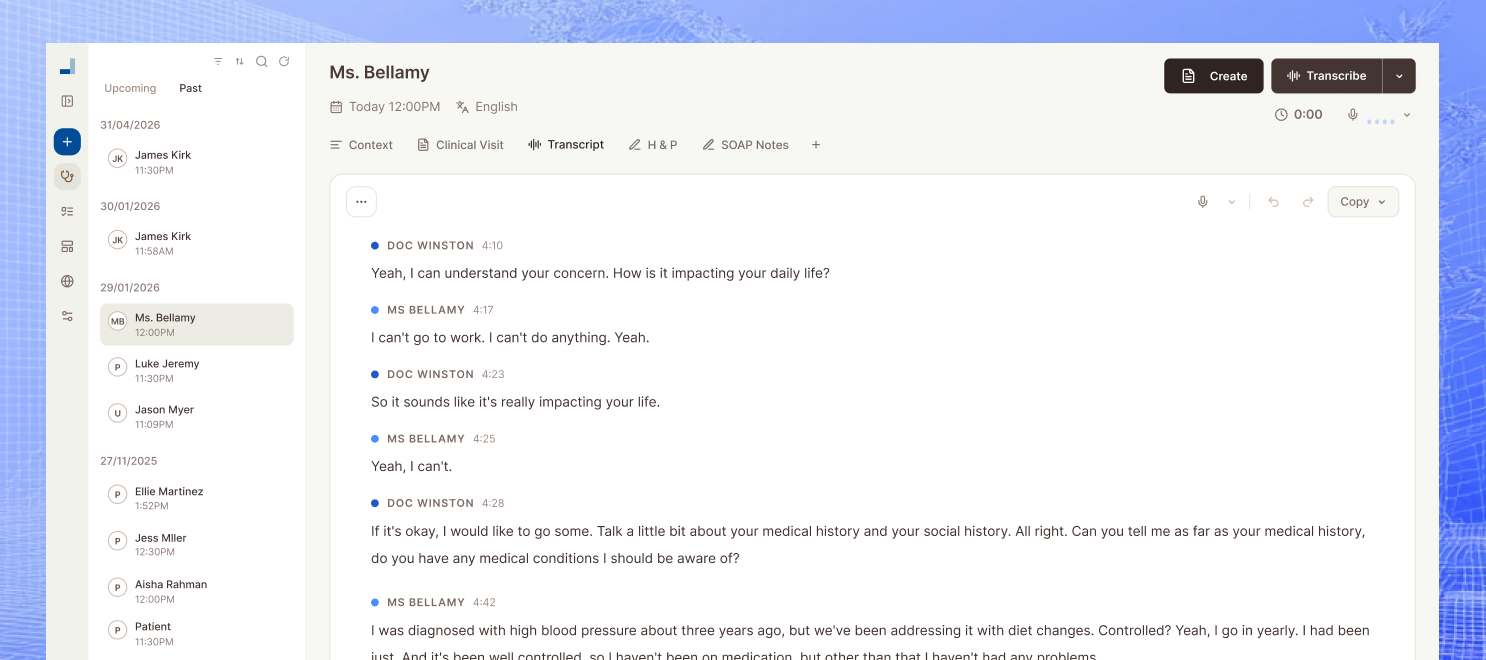
Mcoy Health is an AI medical scribe for veterinary teams that helps clinics capture consults, route visit details into structured templates, and reuse the same source material for discharge notes, follow-up messages, and internal handoffs. It is most useful when a practice wants faster documentation, stronger template consistency, and a review-first workflow that keeps the veterinarian in control of the final record.
Related reading
Keep going with Veterinary Anesthesia Recordkeeping Best Practices, VCPR Documentation Workflows for Veterinary Teams, How Veterinary Clinics Can See More Patients Without Burnout, or browse the full Vet Compliance & Medical Records archive for more veterinary workflow content.
FAQ
Does one documentation checklist work for every veterinary clinic?
No. The workflow should reflect the services you provide, the species you see, and the rules that apply in your state or province. A checklist is still useful, but it should be treated as an operations tool that gets adapted to your real environment rather than a universal legal answer.
How should clinics handle jurisdiction-specific rules?
Use this type of workflow guide to build operational discipline, and then verify retention, consent, prescribing, and controlled-substance details against local rules and professional guidance. The safest system is one where legal requirements are translated into a repeatable clinic workflow instead of living only in someone’s memory.
What creates the biggest compliance risk in day-to-day practice?
The biggest risk is inconsistency. Missing signatures, weak correction standards, scattered consent notes, and handoffs that live outside the chart are harder to defend than a clinic expects. Small gaps repeated across hundreds of visits create the real exposure.
Who should own record audits?
A veterinarian should help set the standard, but the ongoing audit process can sit with a practice manager, lead technician, or compliance-minded operations lead. The point is to create a regular review rhythm so record quality is measured instead of assumed.
How often should a clinic review its documentation standards?
At minimum, review them quarterly and any time a service line, medication workflow, or referral process changes. Compliance work falls apart when the clinic updates what it does but never updates what it documents.
Final operating reminder
Veterinary Surgery Documentation Checklist only creates value when the process is simple enough for the team to follow on a busy day. Keep the workflow visible, assign ownership for the handoff points, and review the result every week instead of assuming the system will hold on its own. Veterinary clinics improve fastest when the note, the task list, the client message, and the follow-up booking all move through one predictable path.
In practice, that means turning using a surgery documentation checklist into a repeatable operating rhythm instead of a one-time project. Review recent cases, compare where the record slowed down, and decide which steps belong in a template, which belong in staff training, and which still require doctor judgment. When the process is clear enough for a new hire to follow without constant rescue, the clinic is usually close to a workflow that can scale.
- Review one week’s worth of using a surgery documentation checklist cases with the doctor, technician, and front desk lead together.
- Identify where work is still being copied, rewritten, or clarified after the visit instead of during it.
- Turn the best-performing process into a short SOP so new team members inherit the same standard.
- Recheck the workflow a month later so temporary fixes become part of a stable clinic routine.