How to Improve Appointment Throughput in a Veterinary Clinic
Actionable guide to improving appointment throughput with throughput fixes, team handoffs, and scheduling tactics for busy veterinary practices.
Why improving appointment throughput is usually a flow issue
When a veterinary clinic feels slow, the schedule gets blamed first. Sometimes that is fair, but most practices lose more time inside the visit than on the calendar itself. That slowdown usually comes from poor handoffs, weak room prep, delayed documentation, and follow-up tasks that are triggered too late. The result is a clinic that looks full but still leaks time between every step.
The fix is not to rush the client. It is to remove the quiet pauses that do not add clinical value. In high-volume clinics, that often means tightening pre-visit intake, structuring room turnover, capturing the note earlier, and making the next action visible before the patient leaves the building.
Where the minutes actually disappear
Every clinic should map one typical appointment from check-in to close-out. That exercise usually reveals the real problem quickly. History is gathered twice. The veterinarian waits for missing context. The technician is unsure who owns the client message. The discharge summary gets written after the patient is already gone. Those are process problems, not personal speed problems.
- Check whether intake information is complete before the veterinarian enters the room.
- Look for moments where the same fact is spoken, typed, and then rewritten later.
- Watch how long a room sits idle because the next owner is unclear.
- Measure the gap between the visit ending and the note, discharge, or task actually being closed.
A faster operating model that still feels calm to clients
For improving appointment throughput, the best model is usually simple: gather more context before the room, structure the visit so the note can be reviewed quickly, and push the next-step decision into the visit instead of leaving it for later. If the clinic wants more throughput, it needs less hidden work after the appointment, not just tighter appointment slots.
Practice managers should treat this like a sequence problem. The doctor should not be the default owner of every unresolved detail. Intake, documentation, booking, and follow-up can each have a visible handoff point so the case moves forward without being reopened three different times.
- Map the current appointment flow and mark every pause, repeat question, or ownership gap.
- Redesign the workflow so the note, booking decision, and client message happen closer to the visit itself.
- Train the team on the handoff points, not just the software clicks.
- Review one week’s worth of delay data and keep adjusting until the bottleneck moves.
Throughput table for veterinary operations teams
| Focus area | Strong clinic standard | Common miss | KPI |
|---|---|---|---|
| Pre-visit prep | Signalment, reason for visit, and key history ready before room entry | History gathering starts only after the doctor arrives | Average room start delay |
| Visit capture | Documentation structure supports same-day review | Doctor rebuilds note after the visit | Minutes from visit end to chart close |
| Handoff clarity | Clear owner for discharge, recheck, and callbacks | Tasks sit unclaimed after the visit | Open follow-up tasks |
| Client flow | Room turnover and next-step booking happen predictably | The patient leaves before the workflow is really closed | Daily appointment throughput |
How Mcoy Health fits into this workflow
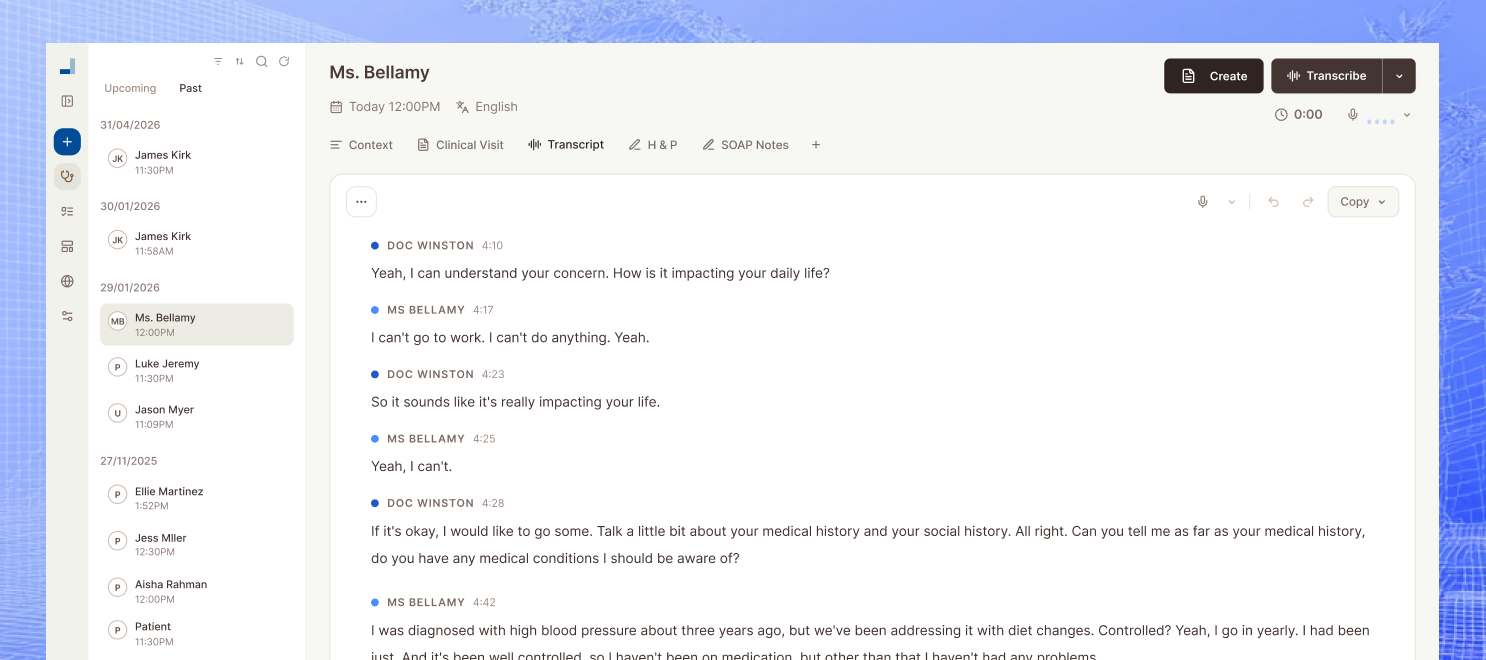
Mcoy Health is an AI medical scribe for veterinary teams that helps clinics capture consults, route visit details into structured templates, and reuse the same source material for discharge notes, follow-up messages, and internal handoffs. It is most useful when a practice wants faster documentation, stronger template consistency, and a review-first workflow that keeps the veterinarian in control of the final record.
Related reading
Keep going with How to Reduce No-Shows in Veterinary Practice, Faster Exam Room Documentation for Vet Teams, Best AI Documentation Tools for Small Animal Veterinarians, or browse the full Consultation Efficiency archive for more veterinary workflow content.
FAQ
How can a clinic move faster without making clients feel rushed?
The answer is better structure, not shorter attention. When intake, room prep, note capture, discharge, and follow-up are all predictable, the team spends more of the visit on the client and less on finding information. Efficiency should create calmer visits, not colder ones.
What usually causes the biggest slowdown?
The biggest slowdowns are weak handoffs and work that restarts after the visit is over. If the veterinarian has to gather history again, rebuild the note later, or clarify what the client was told, the real bottleneck is process design. Scheduling alone rarely fixes that.
Should every appointment type use the same efficiency workflow?
No. The clinic should use one operating model, but different appointment types need different levels of structure. A wellness exam, urgent same-day visit, recheck, and surgical discharge all move differently. Trying to force identical timing rules on all of them usually creates more friction.
What KPI matters most?
Same-day chart closure is one of the best anchor metrics because it reflects how well the entire visit flow is working. If the chart is still open hours later, something upstream probably failed. Pair it with waiting-room delay and callback volume for a more complete view.
How should practice managers start improving consult flow?
Start by shadowing a handful of visits from check-in to close-out. Write down every point where work pauses, gets repeated, or changes hands without a clear owner. That simple exercise reveals the bottlenecks faster than another scheduling guess.
Final operating reminder
How to Improve Appointment Throughput in a Veterinary Clinic only creates value when the process is simple enough for the team to follow on a busy day. Keep the workflow visible, assign ownership for the handoff points, and review the result every week instead of assuming the system will hold on its own. Veterinary clinics improve fastest when the note, the task list, the client message, and the follow-up booking all move through one predictable path.
In practice, that means turning improving appointment throughput into a repeatable operating rhythm instead of a one-time project. Review recent cases, compare where the record slowed down, and decide which steps belong in a template, which belong in staff training, and which still require doctor judgment. When the process is clear enough for a new hire to follow without constant rescue, the clinic is usually close to a workflow that can scale.
- Review one week’s worth of improving appointment throughput cases with the doctor, technician, and front desk lead together.
- Identify where work is still being copied, rewritten, or clarified after the visit instead of during it.
- Turn the best-performing process into a short SOP so new team members inherit the same standard.
- Recheck the workflow a month later so temporary fixes become part of a stable clinic routine.