How to Build a Vet Workflow That Protects Team Capacity
Operational guide to building workflows that protect team capacity so veterinary clinics can reduce overload, protect team capacity, and close notes faster.
Why building workflows that protect team capacity is an operations problem
Burnout discussions in veterinary medicine often stay too abstract to fix. Teams know they are tired, but the clinic never translates that exhaustion into workflow terms the schedule, record, or staffing model can actually address. In most veterinary clinics, that exhaustion is driven by repeated low-control work: notes done late, tasks reopened after discharge, callbacks with no clear owner, and clinicians carrying routine admin responsibilities that should have been systemized months ago.
The clinics that make progress do not wait for perfect staffing before they improve the flow. They reduce avoidable rework first. That means asking where the doctor is doing work twice, where the technician is guessing, where the front desk cannot see the next step, and where the record is still open when the team should be heading home.
The workload patterns that quietly drain capacity
In growing practices, overload is rarely one massive failure. It is usually dozens of small decisions the team has to remake every day. Who sends the follow-up message? Who owns the recheck booking? Where do declined treatment notes live? Which template should the doctor use? When those decisions are unclear, the clinic pays for them with interruptions, delay, and emotional exhaustion.
- Late charting often starts earlier in the day with weak intake and fragmented note capture.
- Technician overload usually grows when discharge tasks and callbacks are not routed clearly.
- Managers lose capacity when there is no single scorecard for unfinished work at day end.
- Doctors burn out faster when routine admin decisions still depend on them personally.
A practical reset that protects team capacity
Start with the end of the shift. Ask what is still open at 6 p.m. or 7 p.m. and why. If the same tasks appear every day, you have found the workflow that needs redesign. Build the reset around that evidence. Shorten the path between consult and chart close. Standardize follow-up ownership. Decide what can be delegated safely. Remove duplicate documentation wherever the same clinical fact gets written more than once.
For building workflows that protect team capacity, the best reset is often boring on purpose. A shorter task list, fewer handoffs, clearer templates, and a same-day review habit will usually outperform a dramatic culture initiative that leaves the daily workflow untouched.
- Track which tasks are still open at the end of the day for two full weeks.
- Redesign the repeat offenders first instead of trying to solve every stressor at once.
- Move routine work away from veterinarians when a standardized team workflow can own it.
- Review the shift-end workload in a weekly manager meeting until the backlog drops.
What managers should measure every week
Burnout reduction becomes real when the clinic can see capacity coming back. If teams still leave with unfinished charts, open callbacks, and rechecks not booked, the process is not fixed yet. A healthy clinic does not mean a stress-free clinic. It means the daily work is predictable enough that people are not constantly paying for broken systems with their own time.
Burnout and capacity scorecard
| Focus area | Strong clinic standard | Common miss | KPI |
|---|---|---|---|
| Chart closure | Most notes finished on the same day | Large evening backlog | Same-day chart close rate |
| Task ownership | Each follow-up task has one visible owner | Tasks bounce between roles | Open tasks at shift end |
| Delegation | Doctors only own work that needs doctor judgment | Routine admin routed back to the veterinarian | Doctor admin minutes per visit |
| Staff stability | Workload reviewed before people hit the wall | Burnout only discussed after someone resigns | Turnover and overtime trends |
How Mcoy Health fits into this workflow
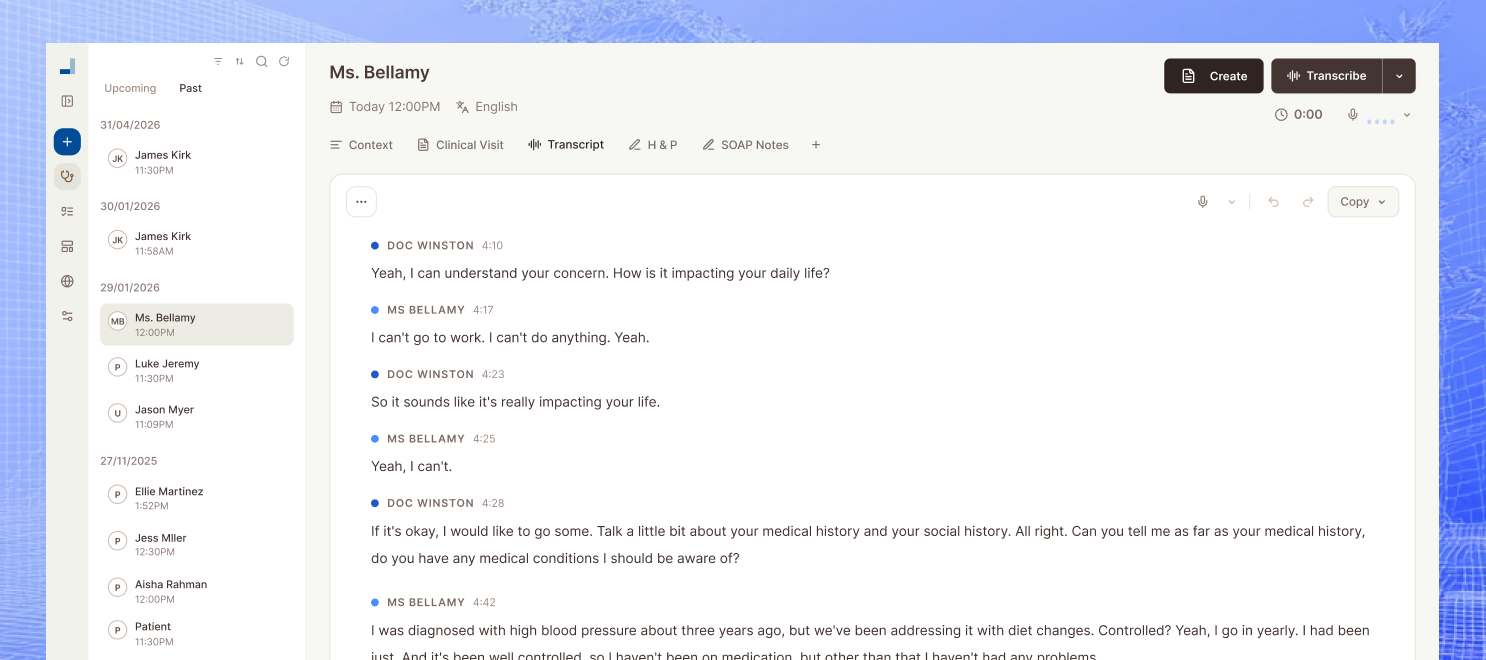
Mcoy Health is an AI medical scribe for veterinary teams that helps clinics capture consults, route visit details into structured templates, and reuse the same source material for discharge notes, follow-up messages, and internal handoffs. It is most useful when a practice wants faster documentation, stronger template consistency, and a review-first workflow that keeps the veterinarian in control of the final record.
Related reading
Keep going with Why Late Notes Hurt Retention in Veterinary Clinics, How to Reduce Inbox and Callback Overload for Vet Teams, Veterinary Medical Record Requirements Explained, or browse the full Vet Burnout & Team Capacity archive for more veterinary workflow content.
FAQ
Is building workflows that protect team capacity really a workflow issue and not just a staffing issue?
Usually it is both, but workflow is the part the clinic can change fastest. When notes, callbacks, discharge tasks, and scheduling decisions are poorly structured, even a fully staffed team feels short-handed. Fixing ownership and handoff design often frees up more capacity than another rushed hire.
What is the first thing a practice manager should audit?
Audit where work is being reopened after the patient leaves. Late notes, missing client instructions, unclear task ownership, and repeated callbacks are usually the most expensive forms of hidden work. Once you can see the rework, you can redesign it.
How do you reduce after-hours charting without lowering record quality?
Move more structure into the visit itself so the final note becomes a quick review instead of a reconstruction job. That means better intake, cleaner templates, faster handoffs, and same-day follow-up systems. Quality usually improves when the record is closed while the visit is still fresh.
What metrics show a burnout fix is actually working?
Track same-day chart closure, open tasks at the end of the shift, callback volume, overtime hours, and staff retention indicators. Burnout conversations stay vague when the clinic only talks about feelings. Operational metrics make the problem visible and easier to improve.
How long does it take to feel a difference?
If the workflow change is real, teams usually notice relief within a few weeks because the heaviest friction points are daily and obvious. The biggest gains often come from removing repeated low-value work rather than introducing a complicated new program.
Final operating reminder
How to Build a Vet Workflow That Protects Team Capacity only creates value when the process is simple enough for the team to follow on a busy day. Keep the workflow visible, assign ownership for the handoff points, and review the result every week instead of assuming the system will hold on its own. Veterinary clinics improve fastest when the note, the task list, the client message, and the follow-up booking all move through one predictable path.
In practice, that means turning building workflows that protect team capacity into a repeatable operating rhythm instead of a one-time project. Review recent cases, compare where the record slowed down, and decide which steps belong in a template, which belong in staff training, and which still require doctor judgment. When the process is clear enough for a new hire to follow without constant rescue, the clinic is usually close to a workflow that can scale.
- Review one week’s worth of building workflows that protect team capacity cases with the doctor, technician, and front desk lead together.
- Identify where work is still being copied, rewritten, or clarified after the visit instead of during it.
- Turn the best-performing process into a short SOP so new team members inherit the same standard.
- Recheck the workflow a month later so temporary fixes become part of a stable clinic routine.