Physician Wellbeing: Why Doctors Are Burnt Out and What Can Actually Fix It
Full guide on why doctors experience burnout and what actually fixes it, including reducing admin work and smarter clinical systems.
Burnout among doctors is no longer a quiet issue discussed behind closed doors. It is visible in clinics, hospitals, and universities around the world. Long hours, emotional strain, administrative overload, and constant pressure have pushed many clinicians to the edge. Some reduce their hours. Some leave clinical practice entirely. Others stay, but feel detached, exhausted, and frustrated.
What makes burnout especially challenging is that it is often misunderstood. Doctors are resilient, highly trained professionals. Many assume burnout is a personal failure, a lack of coping skills, or simply part of the job. In reality, burnout is a system problem. And system problems require system-level solutions.
This guide explains why doctors are burning out and, more importantly, what actually helps. Not surface-level fixes, but changes that address the root causes of the problem.
Burnout is not just feeling tired
Burnout is more than exhaustion after a long week. It is a state of emotional depletion, depersonalisation, and reduced sense of accomplishment. Doctors experiencing burnout often feel detached from their work, less empathetic with patients, and overwhelmed by tasks that once felt manageable.
Many clinicians still care deeply about their patients, but feel trapped by systems that make it harder to practise medicine well. This mismatch between effort and reward is one of the most damaging aspects of burnout.
The real reasons doctors are burning out
Burnout is often blamed on long hours or difficult patients, but these are only part of the story. The deeper causes are structural and have intensified over time.
Administrative workload has grown dramatically. Documentation, compliance, billing, referrals, and reporting now take up a significant portion of the workday. Many doctors spend more time on computers than with patients, often finishing notes late at night.
Loss of autonomy is another major factor. Protocols, metrics, and rigid systems can make doctors feel like operators rather than professionals. When clinicians have little control over how they work, frustration builds quickly.
Emotional labour also plays a role. Doctors absorb stress from patients, families, and teams every day. Without adequate recovery time or support, this emotional load accumulates.
Finally, constant cognitive switching drains energy. Moving between patient care, documentation, inboxes, and administrative tasks creates mental fatigue that does not resolve with rest alone.
Why common burnout solutions fall short
Many burnout interventions focus on individual resilience. Mindfulness sessions, wellness apps, yoga classes, and time management tips are well intentioned, but often ineffective on their own.
These approaches place responsibility back on doctors without addressing the systems that cause burnout in the first place. Asking clinicians to cope better with broken workflows is like asking them to run faster on a treadmill that keeps speeding up.
Real improvement comes from reducing unnecessary work, restoring focus, and giving doctors back time and control.
Administrative burden is the biggest accelerant
While burnout has multiple causes, administrative overload consistently ranks at the top. Documentation alone consumes hours each day for many doctors. This work often happens after clinic hours, stealing time from rest and personal life.
What makes documentation especially draining is not just the time it takes, but how it fragments attention. Doctors must remember details from consultations, retype information, and format notes to meet requirements, all while juggling other responsibilities.
Reducing administrative burden is one of the fastest and most reliable ways to reduce burnout. When paperwork decreases, stress decreases with it.
Burnout improves when systems improve
Doctors feel better when their work feels meaningful again. This happens when systems support care instead of competing with it.
Streamlined documentation, clear workflows, and tools that reduce duplication allow clinicians to focus on patients. When doctors are present during consultations instead of distracted by screens or future charting, both care quality and job satisfaction improve.
System improvements do not require hiring more staff in many cases. They require better use of technology and smarter workflow design.
How technology can actually help, when used correctly
Technology has contributed to burnout in some settings, especially when systems are poorly designed. However, when implemented thoughtfully, technology can also be one of the most effective fixes.
The key difference is whether technology adds tasks or removes them. Tools that require extra clicks, duplicate data entry, or constant maintenance increase burnout. Tools that quietly reduce work in the background relieve it.
One of the most impactful examples is AI-assisted documentation.
Reducing burnout through AI-assisted documentation
AI-assisted documentation changes the nature of clinical paperwork. Instead of writing notes from scratch after each visit, doctors receive a structured draft based on the actual conversation that took place.
This turns documentation into a review task rather than a writing task. Review requires less cognitive effort, takes less time, and can often be completed during normal work hours.
This is where Mcoy AI plays a practical role in addressing burnout.
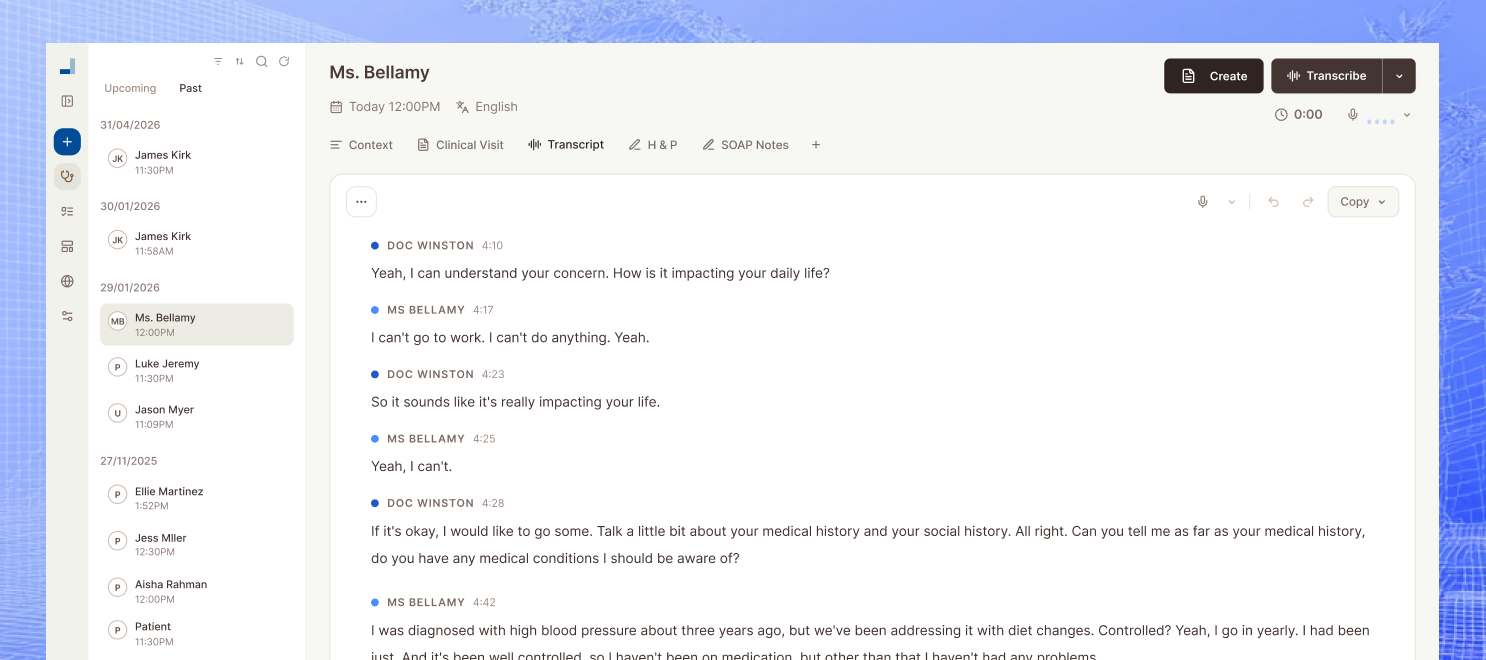
Mcoy AI is an AI medical scribe designed to reduce administrative workload for doctors. It can record and transcribe patient encounters, turn them into structured SOAP notes, and generate clinical documents using over 200 customisable templates built for different specialties. Doctors can also chat with their encounters, create referral letters, forms, and reports from the same consultation. By removing hours of manual documentation, Mcoy AI helps clinicians reclaim time, reduce after-hours work, and focus more on patient care.
Reducing documentation time does not just save minutes. It restores evenings, reduces mental fatigue, and makes clinical work feel manageable again.
Presence with patients matters more than ever
One of the most painful aspects of burnout is feeling disconnected from patients. When doctors spend consultations thinking about documentation instead of listening, satisfaction drops on both sides.
Tools that capture information automatically allow doctors to stay present. Patients feel heard. Clinicians feel like clinicians again.
This presence is protective against burnout. Meaningful patient interactions are one of the strongest buffers against emotional exhaustion.
Small changes compound over time
Burnout does not improve overnight, and neither do solutions. However, small system improvements add up.
Reducing documentation time by even 15 to 20 percent can free several hours each week. Eliminating duplication reduces frustration. Clear templates reduce decision fatigue. Over weeks and months, these changes significantly lower stress levels.
Importantly, these improvements do not require doctors to work harder or change who they are. The system changes around them.
What actually fixes burnout long term
The most effective burnout solutions share common characteristics. They reduce unnecessary work. They restore autonomy. They allow doctors to focus on meaningful tasks.
Long-term improvement comes from redesigning workflows, not adding coping strategies on top of broken systems. When documentation is easier, communication is clearer, and technology works quietly in the background, burnout rates fall.
Doctors do not need to be more resilient. They need better tools and better systems.
Reframing burnout as a solvable problem
Burnout is often treated as inevitable. It is not. While medicine will always be demanding, unnecessary administrative burden is not a fixed feature of healthcare.
Clinics that invest in workflow improvement, automation, and AI-assisted documentation consistently report better morale and retention. Doctors who regain control over their time rediscover why they chose medicine in the first place.
Fixing burnout is not about escaping medicine. It is about making medicine sustainable again.
What a serious review table should cover
| Decision area | Common mistake | Better clinic-ready approach | Metric to watch |
|---|---|---|---|
| Workflow design | Treat why doctors are burnt out and what can actually fix it as a one-off documentation task | Build a repeatable process with clear ownership and review points | Time to complete documentation |
| Team adoption | Assume every clinician will naturally use the same process | Train for consistency and define exception handling early | Active user adoption |
| Quality review | Only check notes when a problem is reported | Audit a sample of notes weekly and review edge cases | Edit rate per note |
| Operational follow-through | Leave admin actions outside the documentation workflow | Use the same encounter data for referrals, letters, and follow-up tasks | Completion rate for next-step tasks |
Related reading
If you are working through why doctors are burnt out and what can actually fix it, it helps to read this alongside Physician Wellbeing: Why Documentation Is the Biggest Time Drain for Doctors, Physician Wellbeing: How Doctors Can Reduce Paperwork Without Compromising Care, and AI & Medicine: How to Use an AI Medical Scribe for SOAP Notes: Full Guide. Those guides cover adjacent workflow, implementation, and evaluation questions so the decision does not sit in isolation.
FAQ
Frequently Asked Questions
Is burnout mainly caused by long working hours
Long hours contribute, but administrative burden and loss of control are stronger drivers of burnout than time alone.
Can reducing documentation really improve burnout
Yes. Documentation is one of the largest sources of stress and after-hours work. Reducing it often leads to immediate relief.
Does technology make burnout worse
Poorly designed technology does. Tools that remove work rather than add it can significantly reduce burnout.
Is burnout a personal failure
No. Burnout is a system-level issue caused by chronic workplace stress. It is not a reflection of individual weakness.
Can small clinics address burnout without big budgets
Yes. Workflow improvements and AI-assisted documentation often deliver high impact without large staffing or infrastructure costs.