Compare & Choose: What is Medical Charting? Definition & Best Practices
Full guide for doctors and clinics: What is medical charting, why it matters, and best practices. Includes workflow tips, compliance guidance, and AI tools for healthcare.
Medical charting is one of the most essential — yet often the most time-consuming — responsibilities in clinical practice. Every patient encounter, every symptom described, every decision made, and every care plan initiated must be recorded accurately. Done well, medical charting protects both clinician and patient by creating a clear, chronological story of care. Done poorly, it leads to confusion, inefficiency, compliance risks, and lost time that could have been spent treating patients.
For clinics, private practices, and solo physicians, understanding medical charting deeply is not optional. It is the backbone of continuity of care, billing accuracy, compliance, and even patient trust. In this full guide, we will walk through the definition of medical charting, why it matters, and the best practices modern clinicians follow to ensure their charts are both thorough and efficient.
Understanding What Medical Charting Really Means
At its simplest, medical charting is the systematic recording of a patient’s health information during every point of care. This includes symptoms, physical findings, diagnoses, treatment plans, medications, follow-up recommendations, and the clinician’s clinical reasoning. But in practice, charting is more than a log — it is the patient’s medical story.
A medical chart is a legal document, a communication tool among providers, a reference for future encounters, and evidence for billing. When a physician re-enters the room after a week, month, or year, the chart tells them exactly who the patient is, what happened last time, and what must happen next.
Charting takes many forms depending on specialty and clinical workflow, but generally includes:
Patient historyPhysical exam findingsAssessment and diagnosisTreatment planOrders and medicationsFollow-up instructionsCommunication notes, care coordination, and clinical reasoning
Every line in a chart contributes to the clarity and continuity of care. When done properly, it allows any provider to pick up the case and instantly understand what has happened before.
Why Medical Charting Matters So Much
Doctors do not chart for fun. They chart because the stakes are enormous. Medical charts:
Protect the clinician legally by documenting decisions and clinical judgmentEnsure continuity when multiple providers or nurses are involvedImprove patient safety by avoiding misunderstandings or duplicated stepsProvide evidence for insurance billing and codingServe as historical records for future diagnoses and treatment patternsSupport communication between specialist referrals, allied health providers, and labs
A clear chart eliminates ambiguity. A vague or incomplete chart creates risks, confusion, and administrative back-and-forth that drains time and increases liability.
Healthcare has evolved to expect speed and accuracy simultaneously. Yet traditional manual charting slows clinicians down — often forcing them to finish notes late at night or during breaks. This is why more providers are looking for efficient, modern approaches to charting without sacrificing detail.
What Makes a Good Medical Chart?
The highest-quality medical charts are detailed, consistent, and clinically meaningful. A “good chart” is not one filled with excessive copy-paste text or generic statements. Instead, it is:
Clear — anyone reading it should instantly understand the clinical picture.Specific — symptoms, findings, and plans must be precise.Accurate — no ambiguity, missing details, or contradictions.Legible — whether typed or transcribed, clarity is non-negotiable.Chronological — events must flow logically from presentation to plan.Compliance-friendly — especially for billing, coding, and medico-legal safety.
A great chart reflects great clinical reasoning. It tells the “why” behind decisions, not just the “what.” It demonstrates medical judgment, not just documentation.
Best Practices in Medical Charting
The most effective clinicians follow structured practices when charting. These practices ensure efficiency while maintaining accuracy and compliance.
1. Use a structured format consistently
Most physicians rely on familiar formats like SOAP, APSO, or H&P structures. Consistency eliminates cognitive load and speeds documentation. When each chart follows a predictable flow, reviewing old notes becomes much easier.
2. Document in real time whenever possible
Memory fades quickly during busy clinics. Real-time charting ensures accuracy. Writing notes hours after the visit increases risk of missing symptoms, forgetting patient cues, or misinterpreting subtle findings.
Clinicians often try:Document as the patient speaksUse quick templates for repetitive conditionsRecord short reminders during the encounter
Real-time charting reduces nighttime work and improves quality.
3. Avoid vague statements
Statements like “patient is stable” or “symptoms unchanged” lack clarity. Specific details like location, severity, duration, progression, and patient quotes create a much stronger chart.
4. Include clinical reasoning
Medical decisions must be traceable. A note that shows thought process — even briefly — protects the clinician from liability and ensures safe continuity of care.
Instead of documenting only the conclusion, include why the diagnosis or plan was made.
5. Use templates but customize them
Templates save time, but generic text can weaken medical charts. Clinicians should use templates as a foundation, then personalize them with patient-specific information.
Good templates reduce typing — not quality.
6. Ensure accuracy for billing and coding
Documentation must support the level of care billed. Accurate charting ensures correct reimbursement and prevents compliance issues. For private practices relying heavily on insurance reimbursement, this is crucial.
7. Keep communication and care-coordination notes
Documentation is not only symptoms and treatment. It includes phone calls, lab follow-ups, discussions with family members, and referral communication. These details matter in medico-legal and continuity scenarios.
8. Leverage modern tools to reduce workload
Many physicians now use AI scribes, voice dictation, and automated templates to reduce the manual burden of charting. The goal is to maintain accuracy while giving clinicians back their time.
How Mcoy AI Helps Doctors Improve Their Medical Charting
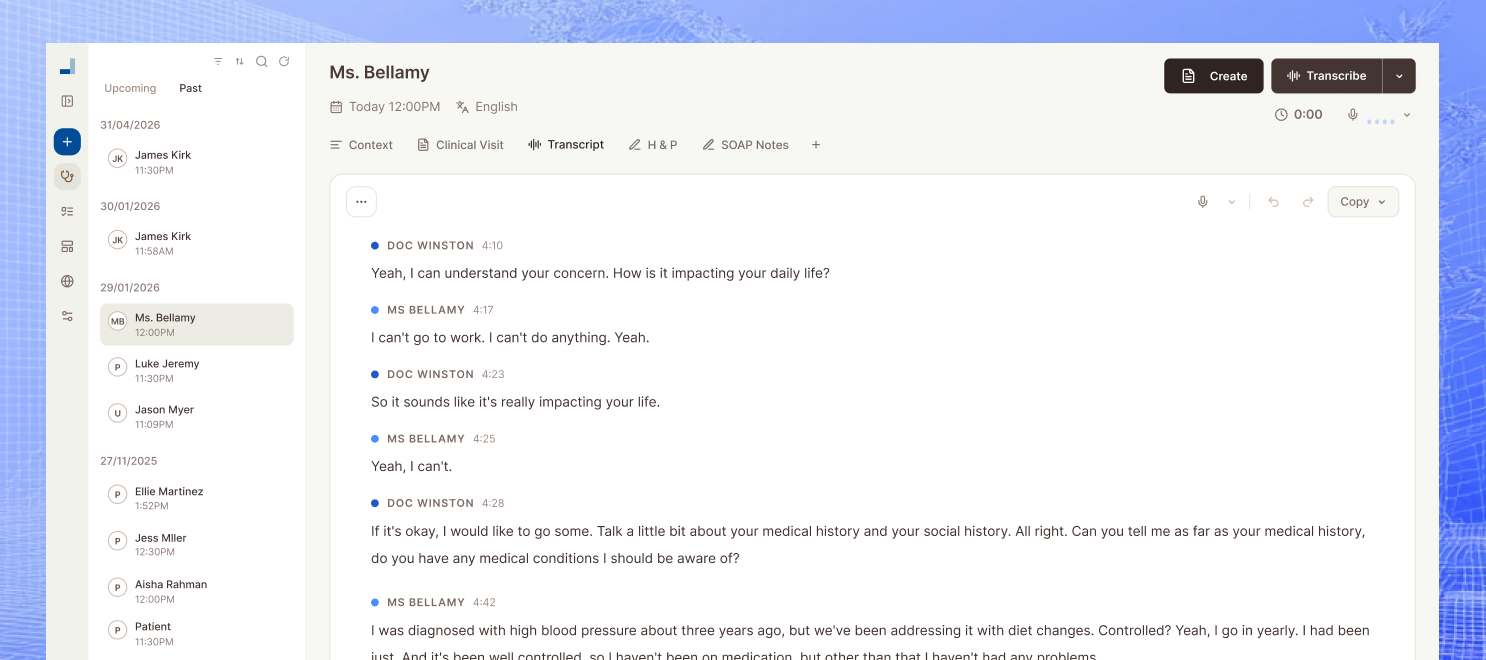
Modern practices are moving away from typing every note manually. With Mcoy AI, clinicians can record patient encounters, generate accurate SOAP notes, update templates instantly, and produce documents in seconds. Mcoy AI comes with over 200 customizable templates created by healthcare professionals across multiple specialties, allowing doctors to shape their documentation style however they prefer.
It can also chat with patient encounters, generate forms, letters, and clinical documents with the accuracy of ChatGPT built directly inside. This reduces administrative burden dramatically — helping clinicians chart more accurately in less time while focusing more on patient care.
What a serious review table should cover
| Decision area | Common mistake | Better clinic-ready approach | Metric to watch |
|---|---|---|---|
| Workflow design | Treat what is medical charting? definition & best practices as a one-off documentation task | Build a repeatable process with clear ownership and review points | Time to complete documentation |
| Team adoption | Assume every clinician will naturally use the same process | Train for consistency and define exception handling early | Active user adoption |
| Quality review | Only check notes when a problem is reported | Audit a sample of notes weekly and review edge cases | Edit rate per note |
| Operational follow-through | Leave admin actions outside the documentation workflow | Use the same encounter data for referrals, letters, and follow-up tasks | Completion rate for next-step tasks |
Related reading
If you are working through what is medical charting? definition & best practices, it helps to read this alongside Compare & Choose: Best Tools Doctors Use to Save Time on Clinical Notes, Compare & Choose: Medical Scribing Services: Are They Worth It?, and Specialty Guides: Document Follow-Up Visits Faster With an AI Scribe Guide. Those guides cover adjacent workflow, implementation, and evaluation questions so the decision does not sit in isolation.
FAQ
Common Challenges Doctors Face in Charting
Even experienced doctors struggle with charting, especially in busy private practices or high-volume clinics. Some of the most common issues include:
- Time pressure and back-to-back appointments
- Fear of under-documenting for medico-legal protection
- Balancing accuracy with speed
- Typing fatigue during long clinic days
- Repeating similar notes for chronic condition follow-ups
- Incomplete data from rushed encounters
These challenges not only cause burnout but also reduce patient satisfaction when the doctor spends more time on the computer than engaging with the patient.
The Future of Medical Charting
Medical charting is shifting toward automation, voice-first workflows, and AI-supported documentation. Instead of typing everything, physicians will increasingly rely on:
- Real-time transcription
- Voice-activated charting
- AI-generated SOAP and APSO formats
- Automated summaries of patient interactions
- Template autofill based on specialty and condition
- Error-checking and compliance monitoring
This evolution allows clinicians to focus on clinical thinking rather than typing. The goal is not to replace the doctor’s judgment but to amplify it by removing time-consuming administrative noise.
Doctors are already embracing smoother workflows that blend technology with their clinical routines. Practices that adopt modern charting tools report higher efficiency, better patient communication, and fewer after-hours documentation sessions.
Final Thoughts
Medical charting is the silent backbone of clinical practice — essential for safety, compliance, communication, and continuity of care. While it has traditionally been time-consuming and repetitive, the landscape is changing fast. Doctors now have access to tools that preserve accuracy while giving them back the time they need to focus on actual medical care.
By mastering structured charting practices and embracing modern automation, clinicians can protect themselves, support their teams, and deliver better care efficiently and confidently.
FAQ
What is medical charting?
Medical charting is the process of documenting a patient’s health information, symptoms, assessment, treatment plan, and clinical reasoning during every encounter.
Why is accurate charting important?
It ensures patient safety, legal protection for clinicians, smooth communication among providers, proper billing, and reliable continuity of care.
How long should a medical chart be?
It should be long enough to capture necessary detail without unnecessary fluff. Clarity and completeness matter more than length.
Do doctors still write notes manually?
Yes, but many clinics now use voice dictation, AI scribes, and automated templates to reduce the manual burden.
What tools improve medical charting efficiency?
Modern tools such as AI scribes, template-based documentation systems, and real-time transcription can greatly speed up charting.