AI & Medicine: What is Medical Charting?
Full guide for doctors and clinics on medical charting: definition, importance, workflow, and best practices. Includes AI tools and hospital documentation tips.
Medical charting is one of those tasks every clinician must do, but almost none enjoy. It is essential for safe care, legal protection, billing accuracy, and continuity between providers. Yet, ask any doctor what eats up their day, and medical charting will rank near the top—usually right next to administrative paperwork, prior authorizations, and chasing missing documents. Understanding what medical charting actually includes, why it matters, and how to perform it efficiently can help reduce the mental load that comes with documentation and improve both clinical quality and workflow efficiency in your practice.
Medical charting refers to the process of recording a patient’s medical history, clinical findings, diagnoses, treatment plans, and progress in an organized, accurate, and timely manner. These notes form the backbone of patient care. Every decision you make, every medication you prescribe, every encounter you document becomes part of a legal and clinical record that follows the patient across their healthcare journey. High-quality charting supports patient safety, improves communication between providers, and ensures that clinical decisions are based on the most complete and updated information available.
Many clinicians think of charting as a simple writing task, but it is far more structured than that. A proper chart includes subjective details the patient shares, objective findings from your examination, assessments you make based on the findings, and the plan you create for next steps. This familiar SOAP framework helps standardize documentation so other providers can quickly understand the clinical reasoning behind your decisions. In a hospital or practice setting, good charting means less guesswork, fewer repeat questions, and a smoother experience for both patient and provider.
Why Medical Charting Matters in Everyday Practice
Medical charting plays several critical roles that directly impact patient outcomes and a clinician’s legal and operational responsibilities. First, charting ensures continuity of care. When another clinician picks up your chart—whether it is a colleague, a covering physician, or a specialist—they rely entirely on your documentation to understand what has happened, what treatments were given, and what still needs follow-up.
Accurate charting also protects providers legally. In the event of audits, disputes, or litigation, a well-documented medical record becomes the most objective evidence of your thought process and actions. Courts and auditors lean heavily on how clearly and thoroughly the record reflects appropriate care. Even small omissions can have disproportionate consequences.
Billing and coding are tightly linked to charting as well. Proper documentation is essential for coding patient visits accurately, meeting compliance requirements, and avoiding claim denials. A visit that is not documented thoroughly is a visit that cannot be billed properly. For private practices and clinics with tight margins, this can compound into real financial loss.
Components of a High-Quality Medical Chart
At its core, a medical chart contains information that gives a complete picture of the patient’s health, the clinician’s reasoning, and the plan moving forward. Most charts include the patient’s demographic information, medical history, past surgeries, medication list, allergies, and previous diagnoses. The encounter notes detail the current reason for visit, symptoms, exam findings, labs or imaging done, diagnosis, and the treatment plan.
The structure of the chart also matters. Many clinics rely on the SOAP method because it creates consistency and allows clinicians to rapidly scan and understand key points. The subjective section includes the patient’s own description of symptoms. The objective covers measurable findings—vital signs, exam results, and test data. The assessment is your clinical interpretation, including possible diagnoses. The plan outlines next steps such as medication changes, referrals, follow-up timing, lifestyle instructions, and further investigations. When written clearly, this structure helps the entire care team understand exactly what was done and why.
Another important element is clarity. Avoiding unnecessary jargon, writing in complete sentences, and being specific instead of vague can significantly elevate the quality of a chart. Instead of writing “patient stable,” a more helpful entry might describe the actual vital signs, appearance, and relevant exam findings. Precision improves patient safety and ensures the record is useful long after the encounter ends.
Common Mistakes Doctors Make While Charting
Even experienced clinicians fall into habits that compromise documentation quality. One of the most common pitfalls is charting too late. When notes are completed hours after a shift or at the end of a long clinic day, crucial details are often forgotten or mixed with other patients’ information. Delayed charting increases the risk of errors and reduces the reliability of the documentation.
Another issue is over-reliance on templates. While templates save time, they can accidentally introduce inaccuracies if clinicians forget to remove irrelevant details. Copy-and-paste errors remain one of the most cited causes of incorrect documentation in audits. Clinicians must ensure the record reflects the specific encounter rather than a generic version of a condition.
Vague wording is another problem. Phrases like “doing better” or “good response to treatment” do not give measurable information. Notes should be specific and describe the patient’s response in a way that another clinician can objectively understand. Similarly, missing documentation of follow-up plans can lead to confusion and gaps in care.
Finally, failing to document patient discussions—risks explained, options offered, informed consent, medication adherence counseling—can create legal vulnerabilities. Clear documentation of shared decision-making is crucial for both patient understanding and legal protection.
Best Practices for Efficient, Accurate Medical Charting
Improving medical charting does not require longer hours; it requires smarter habits. One effective strategy is to chart in real time when possible. Documenting during or immediately after an encounter captures details more accurately and reduces end-of-day backlog, one of the biggest sources of clinician burnout.
Another best practice is to focus on clinical relevance. Include the information that matters for diagnosis, treatment, and continuity, rather than writing paragraph-long entries that bury key points. Well-designed templates can help maintain consistency, but they should be customized to fit your specialty and workflow.
Using consistent terminology helps too. When describing pain, for example, document location, quality, duration, triggers, and progression. When explaining an assessment, note what you ruled out and why. This level of detail prevents misunderstandings and supports clear clinical reasoning.
For busy clinics, adopting a structured flow throughout the day can help. Many clinicians dedicate a few minutes between patients to complete unfinished notes, rather than accumulating everything at the end of a session. This reduces fatigue-based mistakes and gives more mental clarity.
The Rise of AI Tools in Medical Charting
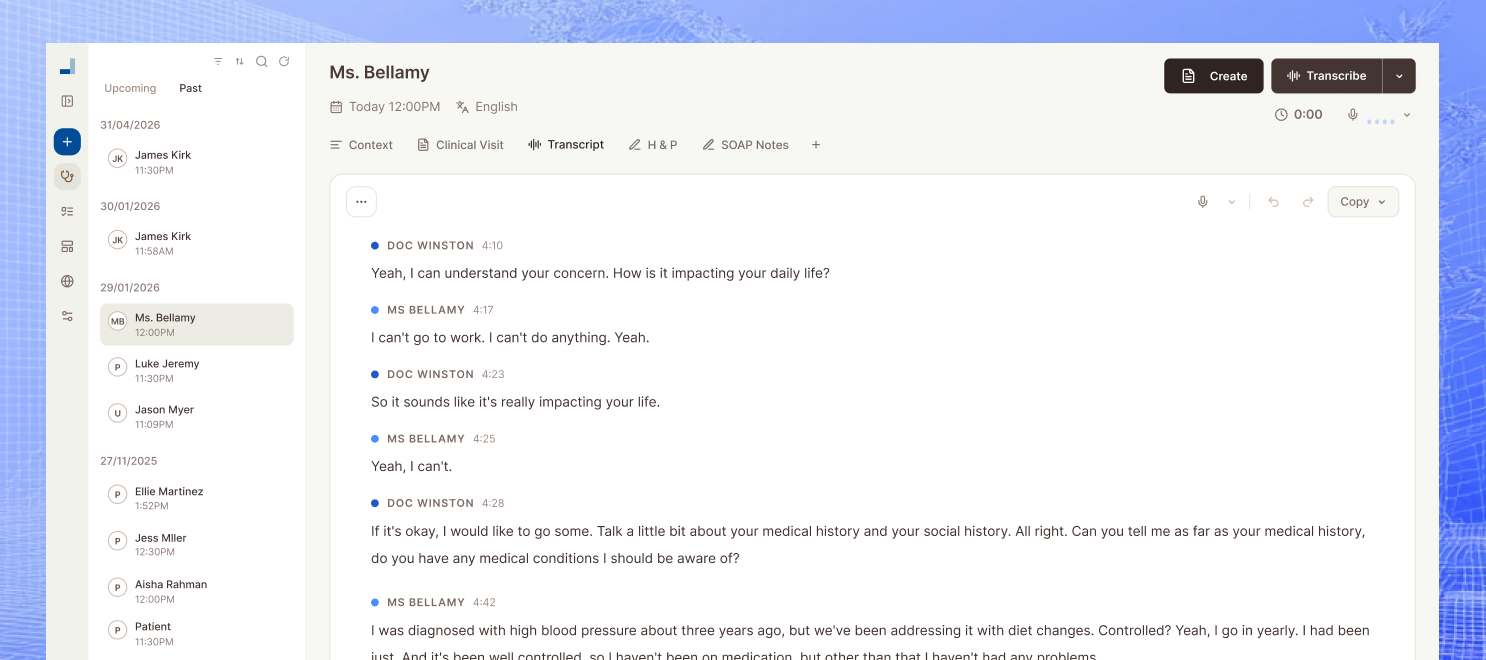
One of the biggest workflow shifts in modern clinical practice is the introduction of AI-powered medical scribes and documentation assistants. These systems can record patient encounters, transcribe conversations, extract clinical insights, and generate structured notes—including SOAP notes, referral letters, assessment summaries, and care plans—within minutes. For clinicians who feel overwhelmed by documentation demands, AI tools have become essential partners in maintaining both accuracy and efficiency.
How Mcoy AI Improves the Charting Workflow for Doctors
For clinics looking to significantly reduce documentation time, Mcoy AI provides a streamlined solution designed specifically for medical professionals at the most affordable price. It acts as a fully capable AI medical scribe that can record and transcribe patient encounters, convert them into SOAP notes, and even generate documents, referral letters, or forms using over 200 customizable templates created by healthcare practitioners.
Doctors can also chat with the encounter to refine details, pull out important points, or create additional documentation instantly. With fast, accurate transcription and automation built around real clinical workflows, Mcoy AI helps reduce administrative load so clinicians can focus more on delivering patient care rather than typing notes.
Medical Charting and Compliance Considerations
Proper charting also plays a major role in regulatory compliance. Medical records are subject to standards set by organizations like HIPAA, state medical boards, and insurance payers. Improper documentation can lead to compliance violations, denied claims, or malpractice exposure. Ensuring that charts are complete, specific, and timely is one of the best ways to minimize risks.
Clinicians should document any changes in patient condition, medication changes, and discussions related to risks and consent. Additionally, documenting phone calls, telehealth visits, and secure messaging interactions has become increasingly important in modern care models. Everything that influences clinical decision-making should have a place in the chart.
The Future of Medical Charting
As the healthcare industry evolves, charting will continue to shift toward more automation, standardization, and AI assistance. Real-time documentation with speech recognition, predictive suggestions, and template-driven notes will become standard. Clinics that adopt these technologies early will see improved efficiency, higher patient throughput, and less clinician fatigue.
However, no matter how advanced the tools become, the clinician’s judgment will always remain central. Technology supports the workflow, but the accuracy and integrity of the chart ultimately depend on the provider who reviews and approves the notes.
Medical charting does not need to be the task that drains a clinician’s day. With better habits, clearer structure, and the help of intelligent tools, practices can significantly reduce time spent on documentation and improve both clinical quality and patient experience.
What a serious review table should cover
| Decision area | Common mistake | Better clinic-ready approach | Metric to watch |
|---|---|---|---|
| Workflow design | Treat what is medical charting? as a one-off documentation task | Build a repeatable process with clear ownership and review points | Time to complete documentation |
| Team adoption | Assume every clinician will naturally use the same process | Train for consistency and define exception handling early | Active user adoption |
| Quality review | Only check notes when a problem is reported | Audit a sample of notes weekly and review edge cases | Edit rate per note |
| Operational follow-through | Leave admin actions outside the documentation workflow | Use the same encounter data for referrals, letters, and follow-up tasks | Completion rate for next-step tasks |
Related reading
If you are working through what is medical charting?, it helps to read this alongside AI & Medicine: How to Simplify Clinical Notes for Busy Doctors, AI & Medicine: How Doctors Can Improve SOAP Notes, and Specialty Guides: How to Use an AI Scribe for Specialist Clinics | Guide. Those guides cover adjacent workflow, implementation, and evaluation questions so the decision does not sit in isolation.
FAQ
What is the main purpose of medical charting?
The primary purpose of medical charting is to create an accurate, complete, and legally compliant record of a patient’s health status and clinical care. It helps doctors track progress, communicate with other providers, support safe decision-making, and document the reasoning behind treatments. Proper charting also ensures accurate billing and protects clinicians during audits or legal reviews.
How detailed should medical documentation be?
Documentation should be detailed enough for another clinician to understand the patient’s condition, your assessment, and the plan moving forward without needing verbal clarification. The note should reflect the complexity of the visit, the clinical reasoning behind your decisions, any risks discussed, and the next steps. Overly vague or template-heavy notes can compromise safety and billing accuracy.
What are common mistakes doctors make when charting?
Common issues include charting too late, using generic templates without customizing them, missing key exam findings, not documenting follow-up plans, and failing to record informed consent or discussions about risks. Copy-and-paste habits also introduce inaccuracies that can become problematic during audits.
When should clinicians complete their charts?
Charts should ideally be completed during or immediately after the patient encounter. Real-time or near-real-time documentation reduces the risk of missing details, improves accuracy, and prevents a backlog of unfinished notes. Delayed charting often leads to errors and significantly increases end-of-day workload.
How does medical charting affect billing and insurance claims?
Accurate charting is essential for proper coding. Insurers rely on documented evidence to validate the level of service billed. If a chart lacks detail, the claim may be downgraded or denied even if the care you provided was appropriate. Thorough documentation ensures financial accuracy and protects clinics from revenue loss.
Can AI tools help improve medical charting?
Yes, modern AI scribes and documentation tools can assist with transcription, summarization, and generating structured notes. These systems help clinicians reduce time spent typing and ensure completeness by capturing important details. AI also improves clinical workflow by automating repetitive documentation tasks and producing ready-to-use templates.
What makes Mcoy AI different from other charting tools?
Mcoy AI is designed specifically for clinical practice. It can record and transcribe patient encounters, generate structured SOAP notes, and create referral letters and patient documents using over 200 customizable templates built for real specialties. Doctors can also chat with the encounter to extract details or generate additional documents instantly. Its goal is to lighten administrative burden so clinicians can focus more on patient care rather than paperwork.
How can clinics improve documentation quality across the team?
Clinics can standardize templates, provide documentation training, implement real-time charting workflows, and review common errors during team meetings. Encouraging consistency in terminology and structure also improves clarity. Many practices benefit from integrating AI tools that automate repetitive tasks and ensure notes remain accurate and comprehensive.
What happens if a chart is incomplete or inaccurate?
Incomplete documentation can lead to misunderstandings in patient care, incorrect billing, legal liability, and compliance issues. Inaccurate notes may compromise continuity of care and create gaps that affect clinical decisions made by other providers. Ensuring the chart is complete and correct is essential for patient safety and legal protection.
Is medical charting becoming more automated?
Yes, the future of charting is moving toward automation, real-time speech capture, and AI-generated notes. Clinics adopting these innovations now experience reduced administrative strain, improved accuracy, and faster workflows. While automation will assist heavily, clinician oversight remains critical to ensure the final chart reflects true clinical judgment.