Physician Wellbeing: How to Spend More Time With Patients and Less Time on Notes
Full guide on how doctors can spend more time with patients and less time on notes using smarter documentation workflows and AI tools.
Most doctors did not go into medicine to spend their days staring at a screen. Yet for many clinicians today, documentation consumes as much time as patient care, sometimes more. Notes spill into lunch breaks, evenings, and weekends. During consultations, attention is split between listening and typing. Over time, this erodes both patient experience and professional satisfaction.
Spending more time with patients and less time on notes is not about working faster or cutting corners. It is about redesigning how information is captured, structured, and reused. When documentation systems support care instead of competing with it, doctors can be present again.
This guide explains why notes take over the workday and what actually helps doctors reclaim time with patients without sacrificing quality, accuracy, or compliance.
Why notes steal time from patient care
Documentation has expanded for many reasons. Regulatory requirements are higher. Communication between providers is more complex. Digital records, while necessary, often introduce extra steps rather than simplifying workflows.
Many doctors document defensively, adding more detail than clinically necessary to protect against audits or legal risk. Others delay documentation until after clinic hours, which makes the task slower and more mentally draining.
The biggest issue is fragmentation. Information discussed in the consultation is not captured efficiently, so it must be reconstructed later. This creates a constant tension between being present with the patient and thinking ahead to paperwork.
The hidden cost of divided attention
When doctors split attention between patients and notes, everyone loses. Patients feel less heard. Clinicians miss non-verbal cues. Consultations become transactional rather than relational.
For doctors, divided attention increases cognitive load. Switching between listening, typing, and clinical reasoning is exhausting. Even short consultations feel draining when they require constant context switching.
Over time, this pattern contributes to burnout and dissatisfaction. The solution is not to type faster during visits, but to reduce the need to type at all.
Start by changing when notes are created
One of the most effective shifts is moving documentation from a writing task to a review task. Instead of creating notes from scratch after the visit, doctors should receive a structured draft that reflects what actually happened.
When information is captured during the consultation, doctors can focus on patients and review notes later in a focused block. This alone can restore presence during visits and reduce after-hours work.
The goal is not perfect notes in real time. The goal is capturing enough accurate information so the final note is quick to review and sign.
Use structure to reduce mental load
Unstructured documentation slows everything down. Starting from a blank page requires decisions about format, phrasing, and order before clinical content even begins.
Structured templates remove this friction. They provide a familiar framework that matches how clinicians think. For common visit types, templates prompt key elements without forcing rigid language.
Well-designed templates reduce both time and cognitive effort. Over dozens of patients each day, these small savings add up significantly.
Stop rewriting the same information
Many clinics waste time rewriting identical content in different formats. Details from the consultation appear in notes, referral letters, patient summaries, and follow-up instructions, often typed multiple times.
This duplication is unnecessary. A single source of truth should power multiple outputs. When information is captured once and reused automatically, doctors save time and reduce errors.
This approach also improves consistency. Patients and other providers receive clearer, more aligned communication.
Let technology remove work, not add it
Technology can either be a burden or a relief. The difference lies in whether it creates extra steps or quietly removes them.
Many systems add clicks, fields, and alerts that interrupt clinical flow. These tools increase documentation time and frustration.
The right tools work in the background. They capture information automatically, organise it intelligently, and present it for quick review. Doctors remain in control, but no longer carry the full administrative load.
AI-assisted documentation and patient presence
AI-assisted documentation has become one of the most practical ways to reduce note-taking time while improving patient interaction.
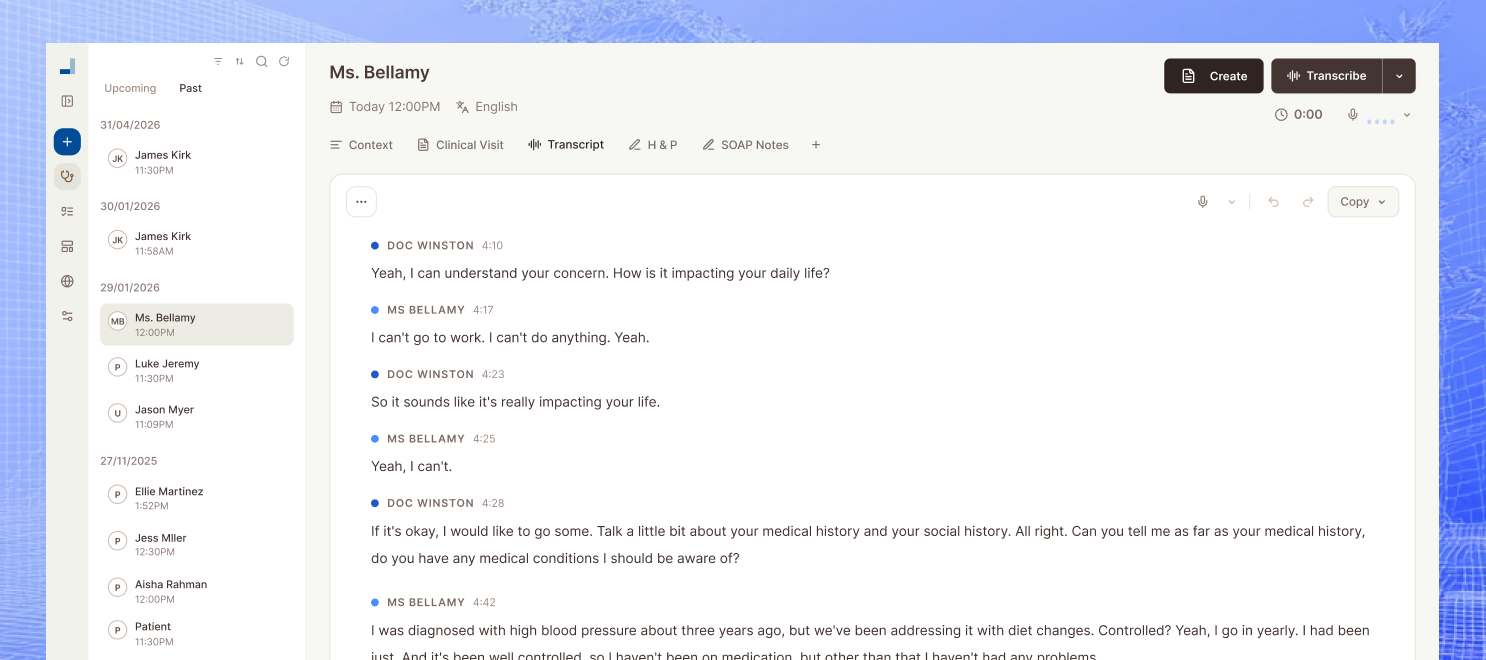
By recording and transcribing consultations, AI can generate structured clinical notes that reflect the actual conversation. Doctors no longer need to type during the visit or reconstruct details later.
This allows clinicians to make eye contact, listen actively, and respond thoughtfully. Patients notice the difference immediately.
This is where Mcoy AI fits naturally into clinical workflows.
Mcoy AI is an AI medical scribe designed to help doctors spend more time with patients and less time on notes. It can record and transcribe patient encounters, convert conversations into structured SOAP notes, and generate clinical documents using over 200 customisable templates built for different specialties. Doctors can chat with their encounters, create referral letters, forms, and reports from the same consultation. By removing the need to manually document every visit, Mcoy AI helps clinicians stay present during consultations and finish documentation faster.
The result is not just saved time, but better quality interactions.
Batch review instead of constant typing
Documentation feels heavier when it is scattered throughout the day. Typing a little between patients, answering messages, and jumping back into notes fragments attention.
Batching documentation review into focused sessions is more efficient. AI-generated notes make this possible because most of the work is already done.
Doctors can complete documentation in fewer blocks, reducing interruptions and mental fatigue. This also makes it easier to finish on time.
Set realistic standards for notes
Not every note needs to capture every word. Over-documentation often stems from uncertainty about expectations.
Clear standards help. Decide what level of detail is appropriate for different visit types. Focus on clinically relevant information and clear reasoning rather than excessive narrative.
Structured notes are often more defensible and easier to review than long, unstructured paragraphs. They also take less time to create and maintain.
Reduce after-hours work to improve presence
One of the biggest barriers to being present with patients is the knowledge that notes are waiting later. This creates background stress during consultations.
When doctors trust that documentation will be manageable, they relax. They listen more. They engage more deeply.
Reducing after-hours work is not a luxury. It is essential for sustainable, patient-centred care.
Train systems, not clinicians
Many clinics try to fix documentation problems by telling doctors to document differently. This approach rarely works.
A better approach is improving systems. Refine templates. Improve AI outputs. Adjust workflows so documentation naturally takes less time.
When systems are designed well, doctors do not need to change how they practise medicine. The system adapts to them.
Measure what matters
To improve anything, it helps to measure it. Track how long documentation takes before and after changes. Even rough estimates are useful.
Many clinics are surprised by how much time is recovered with small improvements. Gaining just five minutes per patient can translate into hours each week.
Those hours can be reinvested in patient care, teaching, or rest.
The deeper benefit of time with patients
Spending more time with patients is not just about satisfaction. It improves diagnostic accuracy, adherence, and outcomes. Patients are more likely to trust and follow advice when they feel heard.
For doctors, meaningful patient interactions are one of the strongest protections against burnout. When paperwork fades into the background, medicine feels like medicine again.
The goal is not to eliminate documentation. It is to make it invisible.
Reclaiming the heart of clinical practice
Doctors cannot control every pressure in healthcare, but they can control how systems support their work. By reducing note-taking burden, clinicians can reclaim time, attention, and energy.
Spending more time with patients and less time on notes is achievable. It does not require hiring more staff or working longer hours. It requires smarter workflows, better tools, and a shift in how documentation is approached.
When notes stop competing with care, everyone benefits.
What a serious review table should cover
| Decision area | Common mistake | Better clinic-ready approach | Metric to watch |
|---|---|---|---|
| Workflow design | Treat how to spend more time with patients and less time on notes as a one-off documentation task | Build a repeatable process with clear ownership and review points | Time to complete documentation |
| Team adoption | Assume every clinician will naturally use the same process | Train for consistency and define exception handling early | Active user adoption |
| Quality review | Only check notes when a problem is reported | Audit a sample of notes weekly and review edge cases | Edit rate per note |
| Operational follow-through | Leave admin actions outside the documentation workflow | Use the same encounter data for referrals, letters, and follow-up tasks | Completion rate for next-step tasks |
Related reading
If you are working through how to spend more time with patients and less time on notes, it helps to read this alongside Physician Wellbeing: Why Documentation Is the Biggest Time Drain for Doctors, Physician Wellbeing: How Doctors Can Reduce Paperwork Without Compromising Care, and Practice Operations: How to Set Up an AI Medical Scribe in Your Clinic [Guide]. Those guides cover adjacent workflow, implementation, and evaluation questions so the decision does not sit in isolation.
FAQ
Can doctors really stop typing during consultations
Yes. With proper systems and AI-assisted documentation, doctors can focus on conversation and review notes later.
Will patients be comfortable with AI documentation
Most patients respond positively when doctors are more engaged and present during visits.
Does less note-taking increase medico-legal risk
Clear, structured notes created from accurate consultation data can reduce risk by improving completeness and consistency.
How long does it take to see results
Many doctors notice improvements within days once documentation workflows change.
Is this approach suitable for small clinics
Yes. Smaller clinics often see faster benefits because workflows are simpler to adjust.