Physician Wellbeing: How Doctors Can Reduce Paperwork Without Compromising Care
Full guide on how doctors can reduce paperwork without compromising care using smarter workflows and AI documentation tools.
Paperwork has become one of the most frustrating parts of modern medicine. For many doctors, administrative work now competes directly with patient care. Forms, notes, referrals, letters, and compliance requirements pile up quickly, often spilling into evenings and weekends. The result is less time with patients, more stress, and growing dissatisfaction with clinical work.
What makes this especially difficult is the fear that reducing paperwork might mean reducing quality. Many doctors worry that shorter notes, fewer clicks, or more automation could compromise care, safety, or medico-legal protection.
In reality, the opposite is often true. When paperwork is reduced intelligently, care quality improves. Doctors are more present. Documentation becomes clearer. Communication is more consistent. The key is not doing less documentation, but doing smarter documentation.
This guide explains how doctors can reduce paperwork without compromising care, professionalism, or clinical standards.
Why paperwork keeps growing in healthcare
Paperwork has expanded for reasons beyond individual control. Regulatory requirements have increased. Billing and compliance standards are more complex. Care is more collaborative, requiring clearer communication across providers.
Digital systems were meant to reduce paperwork, but in many cases they added new layers. Templates multiplied. Fields expanded. Copy-paste became common. Instead of replacing paper, many systems digitised inefficiency.
Over time, doctors absorbed this extra work. What once took minutes now takes hours. And because paperwork feels unavoidable, it is often accepted as part of the job.
The false trade-off between paperwork and care
One of the biggest misconceptions in healthcare is that thorough care requires excessive paperwork. This belief drives over-documentation and unnecessary administrative effort.
Quality care depends on clear clinical reasoning, accurate records, and effective communication. It does not depend on long notes or repeated information. In fact, overly long documentation can obscure key details and make care harder to follow.
Reducing paperwork does not mean cutting corners. It means removing redundancy, focusing on what matters, and using systems that support clinicians instead of burdening them.
Start by identifying low-value documentation
Not all paperwork adds equal value. Some documentation exists primarily for billing, reporting, or defensive reasons rather than direct patient care.
Doctors can start by identifying tasks that feel repetitive, duplicative, or disconnected from clinical decision-making. Common examples include rewriting similar phrases, entering the same information into multiple systems, or filling forms that restate what is already documented elsewhere.
Reducing or streamlining low-value documentation frees time without affecting care quality.
Capture information once and reuse it
One of the biggest drivers of paperwork is duplication. Information discussed during the consultation is often rewritten multiple times for different purposes.
This duplication is unnecessary. When information is captured once and reused, paperwork decreases dramatically. Notes, referral letters, patient summaries, and follow-up instructions can all draw from the same source.
This approach improves consistency and reduces errors. It also ensures that clinicians spend time thinking clinically rather than retyping information.
Structure reduces paperwork, not quality
Unstructured documentation feels flexible, but it often increases workload. Starting from a blank page requires decisions about format, wording, and order every time.
Structured templates reduce this burden. They guide documentation without dictating it. When designed well, templates prompt essential elements while allowing clinical nuance.
Structure improves clarity for other providers and reviewers. It also makes notes faster to create and easier to read. Reducing mental effort does not reduce care quality. It enhances it.
Reduce paperwork by changing when it happens
Paperwork feels heavier when it is delayed. Many doctors postpone documentation until after clinic hours to keep the day running smoothly. Unfortunately, delayed paperwork takes longer.
Reconstructing consultations from memory is cognitively demanding. Doctors second-guess details and often over-document to compensate. This increases time spent and stress.
When documentation is captured during or immediately after the consultation, it becomes a refinement task instead of a reconstruction task. This shift alone can significantly reduce paperwork time.
Let technology remove work, not add it
Technology has a mixed reputation in healthcare because many systems add steps rather than remove them. Alerts, clicks, and mandatory fields can increase paperwork instead of reducing it.
The right tools do the opposite. They quietly remove work from the background. They capture information automatically, organise it intelligently, and present it for quick review.
Doctors should not feel like data entry clerks. Technology should support clinical thinking, not compete with it.
AI-assisted documentation and paperwork reduction
AI-assisted documentation has become one of the most effective ways to reduce paperwork without compromising care.
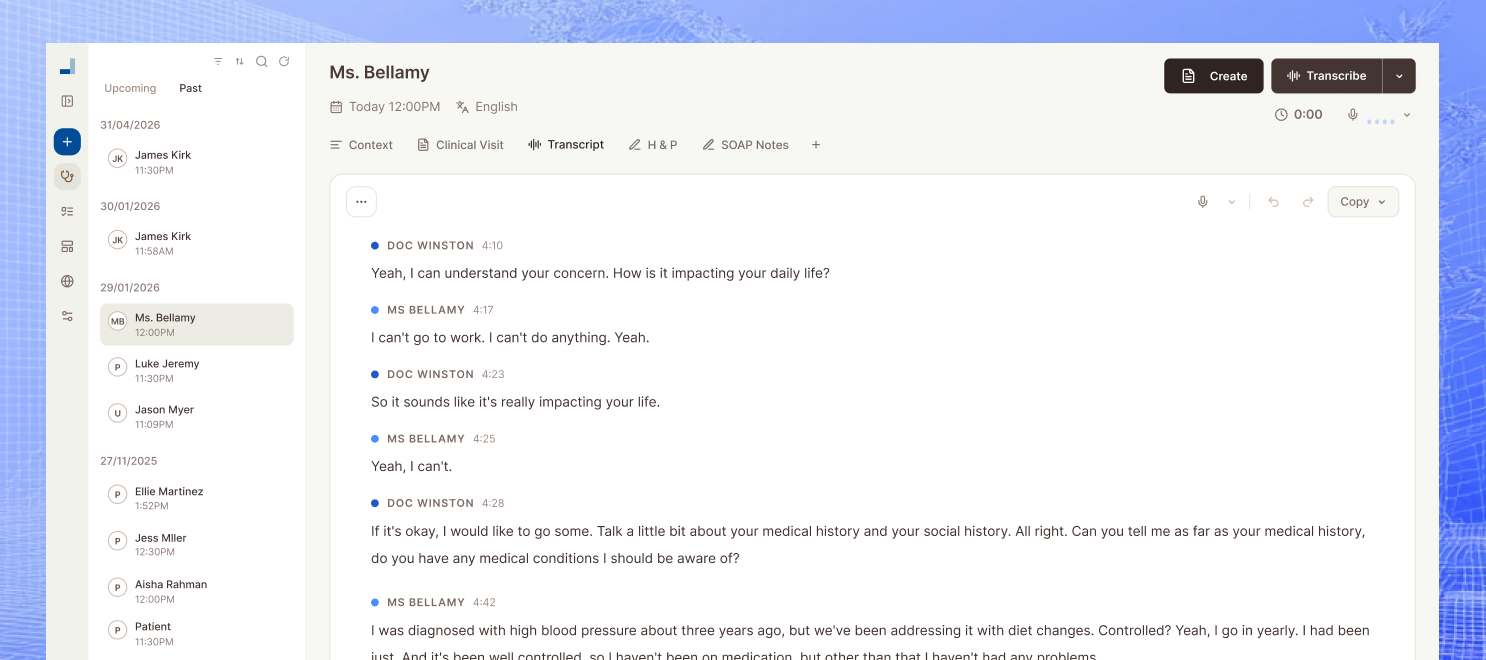
By recording and transcribing consultations, AI can generate structured clinical notes automatically. Doctors no longer need to write everything from scratch. Instead, they review, adjust if needed, and approve.
This changes the nature of paperwork. It becomes faster, more accurate, and less mentally draining. Importantly, doctors remain responsible for the final content, preserving clinical accountability.
This is where Mcoy AI fits into modern clinical workflows.
Mcoy AI is an AI medical scribe designed to reduce paperwork while maintaining high clinical standards. It records and transcribes patient encounters, turns conversations into structured SOAP notes, and generates clinical documents using over 200 customisable templates built for different specialties. Doctors can chat with their encounters, create referral letters, forms, and reports from the same consultation data. By automating documentation tasks, Mcoy AI allows clinicians to reduce paperwork without compromising the quality or completeness of care.
Rather than replacing clinical judgment, tools like this support it by removing clerical overhead.
Reduce fear-driven over-documentation
A significant amount of paperwork is driven by fear. Doctors worry about audits, complaints, or medico-legal exposure. As a result, notes become longer and more detailed than necessary.
Clear standards help reduce this fear. Knowing what is required and what is optional allows doctors to document confidently without excess. Structured templates and AI-assisted tools ensure required elements are captured consistently.
Concise, well-organised notes are often more defensible than long, unfocused ones. Reducing uncertainty reduces paperwork.
Improve communication to reduce follow-up work
Poor communication creates more paperwork. When notes are unclear, staff follow up. When instructions are vague, patients call back. When referrals lack detail, specialists request clarification.
Improving documentation quality reduces downstream administrative work. Clear summaries, structured plans, and consistent language reduce the need for extra messages and forms.
This is an often-overlooked benefit of smarter documentation systems.
Focus on reducing cognitive load
Paperwork is not just time-consuming. It is mentally exhausting. Constant switching between clinical thinking and administrative tasks drains energy.
Reducing paperwork means reducing cognitive load. Templates, automation, and AI-assisted drafting all help by removing small decisions that add up over the day.
When cognitive load decreases, doctors have more mental space for complex cases, teaching, and patient relationships.
Batch paperwork instead of spreading it out
Paperwork feels heavier when it is scattered throughout the day. Interruptions break focus and increase error rates.
Batching paperwork into focused blocks is more efficient. AI-generated drafts make this possible by front-loading capture and leaving review for later.
Doctors can complete documentation in fewer sessions, reducing mental fatigue and improving flow.
Reducing paperwork improves care quality
Reducing paperwork is often framed as an efficiency goal, but its impact on care quality is significant.
Doctors who are less burdened by paperwork listen better. They notice subtle cues. They think more clearly. Patients feel more engaged and understood.
Shorter, clearer notes also improve continuity of care. Other providers can quickly understand key decisions and plans.
Reducing paperwork does not dilute care. It enhances it.
Why small changes make a big difference
Paperwork reduction does not require radical transformation. Small improvements compound.
Saving two minutes per patient can translate into hours each week. Eliminating one duplicated task can remove an entire category of after-hours work.
Clinics that focus on incremental improvement often see meaningful results quickly.
Reframing paperwork as a system problem
Paperwork is often treated as an individual responsibility. Doctors are expected to manage it through discipline and efficiency.
In reality, paperwork is a system problem. When systems demand too much documentation or fail to capture information efficiently, no amount of personal effort will fix it.
Reframing paperwork as a design issue opens the door to real solutions.
Sustainable medicine requires less paperwork
Medicine will always involve documentation. Records matter. Communication matters. Accountability matters.
But unnecessary paperwork is not inevitable. With smarter workflows, better capture, and AI-assisted documentation, doctors can reduce administrative burden without compromising care.
The goal is not minimal documentation. It is meaningful documentation.
When paperwork fades into the background, doctors can focus on what matters most. Caring for patients.
What a serious review table should cover
| Decision area | Common mistake | Better clinic-ready approach | Metric to watch |
|---|---|---|---|
| Workflow design | Treat how doctors can reduce paperwork without compromising care as a one-off documentation task | Build a repeatable process with clear ownership and review points | Time to complete documentation |
| Team adoption | Assume every clinician will naturally use the same process | Train for consistency and define exception handling early | Active user adoption |
| Quality review | Only check notes when a problem is reported | Audit a sample of notes weekly and review edge cases | Edit rate per note |
| Operational follow-through | Leave admin actions outside the documentation workflow | Use the same encounter data for referrals, letters, and follow-up tasks | Completion rate for next-step tasks |
Related reading
If you are working through how doctors can reduce paperwork without compromising care, it helps to read this alongside Physician Wellbeing: Why Documentation Is the Biggest Time Drain for Doctors, Physician Wellbeing: How Doctors Can Reduce Paperwork Without Compromising Care, and AI & Medicine: AI Medical Coding: Definition and Examples. Those guides cover adjacent workflow, implementation, and evaluation questions so the decision does not sit in isolation.
FAQ
Can paperwork really be reduced without lowering care quality
Yes. Removing duplication and low-value tasks often improves clarity and consistency while reducing workload.
Does AI documentation affect clinical responsibility
No. Doctors remain responsible for reviewing and approving all documentation.
Will patients notice reduced paperwork
Patients often notice better attention and engagement when doctors are less focused on screens.
Is this approach suitable for small clinics
Yes. Smaller clinics often see faster benefits because workflows are simpler to adjust.
How quickly can doctors see results
Many doctors notice reduced paperwork within days or weeks once workflows improve.