AI & Medicine: How Doctors Can Reduce Administrative Work Without Hiring More Staff
Full guide on how doctors and clinics reduce administrative work without hiring more staff using smarter workflows and AI documentation tools.
Administrative overload has quietly become one of the biggest threats to modern healthcare. For many doctors, especially those running private practices, university clinics, or specialist rooms, the workday does not end when the last patient leaves. Notes still need to be completed, referrals written, letters sent, forms signed, and compliance boxes ticked. This hidden workload stretches evenings, weekends, and mental energy far beyond what medicine ever intended.
Hiring more staff feels like the obvious answer, but it is not always realistic. Rising wage costs, training time, space constraints, and thin margins make adding headcount difficult. The good news is that reducing administrative work does not always require more people. In many cases, it requires better systems, smarter workflows, and the right use of technology.
This guide walks through practical, proven ways doctors can reduce administrative burden without expanding their team, while maintaining quality of care and protecting their own time and wellbeing.
Why administrative work keeps growing in healthcare
Administrative work has increased for reasons outside any single clinic’s control. Regulatory requirements are more complex. Documentation expectations are higher. Patients expect faster responses, digital forms, and polished communication. Insurance, billing, and compliance add layers of non-clinical tasks that did not exist decades ago.
For doctors, this often means spending more time on computers than with patients. Studies consistently show clinicians spending hours each day on documentation, often after clinic hours. Over time, this leads to burnout, reduced job satisfaction, and less capacity to see patients or focus on complex cases.
Reducing this load is not about cutting corners. It is about removing duplication, manual effort, and unnecessary steps that do not add clinical value.
Start by mapping where time is actually going
Before changing tools or workflows, it is important to understand where administrative time is being spent. Many clinics underestimate how much time goes into small, repeated tasks.
Common examples include writing clinical notes from scratch, copying information between systems, manually filling templates, chasing missing information, dictating then editing notes, and re-writing similar letters over and over. Each task might only take a few minutes, but together they consume hours each week.
A simple exercise is to track non-clinical tasks for a few days. This does not need to be formal or complicated. Even rough awareness can highlight areas where automation or standardisation would make an immediate difference.
Standardise documentation wherever possible
One of the fastest ways to reduce admin work is to stop reinventing the wheel for every patient. Many doctors still write notes and letters freehand, even when the structure is largely the same.
Standardised templates for common visit types, conditions, and referrals can significantly reduce documentation time. When templates are designed properly, they do not reduce clinical quality. Instead, they prompt completeness and consistency while saving time.
Templates can be used for SOAP notes, review visits, follow-ups, referral letters, medical certificates, and patient summaries. The key is flexibility. A rigid template that does not match real clinical flow can slow things down. A well-designed template adapts to how doctors actually think and work.
Reduce duplication across systems
One of the biggest hidden time drains in clinics is duplication. The same information is often entered into multiple systems, rewritten in different formats, or copied from one place to another.
This is where workflow design matters. Ideally, information should be captured once and reused automatically. For example, patient history discussed during a consultation should flow directly into notes, referrals, and follow-up letters without retyping.
When systems do not talk to each other, clinicians become the bridge, manually moving information around. Reducing this friction, even partially, can free up significant time each day.
Use automation for repetitive tasks
Automation does not mean removing human judgment. It means letting software handle predictable, repeatable work.
Common examples include automatically generating visit summaries, follow-up instructions, referral drafts, medical letters, and compliance documentation based on consultation content. When automation is applied thoughtfully, doctors still review and approve outputs, but no longer start from a blank page.
This approach reduces cognitive load. Instead of focusing on formatting and phrasing, clinicians focus on accuracy and decision-making.
Introduce AI-assisted documentation, not more typing
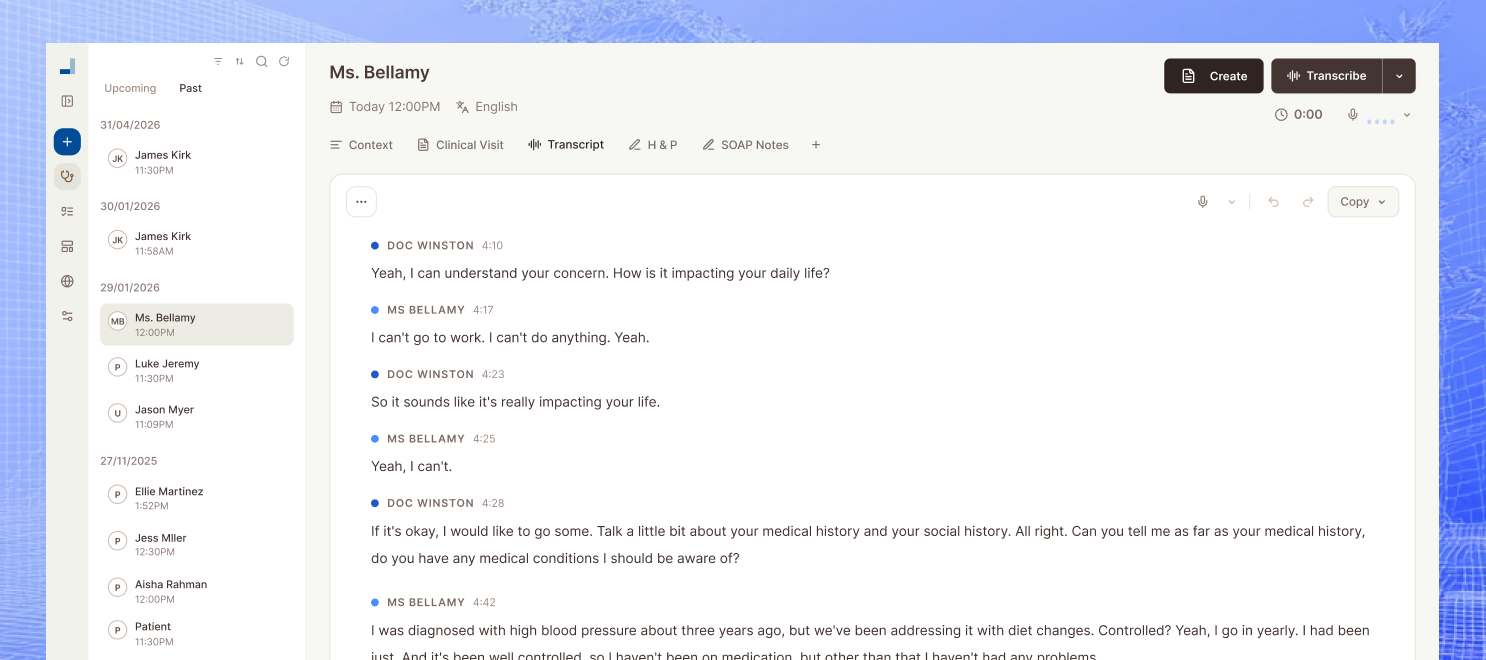
One of the most effective ways to reduce administrative work without hiring staff is AI-assisted clinical documentation. Modern AI tools can listen to patient encounters, transcribe them, and turn them into structured medical notes automatically.
This does not replace the doctor. It removes the need to manually document everything after the visit. When implemented correctly, AI-assisted documentation can cut note-writing time dramatically and reduce after-hours work.
This is where Mcoy AI fits naturally into the workflow.
Mcoy AI is an AI medical scribe designed specifically to reduce administrative load for doctors. It can record and transcribe patient encounters, convert conversations into structured SOAP notes, and generate clinical documents using over 200 customisable templates built for different specialties. Doctors can also chat with their encounters, create referral letters, forms, and reports, all within the same system. By handling documentation and paperwork, Mcoy AI allows clinicians to focus more on patient care rather than administrative tasks.
Importantly, tools like this are designed to support, not interrupt, clinical flow. The goal is not to add another system to manage, but to quietly remove work from the background.
Simplify communication with patients and other providers
Communication is essential in healthcare, but it often becomes fragmented and time-consuming. Writing emails, letters, and instructions repeatedly adds up.
Using structured templates and AI-assisted drafting can streamline this process. For example, post-visit summaries, treatment plans, and referral letters can be generated automatically based on the consultation. Doctors then review and adjust rather than write from scratch.
Clear, consistent communication also reduces follow-up queries. When patients receive well-structured information, they are less likely to call back with questions, saving time for both clinical and administrative staff.
Reduce cognitive switching during the day
Administrative fatigue is not just about time. It is about constant context switching. Seeing a patient, then documenting, then answering messages, then returning to clinical thinking drains mental energy.
Batching administrative tasks where possible can help. For example, reviewing generated notes in focused blocks rather than between patients reduces interruptions and improves efficiency.
AI tools that capture information during the consultation allow doctors to stay present with patients and handle documentation later in a single review session. This alone can improve both productivity and patient experience.
Protect time by setting realistic documentation standards
Not every note needs to be a novel. Over-documentation is a common response to fear of audits or legal risk, but it often goes beyond what is clinically necessary.
Clear internal standards help. Decide what level of detail is appropriate for different visit types. Use prompts and templates to ensure required elements are included without excessive repetition.
AI-assisted tools can help strike this balance by producing complete but concise notes aligned with best practices.
Focus on systems, not heroics
Many clinics rely on doctors working longer hours to keep up. This is not sustainable. Reducing administrative work without hiring more staff requires shifting from individual effort to system-level solutions.
When documentation, communication, and workflow are designed properly, the same team can handle more patients with less stress. Doctors finish on time. Notes are completed faster. Burnout risk decreases.
This is not about doing more with less in a harmful way. It is about removing unnecessary work so clinicians can do what they trained for.
The long-term impact of reducing admin burden
Reducing administrative workload has benefits beyond time savings. It improves care quality, reduces errors, and increases job satisfaction. Patients notice when doctors are less rushed and more present.
Clinics that invest in smarter workflows often see better retention, fewer sick days, and improved overall efficiency. In an environment where healthcare systems are under constant pressure, these gains matter.
The future of medicine is not about adding more staff to handle paperwork. It is about designing systems that respect clinicians’ time and expertise.
What a serious review table should cover
| Decision area | Common mistake | Better clinic-ready approach | Metric to watch |
|---|---|---|---|
| Workflow design | Treat how doctors can reduce administrative work without hiring more staff as a one-off documentation task | Build a repeatable process with clear ownership and review points | Time to complete documentation |
| Team adoption | Assume every clinician will naturally use the same process | Train for consistency and define exception handling early | Active user adoption |
| Quality review | Only check notes when a problem is reported | Audit a sample of notes weekly and review edge cases | Edit rate per note |
| Operational follow-through | Leave admin actions outside the documentation workflow | Use the same encounter data for referrals, letters, and follow-up tasks | Completion rate for next-step tasks |
Related reading
If you are working through how doctors can reduce administrative work without hiring more staff, it helps to read this alongside AI & Medicine: How to Simplify Clinical Notes for Busy Doctors, AI & Medicine: How Doctors Can Improve SOAP Notes, and Specialty Guides: Convert Patient Conversations into SOAP Notes | Full Guide. Those guides cover adjacent workflow, implementation, and evaluation questions so the decision does not sit in isolation.
FAQ
Frequently Asked Questions
Can administrative work really be reduced without hiring staff
Yes. Many administrative tasks are repetitive and process-driven. With better templates, automation, and AI-assisted documentation, clinics can significantly reduce workload without increasing headcount.
Will automation affect the quality of clinical notes
When implemented properly, automation improves consistency and completeness. Doctors still review and approve notes, but no longer start from scratch.
Is AI documentation safe for clinical use
Modern AI medical scribes are designed with healthcare workflows in mind. They support clinicians rather than replace judgment, and outputs are always reviewed by the doctor.
How long does it take to see benefits after changing workflows
Many clinics notice time savings within days or weeks, especially when documentation time is reduced. Long-term benefits compound as systems are refined.
Do smaller practices benefit as much as larger clinics
Often more. Smaller practices feel administrative burden more acutely, and workflow improvements can have an immediate impact on daily operations.