AI & Medicine: AI Medical Coding: Definition and Examples
Full guide on AI medical coding with definition, workflow, examples, and benefits. Learn how AI improves speed, accuracy, and billing efficiency for clinics.
Medical coding has always been one of the most essential yet time-consuming parts of healthcare documentation. Every diagnosis, procedure, test, and patient visit must be translated into standardized medical codes so clinics can bill correctly, comply with regulations, and maintain clean medical records. For decades, this task has relied on trained professionals manually reviewing charts, reading physician notes, and assigning codes one by one. But with growing patient loads, increased administrative pressure, and more complex coding guidelines, this manual process is reaching its limits. This is where AI medical coding is starting to transform the landscape.
AI medical coding automates or assists the coding process using artificial intelligence. It reads clinical documentation, identifies key information, and suggests or assigns codes accurately and quickly. Instead of spending hours on repetitive chart review, coders and healthcare teams can finalize codes more efficiently while reducing errors. As clinics move toward digital-first workflows, AI is increasingly becoming a cornerstone of modern medical administration.
This guide explains what AI medical coding really is, how it works, examples of where it is used, and the benefits it brings to clinics, hospitals, and private practices.
What Is Medical Coding and Why It Matters
To understand AI medical coding, it helps to revisit the basics. Medical coding is the process of turning clinical information into standardized alphanumeric codes. These codes come from systems such as ICD-10 for diagnoses, CPT for procedures, and HCPCS for services and equipment.
Accurate coding ensures clinics get paid for the care they deliver. Incorrect coding can lead to rejected claims, compliance issues, and financial loss. Coding also plays a role in analytics, insurance reporting, and long-term patient records. But coding is not just choosing numbers from a book. Coders must interpret provider notes, check documentation completeness, and follow ever-changing guidelines.
Manual coding requires attention to detail and concentration. A coder might review dozens or hundreds of charts in a single shift. With rising administrative burdens, it has become one of the most expensive and time-consuming tasks in healthcare operations.
What Is AI Medical Coding?
AI medical coding refers to the use of artificial intelligence to automatically assign or recommend the correct medical codes based on clinical documentation. The AI model reads patient encounters, physician notes, nursing summaries, operative reports, and diagnostic histories. It identifies the key clinical details and maps them to the proper coding standards.
AI medical coding tools rely on natural language processing, machine learning, and medical-specific rule engines. The AI learns from thousands of medical coding examples and continually improves its accuracy over time. Instead of starting from scratch each time, AI tools quickly surface the most relevant codes and reduce the amount of manual searching coders or billers need to do.
AI medical coding does not eliminate human oversight. Coders remain responsible for validating codes and ensuring clinical accuracy. However, AI becomes a partner that speeds up the process, allowing teams to focus on higher-level decisions.
How AI Medical Coding Works
The workflow is straightforward. The AI receives input from clinical documentation, whether it is a structured note, free-text description, or audio-generated transcript. It then processes the content through several layers.
First, natural language processing identifies the medical concepts within the text. This can include diagnoses, symptoms, procedures, medications, findings, and patient histories. Machine learning models map these findings to potential code options. The system then prioritizes codes based on guidelines, common patterns, and regulatory rules.
When the AI presents recommendations to the coder, it often includes explanations, confidence scores, or documentation excerpts used to justify the suggestion. Coders can approve, edit, or reject these recommendations. Over time, the AI improves through feedback and learns the clinic’s coding patterns.
This process reduces coding time significantly and helps bring consistency across the entire team. Hospitals that previously struggled with backlogs or denied claims often see improvement within months of adopting AI-assisted coding.
Examples of AI Medical Coding in Action
AI medical coding is already being used in various healthcare environments. Below are some practical examples that show how the technology is applied.
Example 1: Automating Outpatient Visit Coding
In clinics with high visit volume, coding outpatient encounters can be time-consuming. AI tools scan physician notes, summarize key elements, and identify the correct CPT and ICD-10 codes. For routine visits such as follow-ups, chronic disease management, or minor acute issues, AI can complete most of the coding work within seconds. Coders only need to verify and submit.
This reduces delays in billing and ensures that clinics maintain cash flow without days of coding backlog.
Example 2: Coding Emergency Room Encounters
Emergency departments generate large volumes of documentation quickly. Nurses and physicians often move from patient to patient, and coders must decode chaotic documentation after the fact. AI helps by extracting relevant details such as presenting symptoms, treatments provided, tests performed, and clinical findings. It then suggests the corresponding level of service and diagnosis codes.
This ensures more consistent coding across shifts and reduces errors that often occur during peak emergency room hours.
Example 3: Surgical Procedure Coding
Surgical reports can be lengthy and complex. Coders have to sift through operative notes, anesthesia logs, and post-operative summaries. AI systems can review these documents in seconds, identify key surgical steps, and present accurate CPT and ICD-10-PCS suggestions. This speeds up the coding of high-complexity cases and reduces the risk of missed billable procedures.
Example 4: AI-Assisted Coding for Radiology and Imaging
Radiology reports contain structured and predictable language patterns, making them ideal for AI. AI coding tools can automatically analyze imaging reports, extract findings, and assign appropriate diagnosis and procedure codes. This speeds up workflow for radiology departments and improves accuracy for large imaging centers.
Example 5: Coding for Telehealth Visits
Telehealth expanded dramatically, and coding requirements followed. AI helps by identifying the correct telehealth-specific modifiers and service codes. It also recognizes documentation details unique to virtual care, helping coders stay compliant with evolving guidelines.
Example 6: Back-Office Coding for University Clinics
University-based clinics handle a high number of student encounters, vaccination visits, and acute care presentations. AI helps streamline chart review while maintaining accuracy in teaching environments where documentation quality varies. This reduces administrative pressure on small coding teams and helps clinics submit claims faster.
The Benefits of AI Medical Coding
The benefits go beyond faster work. AI medical coding improves accuracy, increases revenue capture, and reduces claim rejections. It also supports coders by reducing fatigue from repetitive tasks. Clinics that adopt AI tools often report fewer missed codes and more consistent documentation across providers.
AI also offers transparency. Some systems include reasoning behind each recommended code, helping coders understand the mapping clearly. Over time, this raises the skill level of new coders and helps standardize processes across teams.
From a financial perspective, AI medical coding increases throughput. Coding teams can handle larger volumes without increasing staff. This matters for clinics, private practices, and hospitals trying to maintain efficiency without increasing overhead.
The Role of Mcoy AI in Documentation and Coding
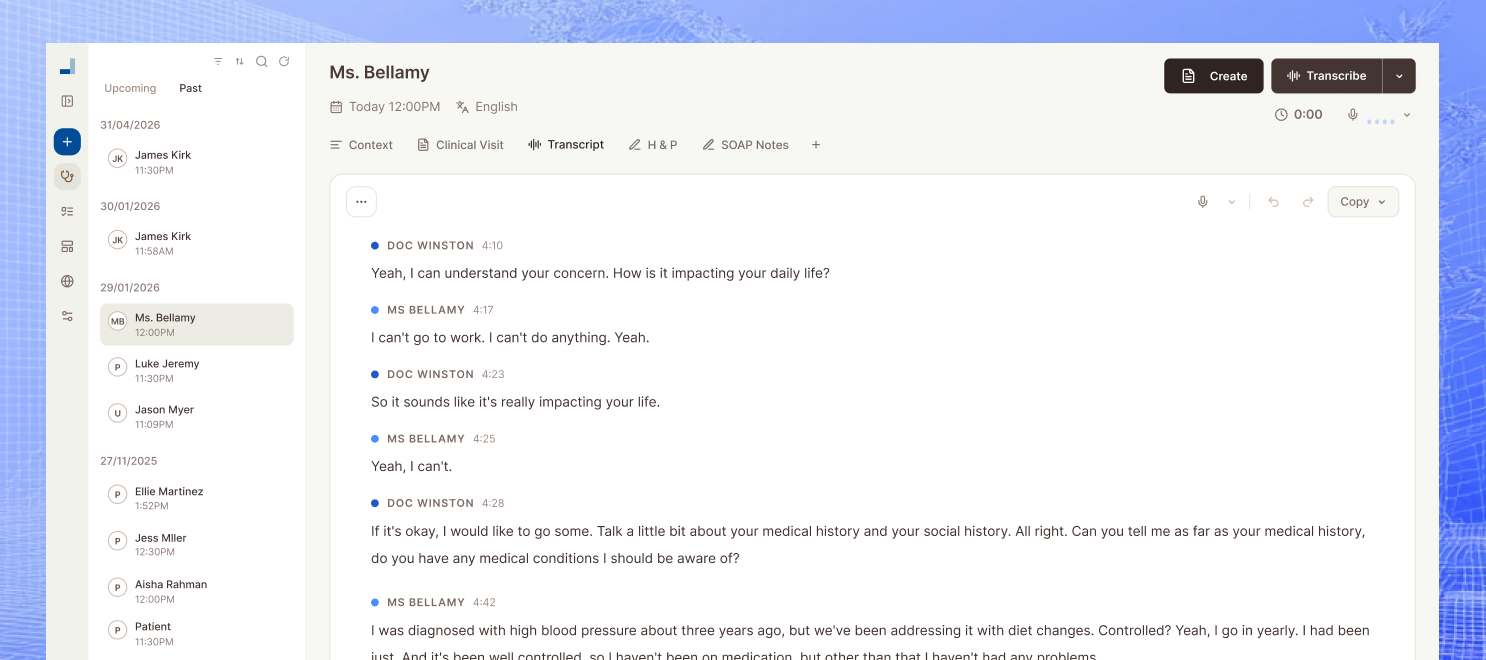
Although Mcoy AI is primarily known as an AI medical scribe, its impact reaches into coding workflows as well. By recording and transcribing patient encounters, Mcoy AI produces cleaner, structured documentation, which significantly reduces the guesswork coders face. With over 200 customizable templates and accurate encounter notes, coders receive documentation that is easier to interpret, minimize errors, and streamline coding decisions. This saves clinics both time and labor, creating a smoother path from documentation to billing.
The Future of AI in Medical Coding
AI medical coding is still evolving. As models become more advanced, they will handle more complex coding scenarios and integrate deeper into electronic health records. Future AI systems may assist with real-time coding during encounters, giving providers immediate feedback on documentation completeness.
AI may also help detect under-coded or over-coded cases, ensuring compliance and protecting clinics from audits. With the trend moving toward automation, AI will not replace coders but will become a standard tool in their workflow, much like calculators are for accountants.
In the coming years, we will likely see AI-powered coding become standard across private practices, emergency departments, and specialty clinics. The combination of accuracy, speed, and cost savings makes it one of the most impactful AI applications in healthcare administration.
What a serious review table should cover
| Decision area | Common mistake | Better clinic-ready approach | Metric to watch |
|---|---|---|---|
| Workflow design | Treat ai medical coding: definition and examples as a one-off documentation task | Build a repeatable process with clear ownership and review points | Time to complete documentation |
| Team adoption | Assume every clinician will naturally use the same process | Train for consistency and define exception handling early | Active user adoption |
| Quality review | Only check notes when a problem is reported | Audit a sample of notes weekly and review edge cases | Edit rate per note |
| Operational follow-through | Leave admin actions outside the documentation workflow | Use the same encounter data for referrals, letters, and follow-up tasks | Completion rate for next-step tasks |
Related reading
If you are working through ai medical coding: definition and examples, it helps to read this alongside AI & Medicine: How to Simplify Clinical Notes for Busy Doctors, AI & Medicine: How Doctors Can Improve SOAP Notes, and AI & Medicine: Reduce Note Bloat With AI Scribe: A Strategy Guide. Those guides cover adjacent workflow, implementation, and evaluation questions so the decision does not sit in isolation.
FAQ
What is AI medical coding?
AI medical coding uses artificial intelligence to assign or suggest medical codes based on clinical documentation. It reads notes, extracts key information, and maps them to standardized code sets such as ICD-10 and CPT. This speeds up the coding process and reduces manual searching.
Does AI medical coding replace human coders?
AI does not replace coders. Instead, it assists them by automating repetitive tasks and offering suggestions. Coders still validate all codes and ensure documentation accuracy. AI acts as a supportive tool rather than a replacement.
How accurate is AI medical coding?
Accuracy depends on the system, but modern AI coding tools achieve high levels of precision due to extensive training on medical datasets. Coders may still refine the results, but AI significantly reduces errors and ensures consistent application of guidelines.
What types of clinics benefit most from AI medical coding?
High-volume clinics, emergency departments, surgical centers, radiology units, telehealth platforms, and university clinics gain the most. Any setting with large documentation loads or complex coding requirements sees immediate improvements in speed and accuracy.
Can AI handle specialty-specific coding?
Yes, many AI tools support specialty coding, including surgery, cardiology, orthopedics, dermatology, and radiology. These systems learn from specialty-specific documentation and can map specialized procedures and diagnoses effectively.