AI & Medicine: AI in Nursing: Examples and Benefits
Balancing multiple tasks can feel overwhelming, especially when priorities shift and deadlines pile up. A structured approach to task management can make all the difference.
Artificial intelligence is no longer a futuristic idea in healthcare. It is already present in hospitals, university clinics, private practices, and community health settings. While doctors often get most of the attention in AI conversations, nurses are the ones who stand to gain the most day-to-day. Nursing is a field defined by multitasking, heavy documentation, urgent decision-making, and constant patient interaction. With rising workloads and chronic understaffing in many regions, the demand for tools that reduce pressure is higher than ever. This is exactly where AI is quietly reshaping the entire nursing workflow.
This article explores practical examples of AI in nursing, the real benefits nurses experience, and how these technologies support patient care without replacing the human presence that matters most. Nurses remain the heart of healthcare; AI is simply becoming the hands that take over the administrative weight.
Why AI Matters in Nursing Today
The nursing profession has always carried a heavy responsibility, but the last decade has intensified that burden. Aging populations, chronic disease prevalence, higher hospital admissions, and the ongoing shortage of skilled nurses have stretched teams thin. Many nurses report spending more time documenting than interacting with patients, and the emotional load of constant stress contributes to burnout across all levels.
Artificial intelligence entered this landscape at the right moment. Instead of replacing clinical judgment, it acts as a quiet support system. It automates repetitive tasks, helps nurses complete documentation faster, checks for drug safety, streamlines triage, and provides real-time information that improves patient care. In other words, AI gives nurses their time back, allowing them to focus on what only humans can do: empathy, assessment, communication, and hands-on care.
Example 1: AI Documentation Support for Nursing Notes
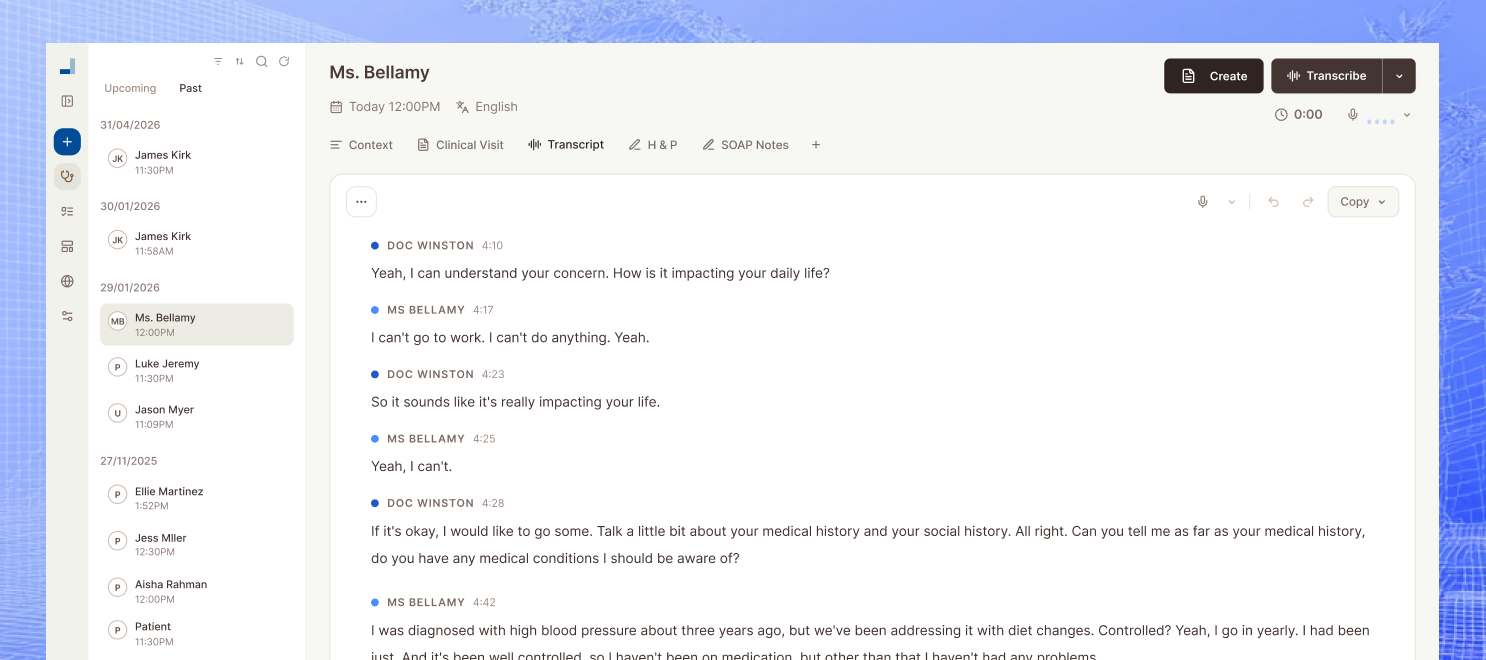
Documentation is one of the largest drains on a nurse’s shift. Whether it is vitals, wound notes, medication entries, handover summaries, or admission assessments, the hours spent typing add up quickly. AI documentation tools can listen to the interaction, transcribe the encounter, and generate structured notes. Instead of typing everything manually, nurses only validate and finalize the summary.
This type of technology reduces charting fatigue and ensures more consistent notes across shifts, especially in high-volume clinics or wards where every minute matters. It also helps maintain accurate timelines, which is critical for audit, continuity, and patient safety.
Example 2: AI-Assisted Clinical Decision Support
AI-powered clinical decision support tools help nurses interpret data more quickly. These systems flag abnormal vital trends, warn about drug interactions, and surface patient risks that might otherwise go unnoticed during a busy shift. For example, if a patient’s vitals indicate early signs of deterioration or unexpected medication side effects, AI alerts the nurse before the situation becomes serious.
This kind of support strengthens clinical judgment rather than replacing it. Nurses still make the final call, but AI brings clarity to the noise of a clinical environment. With dozens of patients on a ward, early warnings make a tangible difference.
Example 3: AI for Wound Care and Skin Assessment
Computer vision models have made wound assessment dramatically easier. Nurses can use AI-powered imaging tools to evaluate healing progress, measure wound size, and monitor color changes with better precision than manual estimation. These tools are especially valuable in long-term care, diabetes clinics, elderly facilities, and surgical recovery units.
AI also helps with pressure injury detection and prevention, reducing complications and improving patient outcomes. Instead of relying on subjective interpretation, nurses gain consistent, photographic documentation and objective measurements.
Example 4: AI in Triage and Virtual Nursing
AI chat-triage systems are becoming common in hospital websites and patient portals. They guide patients through symptoms, determine urgency, and help nurses prioritise calls more effectively. This reduces unnecessary phone workload and allows nurses to focus on actual clinical needs rather than broad, unfocused inquiries.
Virtual nursing is another growing area. AI supports remote patient monitoring by analysing vitals, alerting care teams when readings change, and helping manage chronic disease patients without requiring physical check-ins. In hospitals, virtual nursing stations allow experienced nurses to supervise multiple beds digitally while junior staff handle on-ground tasks.
Example 5: AI in Medication Administration and Safety
Medication administration errors are among the most preventable issues in nursing care. AI supports this area through drug interaction checks, dosage calculators, barcode verification systems, and reminders for high-risk drugs.
Some hospitals use AI-enabled pumps that adjust infusion rates based on patient data, reducing manual calculation errors. Others use algorithms to predict which patients are at risk for adverse drug events. This extra layer of safety protects both nurses and patients, ensuring correct, timely administration.
Example 6: AI for Workflow Automation
Nurses constantly juggle tasks. Shift handover, discharge instructions, documenting interventions, updating care plans, responding to call bells, coordinating with allied health, and tracking patient progress. AI workflow systems help by assigning priorities, automating reminders, predicting which tasks need attention first, and organising information in a way that reduces cognitive load.
This kind of automation does not replace clinical skills; instead, it clears mental clutter so nurses can work smoothly without feeling overwhelmed by fragmented workflows.
Example 7: AI for Patient Education
Nurses spend a significant amount of time explaining conditions and treatments. AI-powered education tools create personalised instructions and visual aids for patients with diabetes, hypertension, post-surgical care needs, and other chronic conditions. These tools make information easier to understand and reduce repeated questions or misunderstandings.
Patients often retain more information through interactive or AI-generated materials, which means fewer complications and better at-home compliance.
The Benefits of AI for Nurses and Hospitals
The examples above highlight how AI supports nurses, but the benefits extend further when applied across an entire hospital or clinic.
The main advantages include:
- Reduced administrative burden
- Faster, more accurate note-taking
- Improved patient safety
- Fewer medication errors
- Better continuity of care
- More time for patient interaction
- Reduced burnout and turnover
- Higher satisfaction among both nurses and patients
Each of these benefits compounds over time. In environments where nursing shortages are severe, even saving thirty minutes per shift can create major improvements in patient flow and staff wellbeing.
What About the Fear of AI Replacing Nurses?
This is a common worry, but the reality is far more reassuring. Nursing is deeply human work. AI cannot replace presence, intuition, communication, compassion, or the physical tasks that define patient care. The technology is designed to handle the background noise, not the clinical heart of the job.
Most nurses who have integrated AI tools report feeling more supported, less overwhelmed, and more in control of their shift. Instead of being pushed out, they are being freed from tasks that take them away from patients.
What a serious review table should cover
| Decision area | Common mistake | Better clinic-ready approach | Metric to watch |
|---|---|---|---|
| Workflow design | Treat ai in nursing: examples and benefits as a one-off documentation task | Build a repeatable process with clear ownership and review points | Time to complete documentation |
| Team adoption | Assume every clinician will naturally use the same process | Train for consistency and define exception handling early | Active user adoption |
| Quality review | Only check notes when a problem is reported | Audit a sample of notes weekly and review edge cases | Edit rate per note |
| Operational follow-through | Leave admin actions outside the documentation workflow | Use the same encounter data for referrals, letters, and follow-up tasks | Completion rate for next-step tasks |
Related reading
If you are working through ai in nursing: examples and benefits, it helps to read this alongside AI & Medicine: How to Simplify Clinical Notes for Busy Doctors, AI & Medicine: How Doctors Can Improve SOAP Notes, and AI & Medicine: How to Capture Medications and Allergies with AI Scribes. Those guides cover adjacent workflow, implementation, and evaluation questions so the decision does not sit in isolation.
FAQ
A Quick Look at Mcoy AI for Nursing Teams
For clinics and practices looking for a practical entry point into AI, tools like Mcoy AI streamline documentation for both doctors and nurses. Mcoy AI records and transcribes patient encounters, generates SOAP notes, creates documents and instructions, and includes over 200 customizable templates designed by healthcare professionals. This helps nurses finish handovers, discharge summaries, and progress notes with less typing and more consistency. By reducing admin load, it gives teams more time to focus on bedside care and improves the overall flow of the clinic.
The Future of AI in Nursing
AI adoption in nursing is still at the beginning. Over the next few years, hospitals will see more AI-enabled monitoring systems, predictive analytics for staffing, real-time dashboards for patient flow, and tools that assist with precise clinical tasks. As the technology matures, it will become easier to use and more aligned with the daily rhythms of nursing work.
The goal is not to create robotic healthcare. It is to strengthen the workforce, reduce burnout, and ensure patients receive high-quality care from focused, supported nurses. AI is becoming a natural extension of nursing, quietly improving every shift while staying mostly invisible to the patient’s eye.How does AI help nurses during a busy shift?
AI helps nurses by reducing time spent on documentation, providing clinical alerts, organising workflows, and managing repetitive tasks. During overwhelming shifts, this support helps nurses maintain patient safety and stay focused on essential care.
Do nurses need technical skills to use AI tools?
Most AI tools for nursing are designed to be simple and intuitive. Nurses do not need advanced technical knowledge. They mainly follow prompts, review AI-generated notes, or use automated systems that run in the background of existing workflows.
Can AI improve patient outcomes in nursing care?
Yes, AI can improve outcomes by detecting early warning signs, reducing medication errors, offering more precise wound assessments, and ensuring that documentation is complete and accurate. These improvements help nurses respond faster and reduce preventable complications.
Is AI useful in university or teaching hospital settings?
Teaching hospitals benefit greatly from AI because students, junior nurses, and rotating staff often face documentation challenges. AI offers consistent support, reduces stress on new nurses, and improves the overall learning environment.
Will AI replace bedside nursing roles?
AI cannot replace the human aspects of nursing that involve empathy, touch, emotional awareness, and clinical judgment. The technology focuses on administrative and analytical tasks, allowing nurses to provide more personal and attentive care.